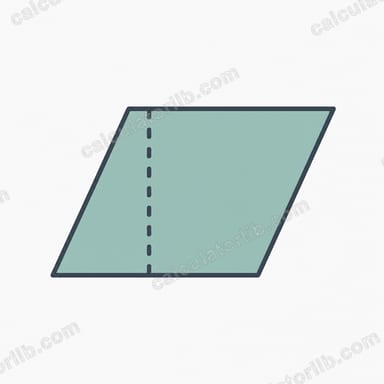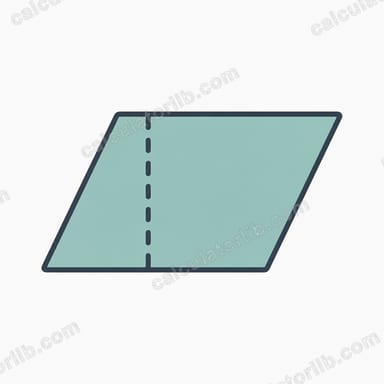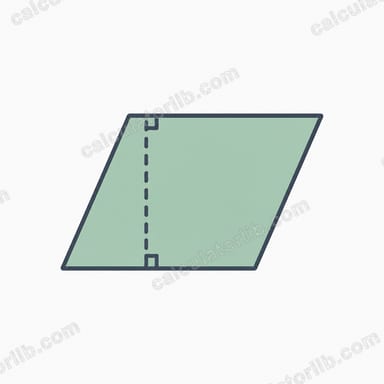

What This Calculator Does
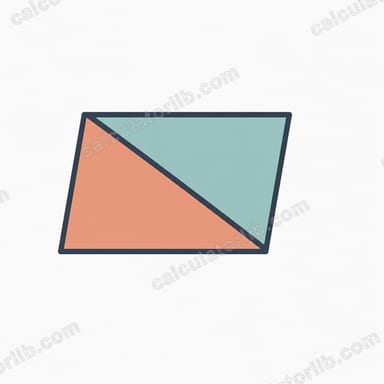
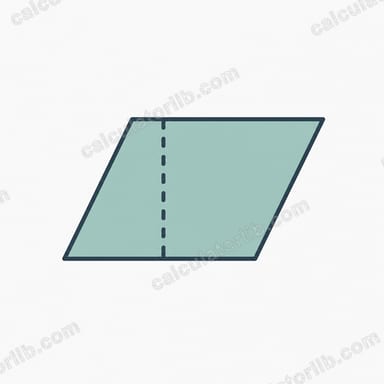
The Parallelogram Area Calculator works out the area of any parallelogram from two simple measurements: the base and the perpendicular height. A parallelogram is a four-sided shape with two pairs of parallel sides — squares, rectangles and rhombuses are all special cases. Whether you're solving homework, planning a tiling layout, or checking a drawing, this tool gives an instant, accurate result.
The Inputs You Enter
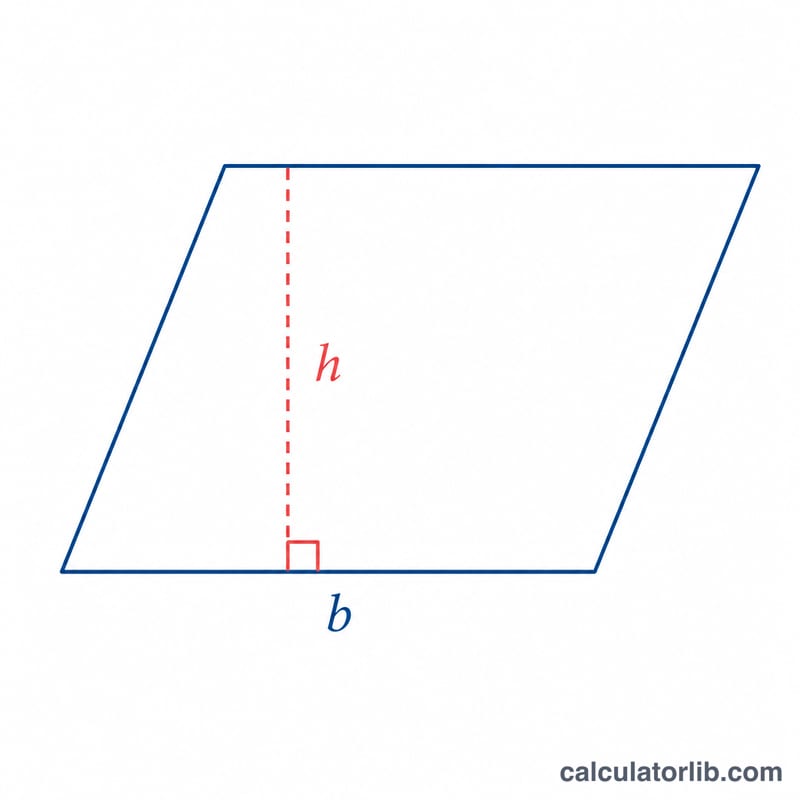
- Base — the length of one side of the parallelogram, measured in any unit (cm, m, inches, etc.).
- Height — the perpendicular distance between the base and the opposite parallel side. Important: this is not the length of the slanted side, but the straight-line height measured at a right angle to the base.
Both fields accept decimal numbers. The calculator reads each value, multiplies them together, and displays the area in square units of whatever unit you used.
The Formula
The calculation is the classic parallelogram area formula:
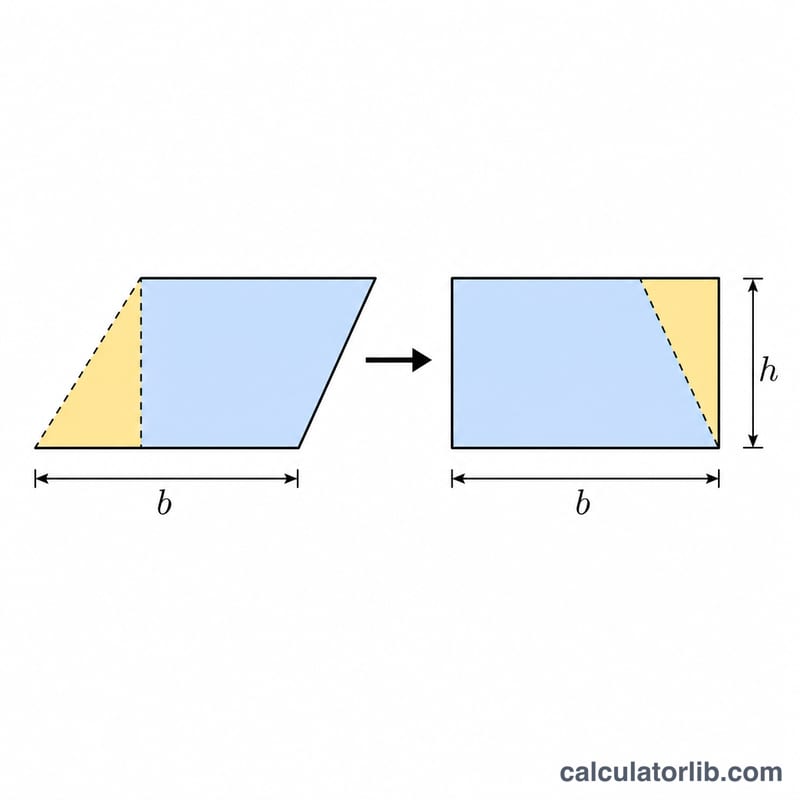
$$\text{Area} = \text{Base} \times \text{Height}$$
Behind the scenes the tool converts both entries to numbers and simply multiplies them. There are no hidden steps — the result is the direct product of your two values. If you enter a unit of length (say metres), the result is in square metres.
Worked Example
Suppose a parallelogram has a base of 8 cm and a perpendicular height of 5 cm. Enter Base = 8 and Height = 5. The calculator computes:
$$\text{Area} = 8 \times 5 = 40 \text{ cm}^2$$
If you change the height to 6.5 cm, the area becomes \(8 \times 6.5 = 52 \text{ cm}^2\). Try different values to see how area scales directly with each measurement.
Frequently Asked Questions
Is the height the same as the slanted side length? No. The height must be measured perpendicular to the base. If you only know the slant side and the angle, multiply the slant length by the sine of the angle to find the true height first.
What units should I use? Use any unit you like, but keep base and height in the same unit. The result will be in those units squared.
Does this work for rectangles and squares? Yes. A rectangle is a parallelogram with right angles, so base × height gives its area too. For a square, base and height are equal.