
What is the Christmas Tree Footprint Calculator?
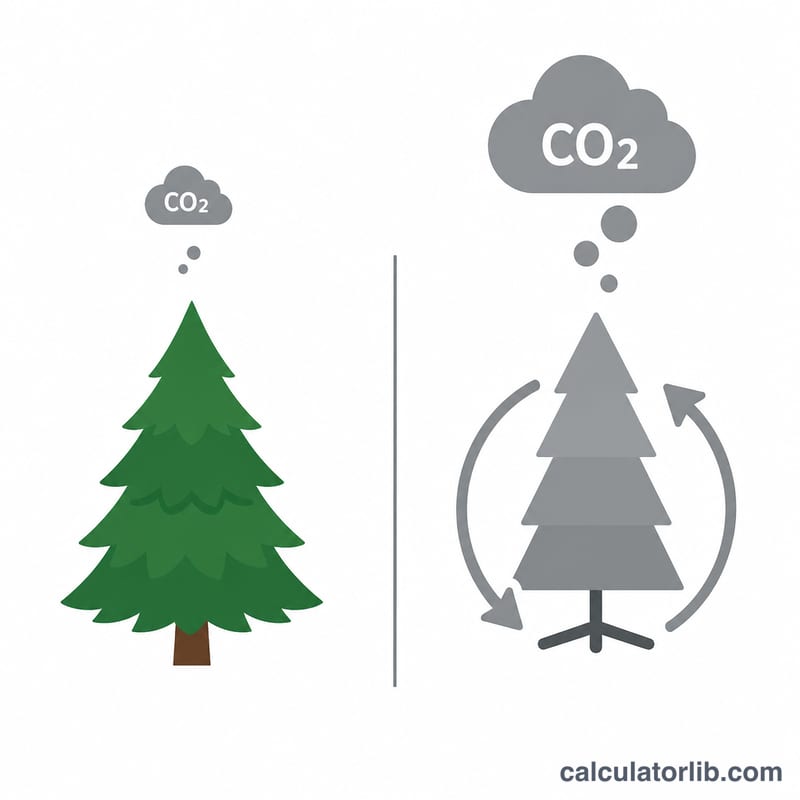
Every December millions of households choose between a real and an artificial Christmas tree, and one of the deciding factors is environmental impact. This calculator estimates the annual carbon footprint (in kilograms of CO₂ equivalent, kg CO₂e) of each option so you can make a more informed, lower-impact choice.
How to use it
Select whether your tree is real or artificial. For a real tree, choose how you dispose of it — sending it to landfill is far worse than chipping, composting, or burning it for energy. For an artificial tree, enter how many years you expect to keep it, since reusing it many times spreads its manufacturing footprint over each year.
The formula explained
The figures are based on widely cited life-cycle studies (e.g. the Carbon Trust). A 2 m real tree that ends up in landfill emits about 16 kg CO₂e because it decomposes anaerobically and releases methane. The same tree chipped, composted, or burned for energy emits only about 3.5 kg CO₂e. A typical 2 m artificial tree has a manufacturing footprint of roughly 40 kg CO₂e; we amortise that over the number of years it is reused:
$$\text{CO}_2/\text{yr} = \frac{40}{\text{Years Kept}}\ \text{kg CO}_2\text{e}$$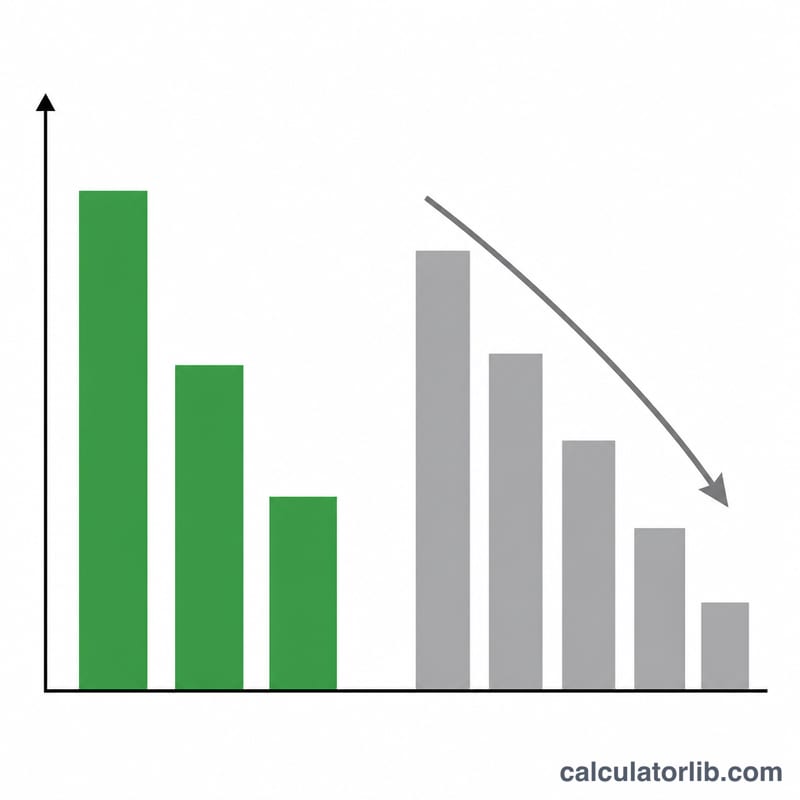
Worked example
If you buy an artificial tree and keep it for 10 years, its annual footprint is
$$\frac{40}{10} = 4\ \text{kg CO}_2\text{e per year}$$— lower than a real tree sent to landfill (16 kg) but slightly higher than a real tree that is recycled (3.5 kg). The common rule of thumb is that an artificial tree must be reused for at least 10–12 years to beat a responsibly disposed-of real tree.
FAQ
Is a real or artificial tree greener? A real tree that is recycled has the lowest footprint, but an artificial tree becomes competitive if you reuse it for over a decade.
Why is landfill so bad for real trees? In landfill the tree breaks down without oxygen, producing methane — a greenhouse gas far more potent than CO₂.
Are these numbers exact? No. They are representative averages for a typical 2 m tree; actual values vary with tree size, transport distance, and materials. Use the result as a guide, not a precise measurement.