
What Is the Tree Benefits Calculator?
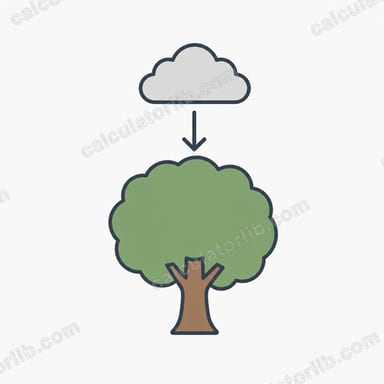
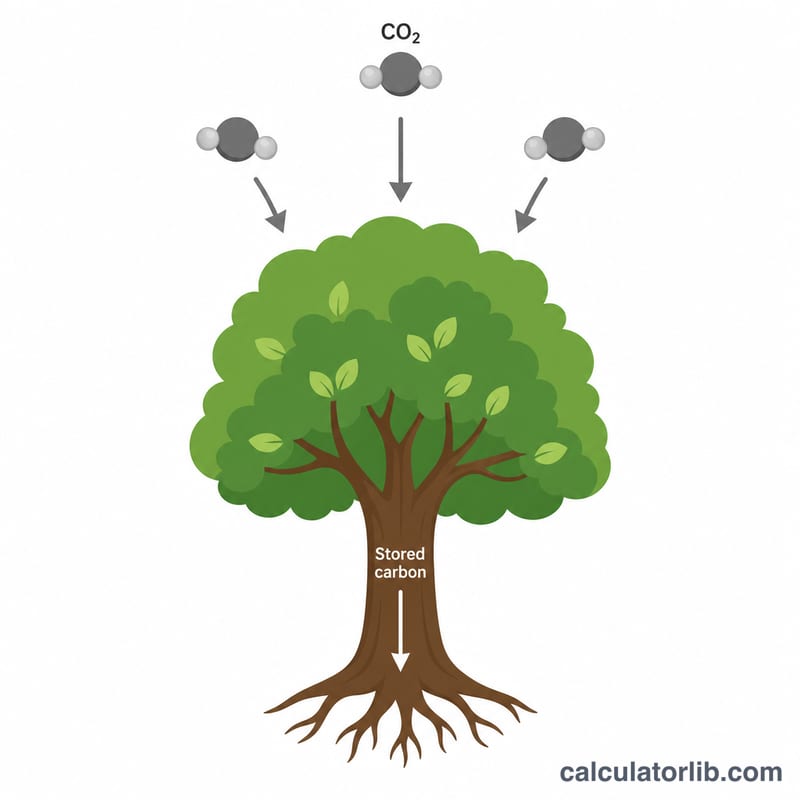
Trees are powerful, low-cost carbon sinks. As they grow, they pull carbon dioxide out of the atmosphere and lock it into wood, roots and soil. This calculator gives a quick estimate of how much CO₂ a group of trees removes from the air each year, helping you measure the climate impact of planting, restoration or urban-forestry projects.
How to Use It
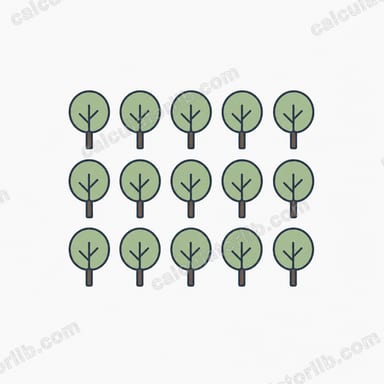
Enter the number of trees you are evaluating and the average CO₂ absorbed per tree in kilograms per year. A widely cited default is about 21.77 kg (≈48 lb) of CO₂ per mature tree per year, but young, slow-growing or stressed trees absorb less, while large, fast-growing species can absorb much more. Adjust the per-tree figure to match your species and climate for a better estimate.
The Formula Explained
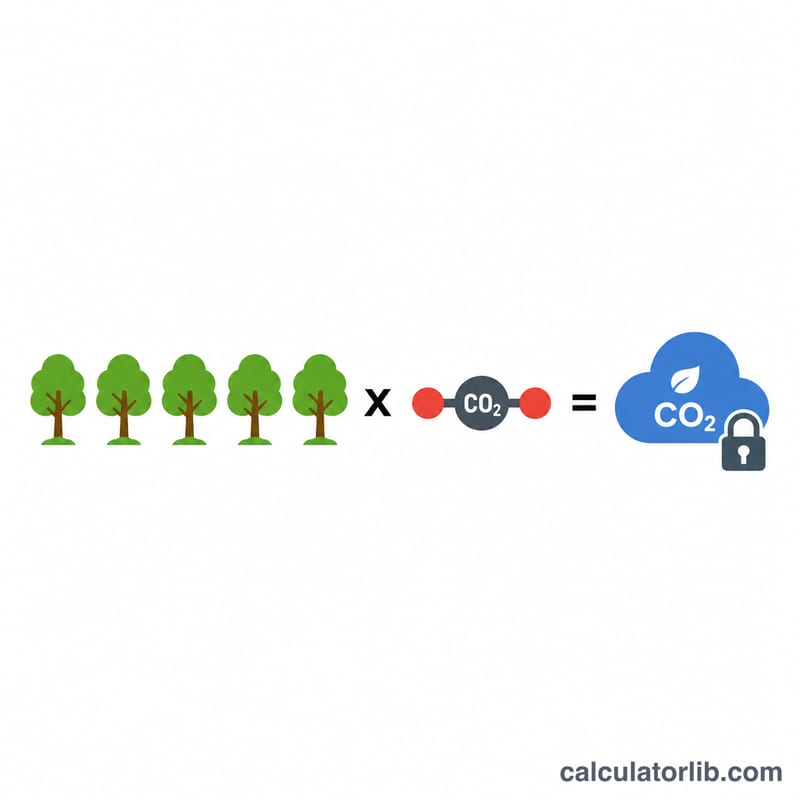
The core math is simple multiplication:
$$\text{CO}_2 \text{ (kg/yr)} = \text{number of trees} \times \text{CO}_2 \text{ per tree (kg/yr)}$$
The result is also shown in metric tonnes (divide by 1,000) and as the equivalent number of average passenger cars removed from the road for a year, using roughly 4,600 kg of CO₂ per car annually.
Worked Example
Suppose you plant 100 trees and assume each absorbs 21.77 kg of CO₂ per year. The total is $$100 \times 21.77 = 2{,}177 \text{ kg/yr},$$ or about 2.18 tonnes. That is roughly 0.47 cars taken off the road for a year.
FAQ
How much CO₂ does one tree absorb? Estimates vary widely (10–40+ kg/yr) depending on species, age, size and growing conditions. The 21.77 kg default is a common average for a mature tree.
Does this account for the whole life of the tree? No — this is an annual estimate. A tree's lifetime sequestration is this yearly figure multiplied across its growing years, which usually increases as the tree matures.
Is this an exact measurement? No. It is a planning estimate. For carbon credits or official reporting, use validated forestry protocols and field measurements.