
What Is the Tree Age Calculator?
The Tree Age Calculator estimates how old a living tree is without cutting it down or coring it. It uses the simple relationship between a tree's trunk size and its species-specific annual growth rate. Foresters and arborists use this "growth factor" method as a quick, non-invasive way to approximate age from a single tape-measure reading.
How to Use It
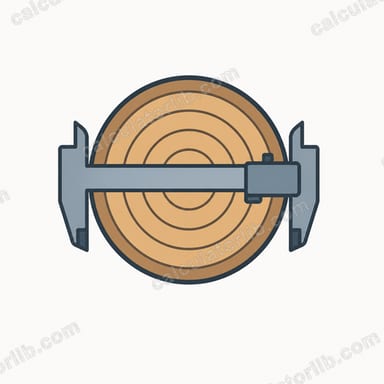
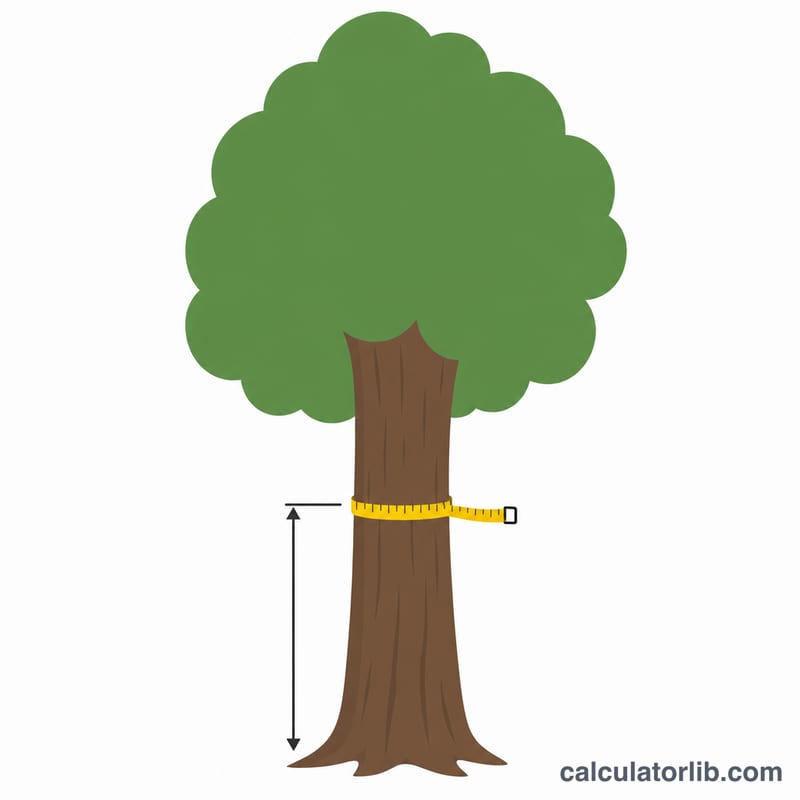
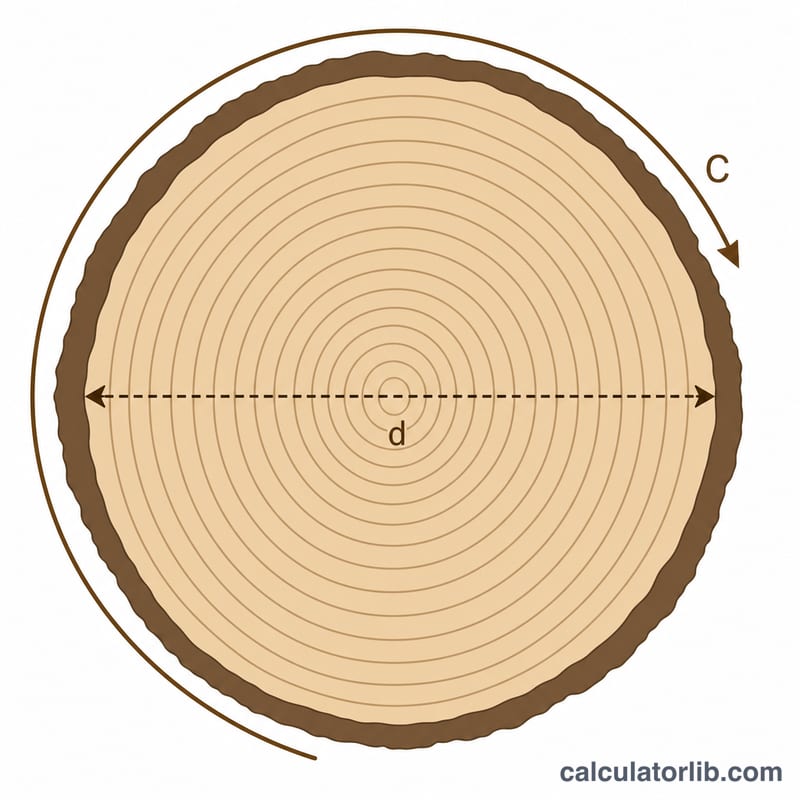
Measure your tree's trunk at about 4.5 feet (1.3 m) above the ground — this is called diameter at breast height (DBH). If you wrap a tape around the trunk you have the circumference; if you measure straight across you have the diameter. Choose which one you measured, enter the value in inches, then enter the growth factor for your tree's species. Press calculate to see the estimated age.
The Formula Explained
Diameter and circumference are related by \(\pi\) (about \(3.14159\)): \(\text{diameter} = \text{circumference} \div \pi\). The age formula is simply diameter (in inches) multiplied by the species growth factor:
$$\text{Age} = \frac{\text{Circumference}}{\pi} \times \text{Growth Factor} = \text{Diameter} \times \text{Growth Factor}$$
The growth factor reflects how many years a species typically takes to add one inch of trunk diameter. Slow growers like dogwood (≈7.0) yield older estimates than fast growers like silver maple (≈3.0).
Worked Example
Suppose you measure a circumference of 31.4 inches on an oak (growth factor 5.0). Diameter = \(31.4 \div 3.14159 \approx 10\) inches. Age = \(10 \times 5.0 = 50\) years. So the oak is roughly half a century old.
FAQ
How accurate is this estimate? It is an approximation. Climate, soil, water, competition and pruning all affect growth, so treat the result as a ballpark figure, not an exact age.
Where do I find my species growth factor? Many arborist guides publish them; common values are Oak 5.0, Red Maple 4.5, Pine 5.0, Dogwood 7.0, Silver Maple 3.0.
Should I measure in inches? Yes — this formula and its growth factors are calibrated for inches and produce age in years.