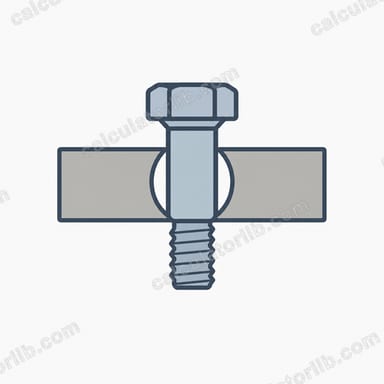

What Is a Clearance Hole?
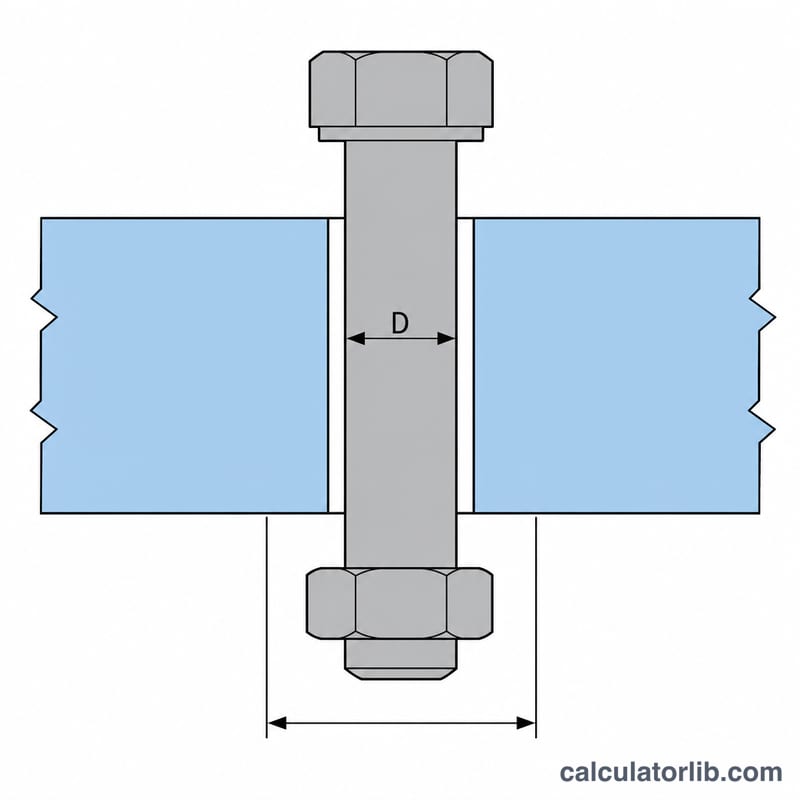
A clearance hole is a hole drilled slightly larger than a bolt or screw so the fastener passes through freely without threading into the material. Getting the diameter right matters: too tight and the bolt binds or cannot be aligned during assembly; too loose and the joint loses positional accuracy. This calculator gives the recommended hole diameter from the nominal bolt size and a chosen fit class.
How to Use It
Enter the nominal bolt diameter in millimetres — for example 8 for an M8 bolt. Pick a fit class: close for precise location, normal for general assembly, or loose where easy alignment is needed. Choose custom to type your own allowance directly. The tool returns the clearance hole diameter, the total allowance, and the radial gap on each side of the bolt.
The Formula Explained
The core relationship is simply:
Clearance diameter = nominal bolt diameter + clearance allowance.
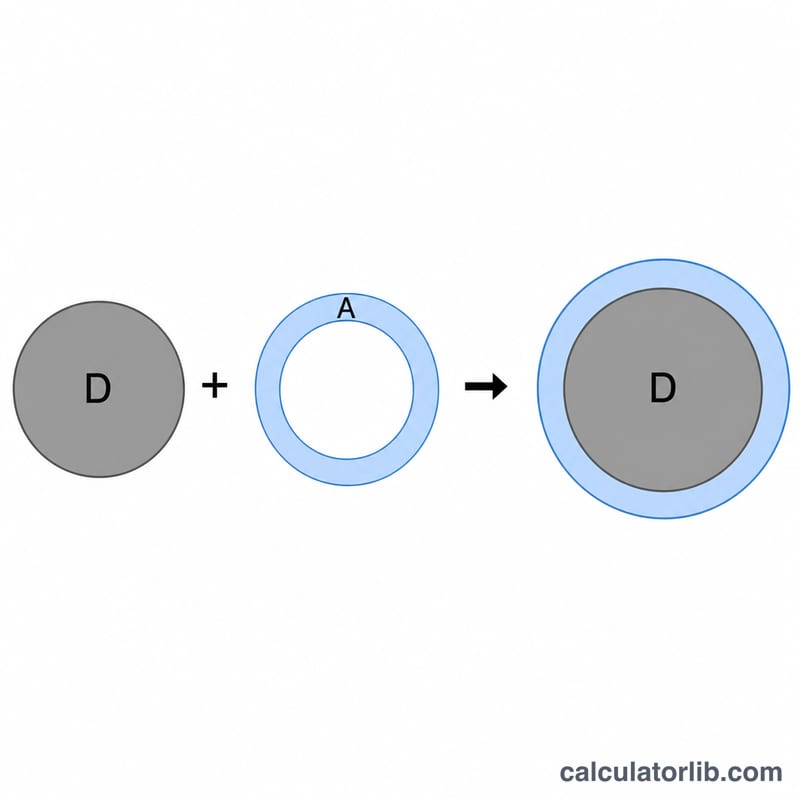
$$D_{c} = \text{Bolt Dia (mm)} + \text{Allowance (mm)}$$For the preset fits, the allowance is scaled to the bolt size: close fit ≈ 7.5% of diameter, normal ≈ 15%, and loose ≈ 25%. The radial gap is half the total allowance, since the extra space is split around the bolt.
Worked Example
For an M10 bolt (10 mm) with a normal fit, allowance = \(10 \times 0.15 = 1.5\) mm. The clearance hole diameter:
$$D_{c} = 10 + 1.5 = 11.5 \text{ mm}$$with a radial gap of 0.75 mm per side.
FAQ
Is this in metric or imperial? The inputs and outputs are in millimetres. You can convert imperial sizes to mm before entering them.
Which fit should I use? Use close for dowel-like precision, normal for everyday bolted joints, and loose where parts must self-align or thermal movement is expected.
Are these exact standard values? These are practical engineering approximations. For critical work consult the relevant standard (e.g. ISO 273 or ASME B18) for tabulated clearance hole sizes.