Dog Caffeine Toxicity Calculator

Dog Caffeine Toxicity Calculator

#10 · Pet Care AI Skill PRO

Enter Calculation

Check the label for the caffeine amount. Typical per 12 fl oz (US FDA): brewed coffee 113–247 mg, caffeinated soft drink 23–83 mg, black tea 71 mg.

Formula

Dose=Caffeine (mg)Weight (kg)(mg/kg)\text{Dose} = \frac{\text{Caffeine (mg)}}{\text{Weight (kg)}} \quad (\text{mg/kg})
Usage stats

Advertisement

Results

Caffeine Dose
9.5
mg per kg of body weight
Below the 20 mg/kg level for mild signs — not a safe dose, call your vet
Dog weight 10 kg
Caffeine ingested 95 mg
Mild toxicity ≥ 20 mg/kg
Severe toxicity ≥ 40 mg/kg
Seizures ≥ 60 mg/kg
Potentially lethal ≥ 100 mg/kg

Severe signs and death can occur at much lower doses; dogs vary in sensitivity (Merck Veterinary Manual).

This tool is for educational estimation only and is not a substitute for veterinary advice. If you suspect caffeine poisoning, contact your vet or an animal poison control center immediately.

Report an error on this page

What This Calculator Does

Caffeine is dangerous for dogs. Coffee, tea, energy drinks, soda, and chocolate all contain it, and dogs are far more sensitive to it than humans. This calculator estimates the caffeine dose per kilogram of your dog's body weight and compares it against published toxicity thresholds so you can gauge how worried to be while you contact a vet.

How to Use It

Enter your dog's weight in kilograms and the total amount of caffeine ingested in milligrams. If you don't know the exact caffeine content, check the product label; the US FDA lists typical amounts per 12 fl oz of 113–247 mg for brewed coffee, 23–83 mg for caffeinated soft drinks, and 71 mg for black tea. The calculator divides the total caffeine by the weight and returns the dose in mg/kg, along with a risk band.

The Formula Explained

The math is simple division: $$\text{Dose} = \frac{\text{Caffeine (mg)}}{\text{Weight (kg)}} \quad (\text{mg/kg})$$ Toxicity is then read off reference ranges commonly cited in veterinary toxicology: mild signs (vomiting, diarrhea, increased thirst) can appear around 20 mg/kg, heart effects at 40–50 mg/kg, seizures from 60 mg/kg, and the oral LD50 is 100–200 mg/kg, although severe signs and death can occur at much lower doses.
Advertisement
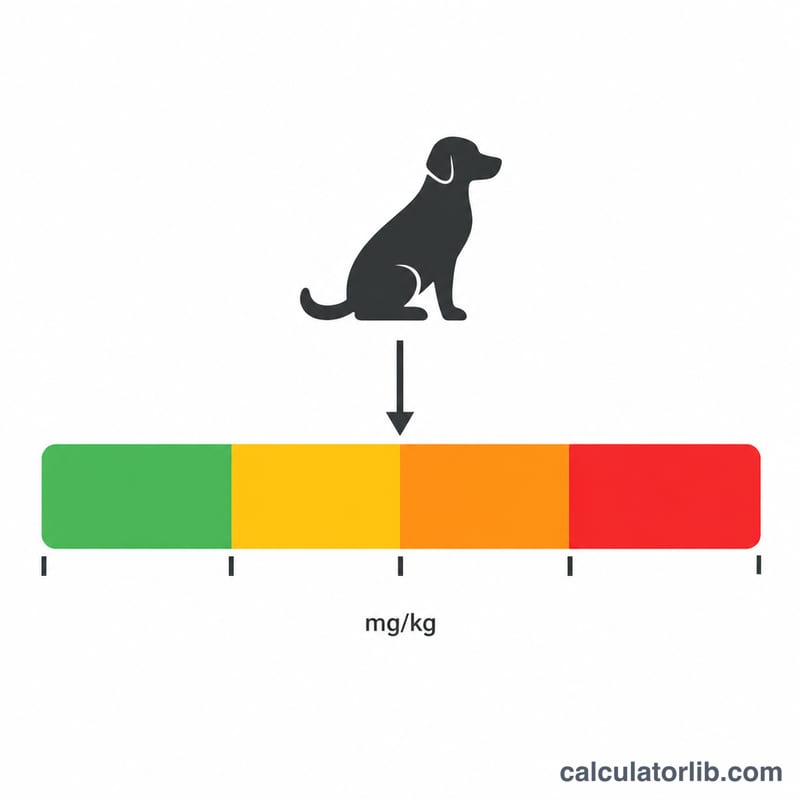
Horizontal risk scale showing increasing caffeine dose in milligrams per kilogram with colored severity zones for a dog
Caffeine dose per kilogram of body weight maps to mild, severe, and lethal toxicity zones.

Worked Example

Suppose a 5 kg terrier swallows 95 mg of caffeine. $$\text{Dose} = 95 \div 5 = 19 \text{ mg/kg}$$ That is just below the 20 mg/kg level at which mild signs are reported, but it is not a safe dose: dogs vary in sensitivity and severe signs can occur at much lower doses, so call your vet right away.
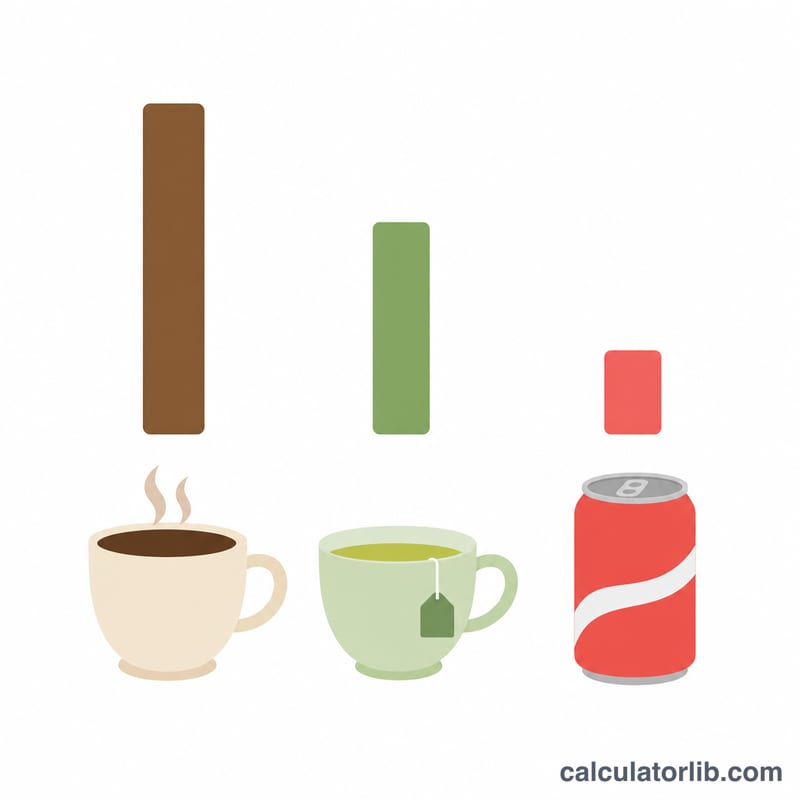
Flat icons of a coffee cup, tea cup, and soda can each with a relative caffeine amount indicator
Different beverages contain different caffeine amounts, changing the dose a dog receives.

FAQ

Is any amount of caffeine safe for dogs? There is no safe recommended dose. Even small amounts can cause symptoms in small dogs, so treat all caffeine ingestion as a potential emergency.

What symptoms should I watch for? Restlessness, rapid breathing, a racing heart, vomiting, muscle tremors, and seizures. Signs can appear within 1–2 hours.

What should I do if my dog ingested caffeine? Don't wait for symptoms. Call your veterinarian or an animal poison control hotline immediately and have your dog's weight and the amount ingested ready.
Sources & References

  • Chocolate Toxicosis in Animals — Merck Veterinary Manual (Merck & Co., Inc.), professional version. Caffeine and theobromine in dogs: LD50 100-200 mg/kg but death at much lower doses; mild 20, cardiotoxic 40-50, seizures 60 mg/kg. · Verified 2026-11-07
  • Spilling the Beans: How Much Caffeine is Too Much? — U.S. Food and Drug Administration, Consumer Update. Caffeine in common drinks per 12 fl oz: brewed coffee 113-247 mg, soft drinks 23-83 mg, black tea 71 mg. · Verified 2026-11-07

Checked against these sources on . Not reviewed by a clinician. For general information only, not veterinary advice. Ask a veterinarian about your animal's health and before giving it any medicine.

Last updated:

Most popular in Pet Care

View all Pet Care calculators