What This Calculator Does
Xylitol is a sugar substitute found in sugar-free gum, mints, candy, baked goods, peanut butter, toothpaste, and some medications. In dogs it triggers a rapid insulin release that can cause life-threatening low blood sugar (hypoglycemia) and, at higher doses, acute liver failure. This calculator estimates the dose your dog may have received in milligrams per kilogram (mg/kg) and flags whether that dose crosses known danger thresholds.
How to Use It
Enter your dog's weight (kilograms or pounds). Then either type the total xylitol ingested in milligrams, or enter how many pieces of gum/candy were eaten along with the xylitol content per piece. The tool converts weight to kilograms, totals the xylitol, and divides to find the dose per kilogram. Sugar-free gum commonly contains 200–1000 mg of xylitol per piece, but amounts vary widely by brand — when unsure, assume the higher end.
The Formula Explained
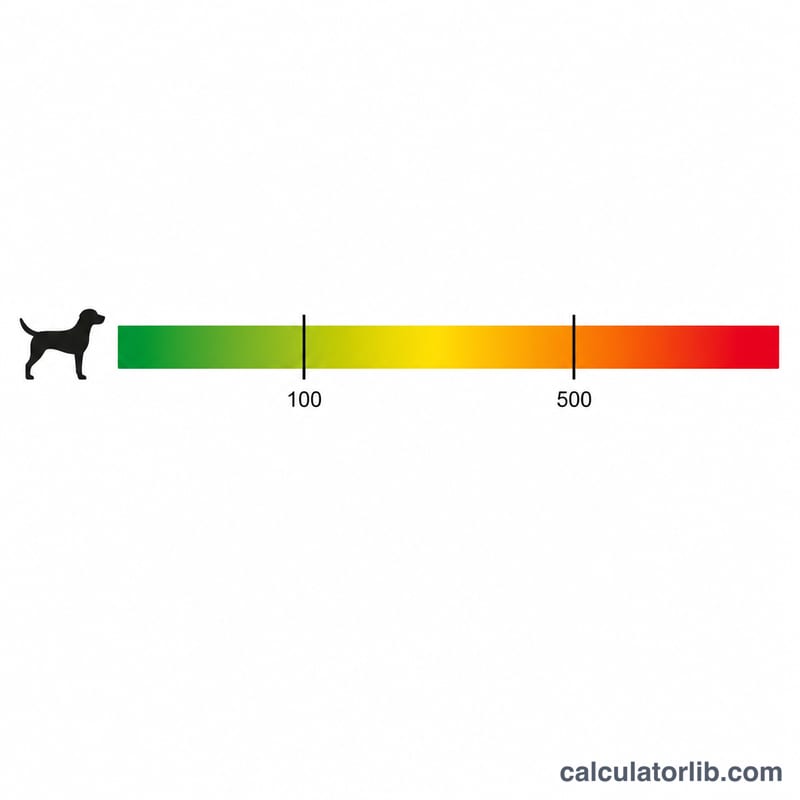
The core math is simple: Dose (mg/kg) = total xylitol (mg) ÷ body weight (kg).
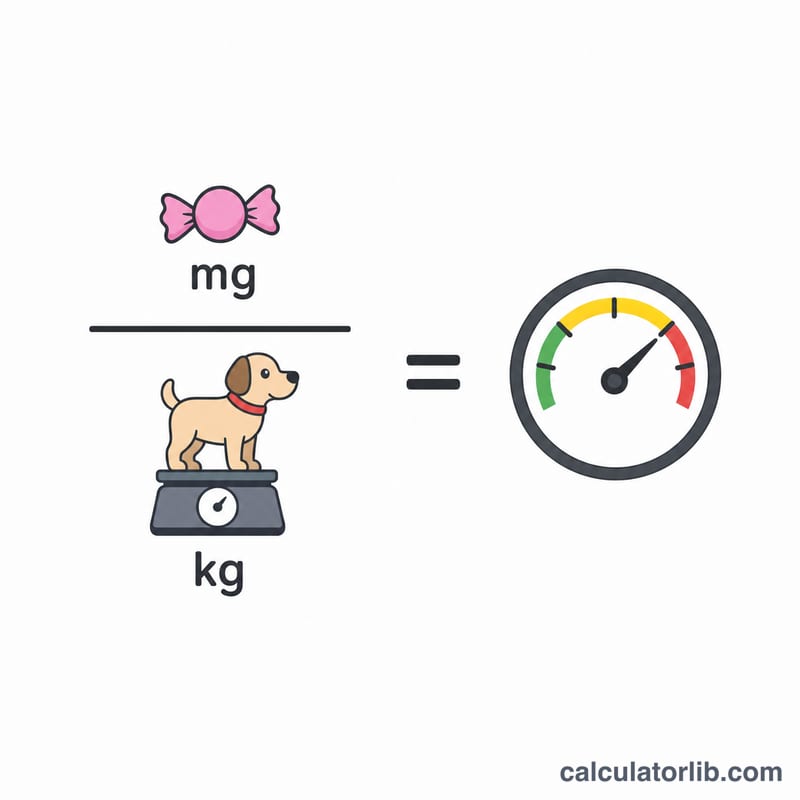
$$\text{Dose} = \frac{\text{Xylitol (mg)}}{\text{Weight (kg)}} \quad \left[ \frac{\text{mg}}{\text{kg}} \right]$$Veterinary toxicology guidelines treat doses above 100 mg/kg as a hypoglycemia risk and doses above 500 mg/kg as a risk of hepatic (liver) failure. These are screening thresholds, not guarantees — individual dogs vary.
Worked Example
A 10 kg dog eats 4 pieces of gum containing 300 mg of xylitol each. Total xylitol = \(4 \times 300 = 1{,}200\) mg. Dose = \(1{,}200 \div 10 = \mathbf{120}\) mg/kg. Because 120 is above 100 mg/kg but below 500 mg/kg, this falls in the hypoglycemia-risk zone — an urgent reason to call a veterinarian.
Typical Xylitol Content in Common Products
The amounts below are approximate ranges for planning purposes only. Xylitol content varies widely by brand, flavor and formulation, and it can change when a recipe changes. Always check the product label or contact the manufacturer. Some labels list only "sugar alcohols" without naming xylitol, so the exact amount may not be shown. When you are unsure, assume the higher end of the range.
| Product | Approximate xylitol | Notes |
|---|---|---|
| Sugar-free gum | about 200-1000 mg per piece | Brand-dependent. Some gums use little or no xylitol. |
| Breath mints | about 300-1000 mg each | Small, easy to eat many at once. |
| Xylitol-sweetened peanut butter | per tablespoon: varies by brand, often listed in grams | Look for "xylitol" in the ingredients. Even a small amount of a sweetened spread can matter for a small dog. |
| Toothpaste | per gram: none in many products, up to roughly 100 mg/g (about 10% by weight) in xylitol-focused products | Check the label. Tubes hold many grams. |
| Sugar-free baked goods | varies by recipe, can be grams per serving | Homemade or specialty items often have no label. |
| Liquid or chewable supplements (including gummies) | varies; can range from hundreds of mg to grams per serving | Check the "other ingredients" list, and note that serving sizes are often several chews. |
Use the calculator's gum pieces and mg-per-piece fields for gum or mints, or enter the total xylitol in mg directly if you know it from the label.
Interpreting Your Result
The calculator divides the estimated xylitol (mg) by the dog's weight (kg) to give a dose in mg/kg. That dose is compared with two commonly cited thresholds from veterinary toxicology literature: about 100 mg/kg for hypoglycemia and about 500 mg/kg for acute liver injury.
| Dose | Risk band | Typical signs | Usual onset |
|---|---|---|---|
| Under 100 mg/kg | Below the commonly cited hypoglycemia threshold | Often none, but vomiting or lethargy are possible | Usually within an hour if signs occur |
| 100-500 mg/kg | Hypoglycemia (low blood sugar) risk | Vomiting, weakness, wobbliness, collapse, tremors, seizures | Within 30 minutes, or delayed up to 12-18 hours when the xylitol is in a product that slows absorption, such as some gums. |
| Above 500 mg/kg | Risk of acute liver injury or failure, in addition to hypoglycemia | Vomiting, lethargy, loss of appetite, elevated liver enzymes, bleeding problems or jaundice in severe cases | Liver enzymes often rise within 4-12 hours; signs of liver injury may not appear until 24-48 hours or later |
Important limits: These thresholds are screening estimates, not hard cutoffs. Individual dogs vary in sensitivity, and some cases of illness have been reported at lower doses. Gum can slow absorption, so a dog that looks fine early on may not be out of danger. Product xylitol content is often uncertain, which adds error to any estimate. A result under 100 mg/kg does not mean the exposure is safe, so veterinary or poison-control contact is still advised.
This tool is not a diagnosis and does not replace guidance from your veterinarian, an emergency clinic, or a poison-control service (for example, the ASPCA Animal Poison Control Center or Pet Poison Helpline in North America). If your dog has eaten a product that may contain xylitol, contact one of them right away rather than waiting for signs.
Dose Comparison by Dog Size and Amount Eaten
Assumption: 300 mg of xylitol per piece of gum. Real gum varies, so check your product. Dose = (pieces × 300 mg) ÷ weight in kg. Thresholds: 100 mg/kg (hypoglycemia) and 500 mg/kg (liver injury).
| Dog weight | 1 piece (300 mg) | 5 pieces (1,500 mg) | 10 pieces (3,000 mg) |
|---|---|---|---|
| 3 kg | 100 mg/kg: at the hypoglycemia threshold | 500 mg/kg: at the liver-risk threshold, so treat as high risk | 1,000 mg/kg: above 500, high risk of liver injury |
| 10 kg | 30 mg/kg: below 100 | 150 mg/kg: hypoglycemia risk (100-500) | 300 mg/kg: hypoglycemia risk (100-500) |
| 25 kg | 12 mg/kg: below 100 | 60 mg/kg: below 100 | 120 mg/kg: hypoglycemia risk (100-500) |
| 40 kg | 7.5 mg/kg: below 100 | 37.5 mg/kg: below 100 | 75 mg/kg: below 100 |
Example: a 10 kg dog eating 5 pieces receives 5 × 300 = 1,500 mg, so 1,500 ÷ 10 = 150 mg/kg. That falls in the 100-500 mg/kg hypoglycemia band.
"Below 100" does not mean risk-free. Doses vary with the real xylitol content, which can be up to about 1000 mg per piece in some products, and individual dogs differ. Contact a veterinarian or poison-control service for any suspected xylitol ingestion. This is general information, not professional veterinary advice.
FAQ
Is any amount of xylitol safe for dogs? No amount is considered safe. Even sub-threshold exposure warrants monitoring and a call to your vet.
How fast do symptoms appear? Hypoglycemia can develop within 30 minutes, or be delayed up to 12–18 hours with gum. Liver enzymes often rise within 4–12 hours, but signs of liver damage may not appear until 24–48 hours or later. Do not wait for symptoms.
What should I do right now? Contact your veterinarian or a pet poison helpline immediately. This calculator is an educational estimate and does not replace professional emergency care.