
What the Dog Age Calculator Does
This tool converts your dog's chronological age into a human-age equivalent, adjusting for body size. Because small, medium, and large breeds age at different rates — especially as they get older — a single "multiply by 7" rule is misleading. Instead, this calculator uses a size-aware model that mirrors how veterinarians describe canine ageing.
The Inputs You Provide
- Dog's Age (in actual years): how many calendar years old your dog is.
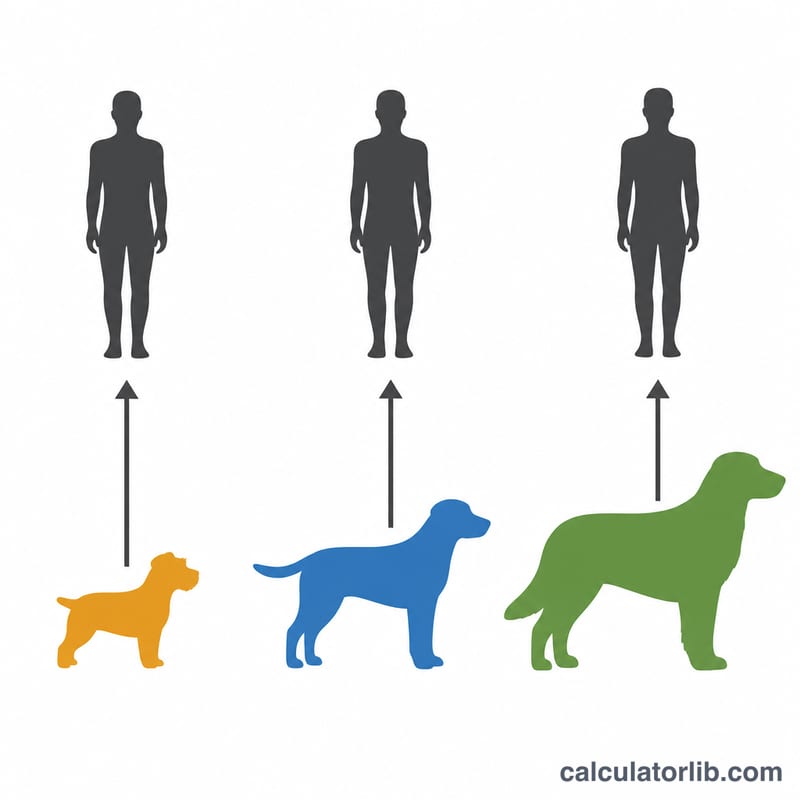
- Dog's Size: choose one of three categories — Small (up to 20 lbs), Medium (21–50 lbs), or Large (51+ lbs).
The Formula Explained
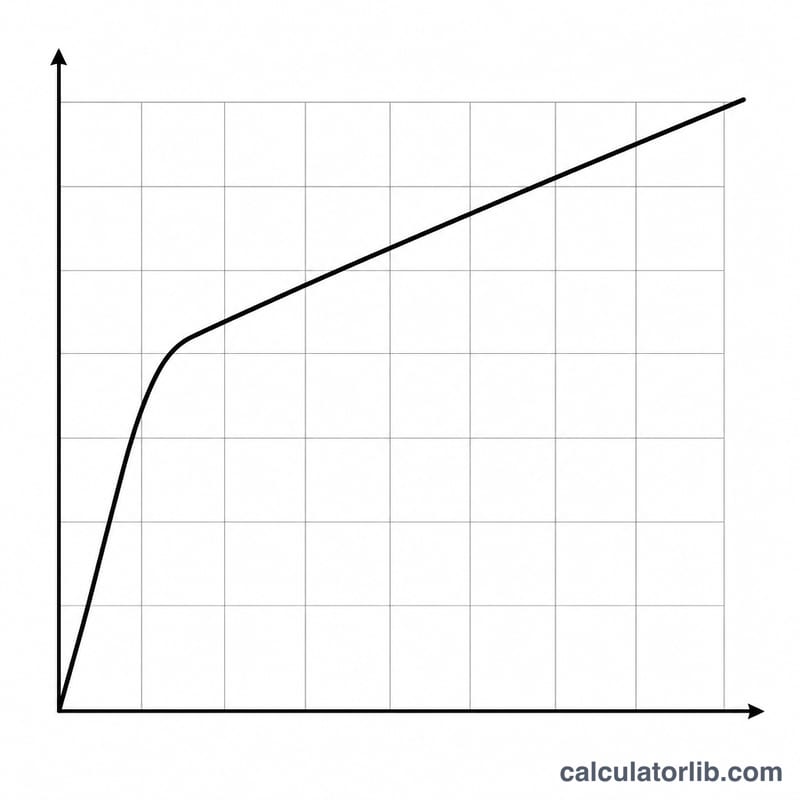
The calculator front-loads the rapid development of a dog's first two years, then adds a fixed number of human years per dog year based on size:
- Year 1 always equals 15 human years.
- Year 2 always equals 24 human years.
- Each year after 2 adds: 4 years (small), 5 years (medium), or 6 years (large).
So the formula for ages above 2 is:
$$\text{Dog Years} = 24 + \left(\text{Age} - 2\right) \times \text{size factor}$$Larger dogs gain more human years annually, reflecting their shorter lifespans.
Worked Example
Suppose you have a 5-year-old medium dog (a 35 lb breed). The calculation is:
- Start with 24 (for the first two years).
- Add \((5 - 2) \times 5 = 15\).
- Total = \(24 + 15 = 39\) human years.
The same 5-year-old as a Large breed would equal \(24 + (3 \times 6) = 42\) human years, while a Small breed would be \(24 + (3 \times 4) = 36\) human years.
Frequently Asked Questions
Why isn't it just 7 years per dog year? Dogs mature very quickly early on, then slow down. The flat "×7" rule overstates puppy ageing and ignores breed size, so this calculator uses a more realistic staged model.
Why do bigger dogs age faster here? Large breeds generally have shorter lifespans, so each year after age 2 adds 6 human years for large dogs versus 4 for small dogs.
What if I enter age 1 or 2? Those return fixed values of 15 and 24 human years respectively, regardless of size, because early development is similar across breeds.