
What this calculator does
The Dog Raisin Toxicity Calculator estimates how the amount of grapes or raisins your dog ate compares with a conservative published toxic-dose threshold for its body weight. Grapes, raisins, currants and sultanas can cause acute kidney injury in dogs, and the dangerous dose varies enormously between individuals. This tool gives a rough risk figure — it is an education aid, not a diagnosis.
How to use it
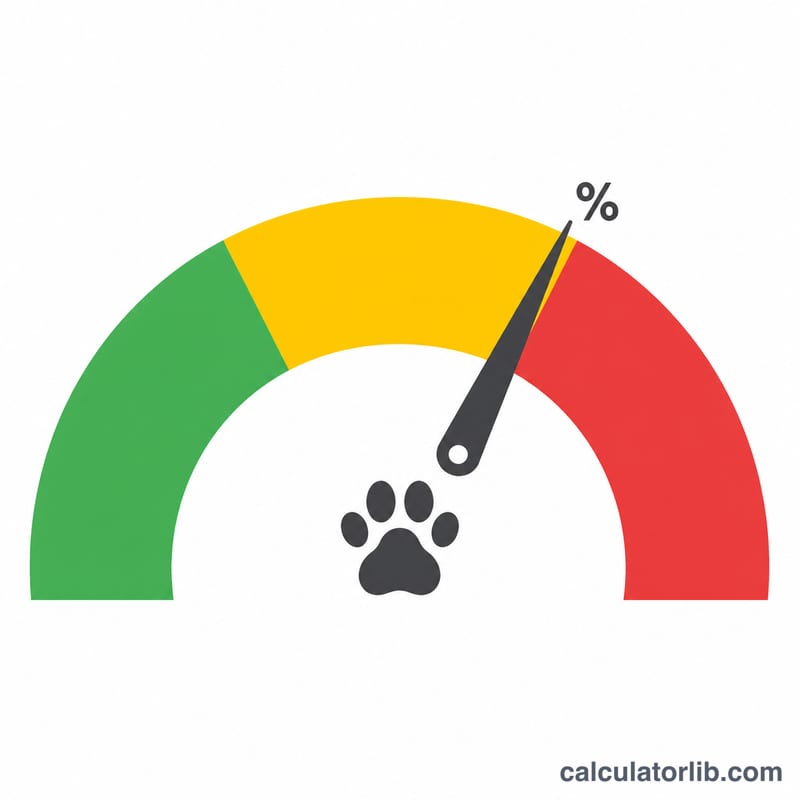
Enter your dog's weight in kilograms, the amount of grapes or raisins eaten in grams, and select whether the food was fresh grapes or dried raisins. The calculator divides the intake by the toxic amount for your dog and shows the result as a percentage of the conservative threshold, plus the raw toxic amount and risk ratio.
The formula explained
Reported lowest toxic doses are around 32 g/kg for grapes and roughly 11–30 g/kg for raisins (we use 11.2 g/kg, the conservative low end, because raisins are more concentrated). The toxic amount equals the threshold multiplied by body weight. Risk percent = intake ÷ toxic amount × 100. A value at or above 100% means the dose reaches the level where toxicity has been documented.
$$\text{Risk \%} = \frac{\text{Amount Eaten (g)}}{11.2 \times \text{Weight (kg)}} \times 100$$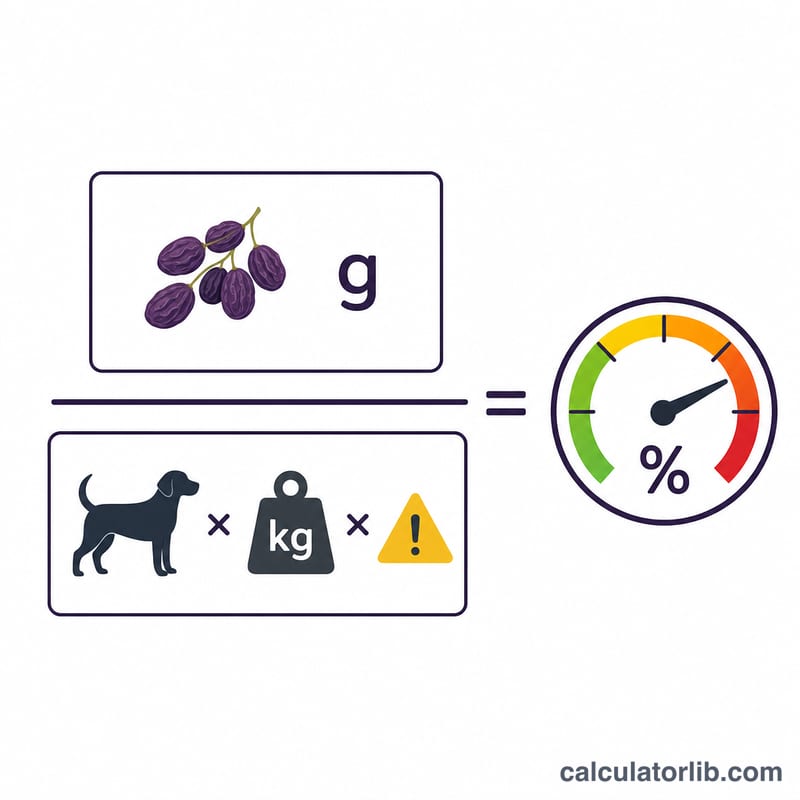
Worked example
A 10 kg dog eats 30 g of raisins. Toxic amount = \(11.2 \times 10 = 112\) g. Risk = \(30 \div 112 = 0.268\), or about 26.8% of the conservative threshold. Although this is "under" the threshold, vets still treat any raisin ingestion as a potential emergency.
FAQ
If the risk is below 100%, is my dog safe? No. Toxicity is idiosyncratic — some dogs are harmed by a single raisin. Always call your vet.
Why are raisins more dangerous than grapes per gram? Drying removes water, so raisins pack more of the toxic principle into each gram.
What should I do right now? Contact your veterinarian or a pet poison control line immediately; early decontamination greatly improves outcomes.