
What Is a Dog Respiratory Rate Calculator?
This tool converts the number of breaths you count over a short timed period into a full-minute respiratory rate (RR), measured in breaths per minute (bpm). Monitoring your dog's resting or sleeping breathing rate is a simple, valuable way to track heart and lung health at home. A normal resting rate for most dogs is roughly 10–30 breaths per minute.
How to Use It
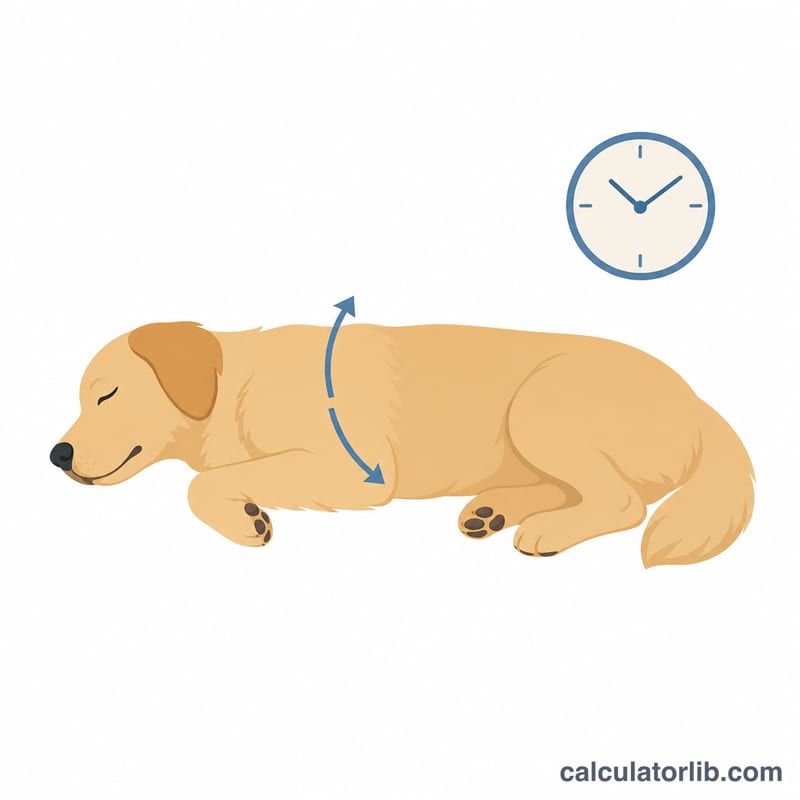
Watch your sleeping or calmly resting dog and count one breath as a full rise and fall of the chest. Count for a set period — 15, 30, or 60 seconds work well — then enter the number of breaths and the number of seconds you counted. The calculator scales the count to a per-minute figure and tells you whether it falls within, below, or above the typical resting range.
The Formula Explained
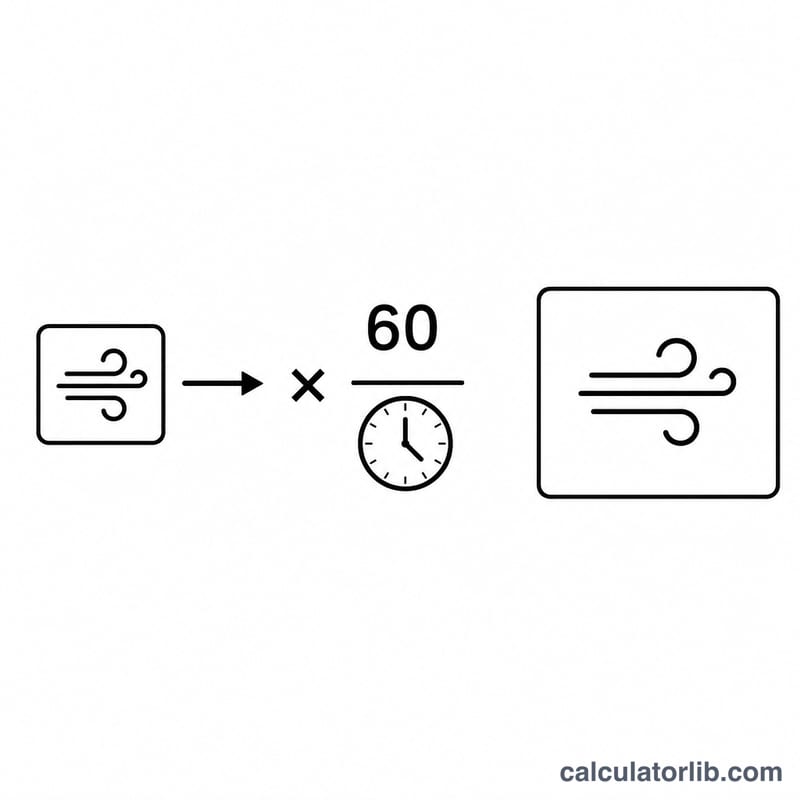
The math is a simple proportion: $$\text{RR} = \text{breaths} \times \frac{60}{\text{seconds}}$$. If you count over a full 60 seconds, the multiplier is 1. Over 30 seconds it doubles the count; over 15 seconds it multiplies by four. Counting while your dog is asleep gives the most reliable baseline because activity, excitement, heat, and stress all raise the rate.
Worked Example
Suppose you count 8 breaths over 30 seconds. $$\text{RR} = 8 \times \frac{60}{30} = 8 \times 2 = 16 \text{ breaths per minute}$$ which is comfortably within the normal 10–30 bpm resting range.
FAQ
What is a normal sleeping breathing rate for a dog? Most healthy dogs breathe 10–30 times per minute while resting or sleeping. Consistently above 30–35 at rest may warrant a vet visit.
When should I be concerned? Persistently high resting rates, labored breathing, or sudden increases can indicate heart or respiratory issues. Track trends over days and consult your veterinarian.
Should I count when my dog is active? No. Active, panting, hot, or stressed dogs breathe much faster. Always measure at rest or asleep for a meaningful baseline.