
What Is Hydraulic Retention Time?
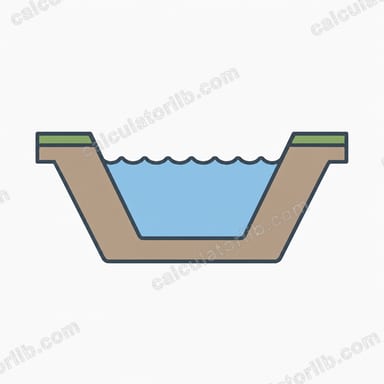
Hydraulic Retention Time (HRT), sometimes called hydraulic residence time, is the average length of time that a soluble compound or volume of water remains inside a reactor or treatment tank. It is one of the most important design parameters in wastewater treatment, anaerobic digestion, and chemical reactor engineering, because it controls how long microorganisms or reactions have to act on the incoming flow.
How to Use This Calculator
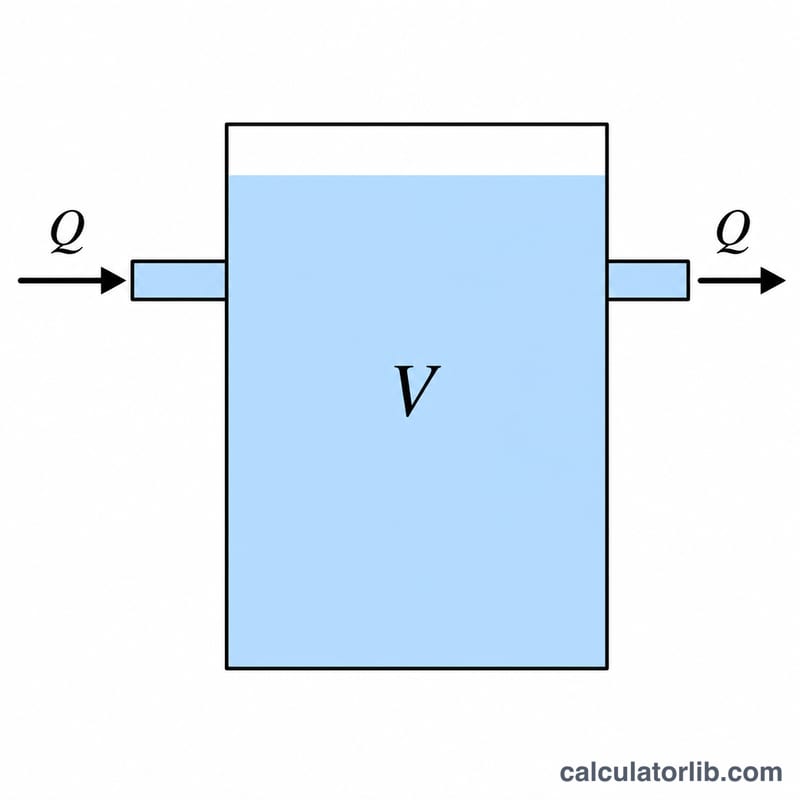
Enter the working reactor volume (in cubic metres) and the volumetric flow rate entering the system (in cubic metres per day). The calculator divides volume by flow to return the HRT in days, and also converts it to hours for convenience. Make sure both inputs use consistent volume units.
The Formula Explained
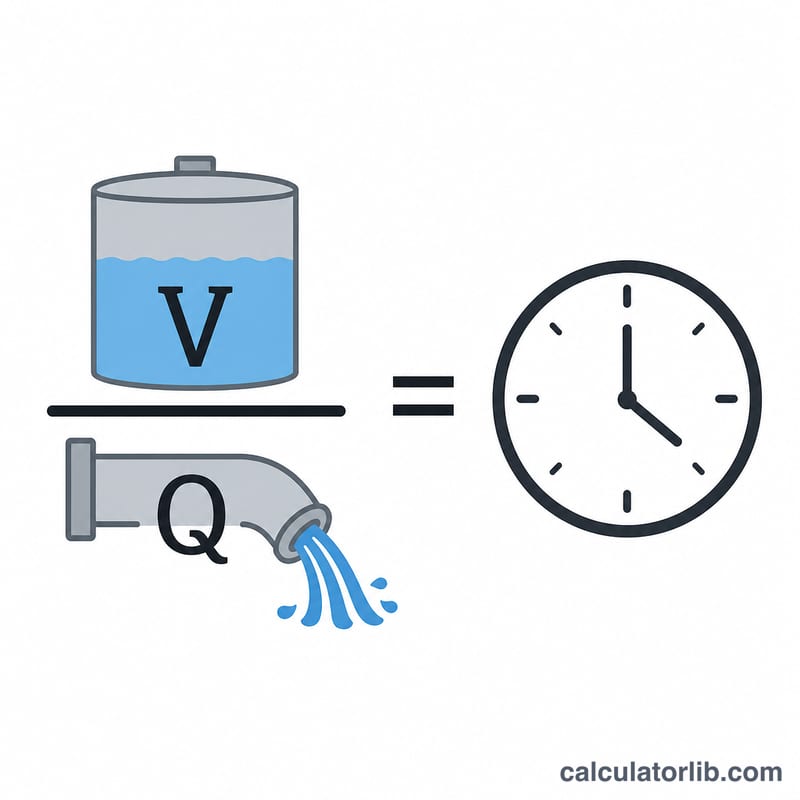
The relationship is simply:
$$\text{HRT} = \frac{\text{Volume (m}^3\text{)}}{\text{Flow (m}^3\text{/day)}}$$
where V is the effective liquid volume of the reactor and Q is the volumetric flow rate. If volume is in m³ and flow is in m³/day, HRT comes out in days. Multiply by 24 to express it in hours.
Worked Example
Suppose a treatment tank holds 1,000 m³ and receives 200 m³/day of influent. Then $$\text{HRT} = \frac{1{,}000}{200} = 5 \text{ days},$$ which equals \(5 \times 24 = 120\) hours. This means an average parcel of water sits in the tank for 5 days before leaving.
FAQ
Is HRT the same as solids retention time (SRT)? No. HRT tracks the liquid; SRT tracks the biomass/solids, which can be retained much longer through sludge recycling.
What units should I use? Any consistent volume unit works, but the flow rate's time unit sets the HRT unit. With m³ and m³/day you get days.
Does a longer HRT always mean better treatment? Generally longer HRT improves removal efficiency, but it also requires larger, more expensive tanks, so design balances performance against cost.