
What Is a Cubic Yard Calculator?
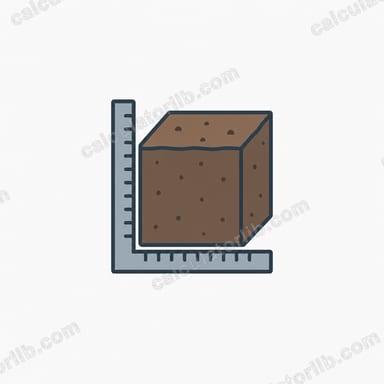
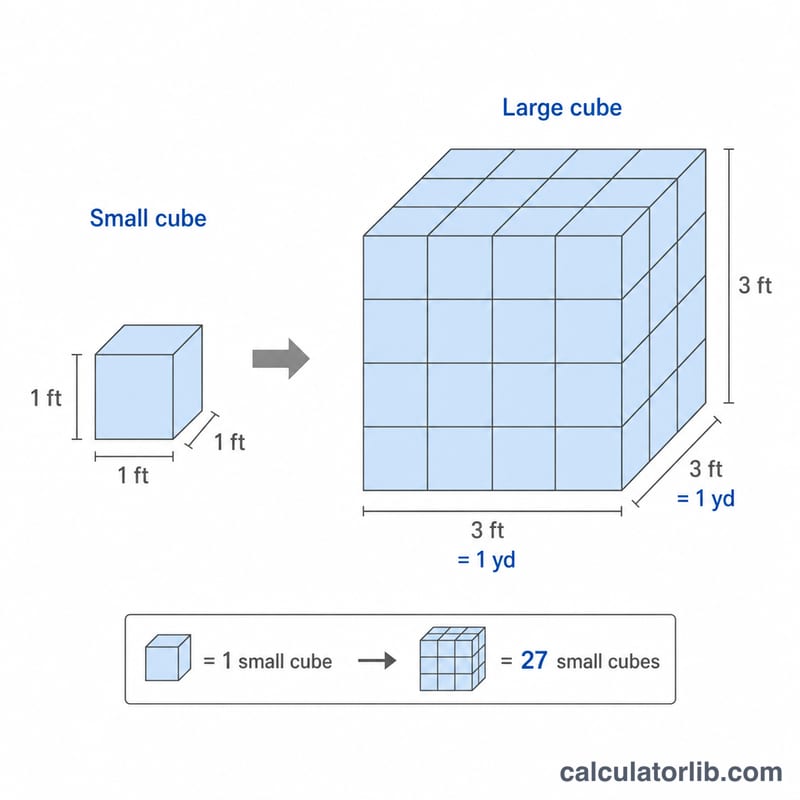
A cubic yard calculator converts a space measured in feet into cubic yards — the standard unit used to order bulk materials like concrete, topsoil, mulch, gravel, sand, and crushed stone. Since one cubic yard equals 27 cubic feet, the tool multiplies your length, width, and depth and divides by 27 to give the volume suppliers actually price by.
How to Use It
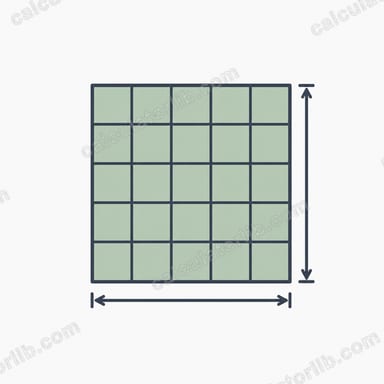
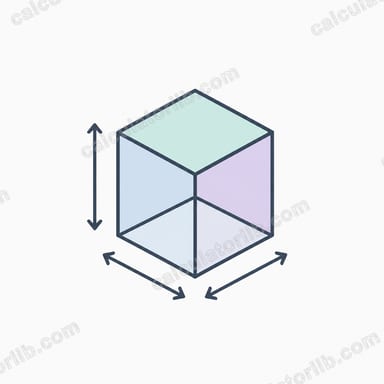
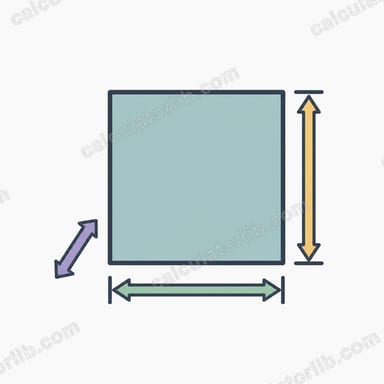
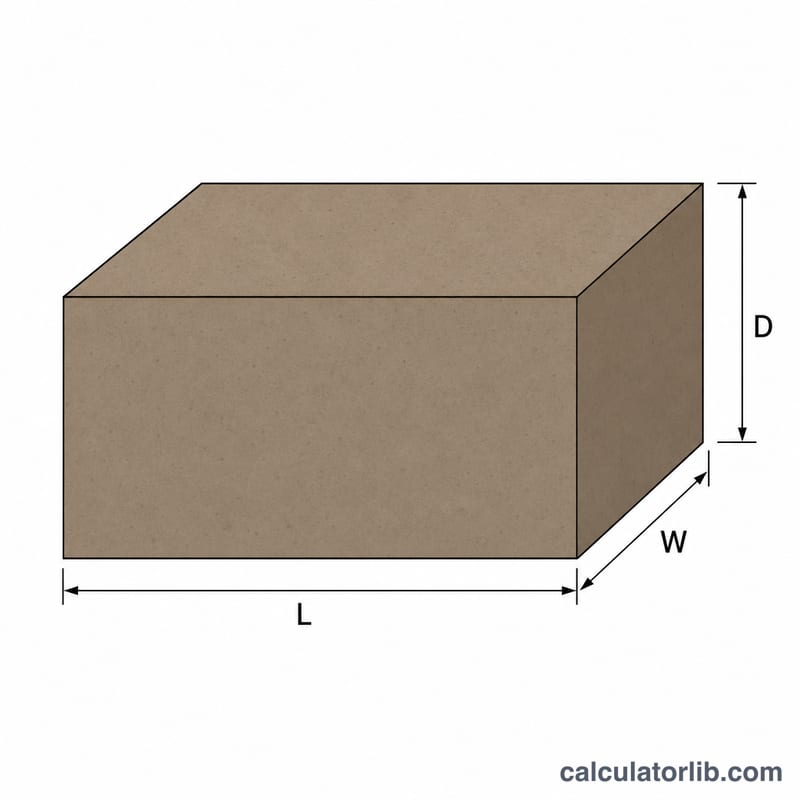
Measure the length, width, and depth of your area in feet, then enter each value. For thicknesses given in inches, divide by 12 first — for example, a 4-inch slab is 0.333 ft deep (\(4 \div 12\)). The calculator instantly returns the volume in cubic yards and shows the equivalent cubic feet.
The Formula Explained
The core equation is:
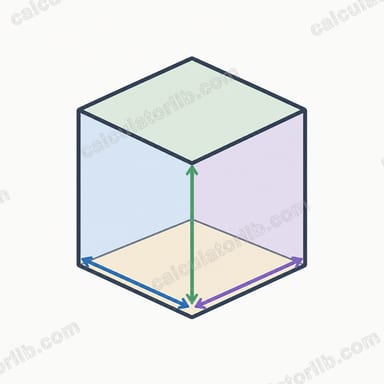
$$\text{Cubic Yards} = \frac{\text{Length} \times \text{Width} \times \text{Depth}}{27}$$All three dimensions must be in feet. The product gives cubic feet, and dividing by 27 converts to cubic yards because a cube measuring 3 ft on every side (one yard) contains \(3 \times 3 \times 3 = 27\) cubic feet.
Worked Example
Suppose you are pouring a patio slab 12 ft long, 10 ft wide, and 4 inches (0.333 ft) deep. Volume in cubic feet =
$$12 \times 10 \times 0.333 = 39.96 \text{ ft}^3$$Cubic yards =
$$39.96 \div 27 \approx 1.48 \text{ cubic yards}$$Most suppliers round up, so you would order about 1.5 cubic yards of concrete.
FAQ
How many cubic feet are in a cubic yard? Exactly 27 cubic feet equal one cubic yard.
My depth is in inches — what do I do? Convert inches to feet by dividing by 12 before entering the depth.
Should I order extra material? Yes — add roughly 5–10% to allow for spillage, compaction, and uneven ground.