
What It Does
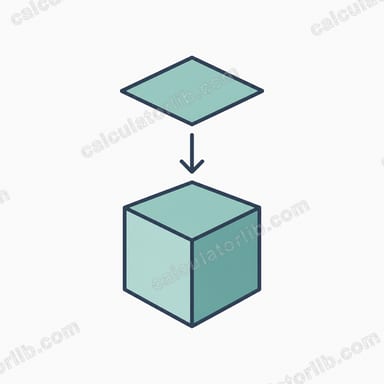
Square feet measure a flat area, but materials like concrete, gravel, topsoil, and mulch are sold by volume — usually in cubic yards. This calculator bridges the two by combining your area (in square feet) with the depth you intend to pour or spread, then converting the result into cubic yards so you can order the right amount.
How to Use It
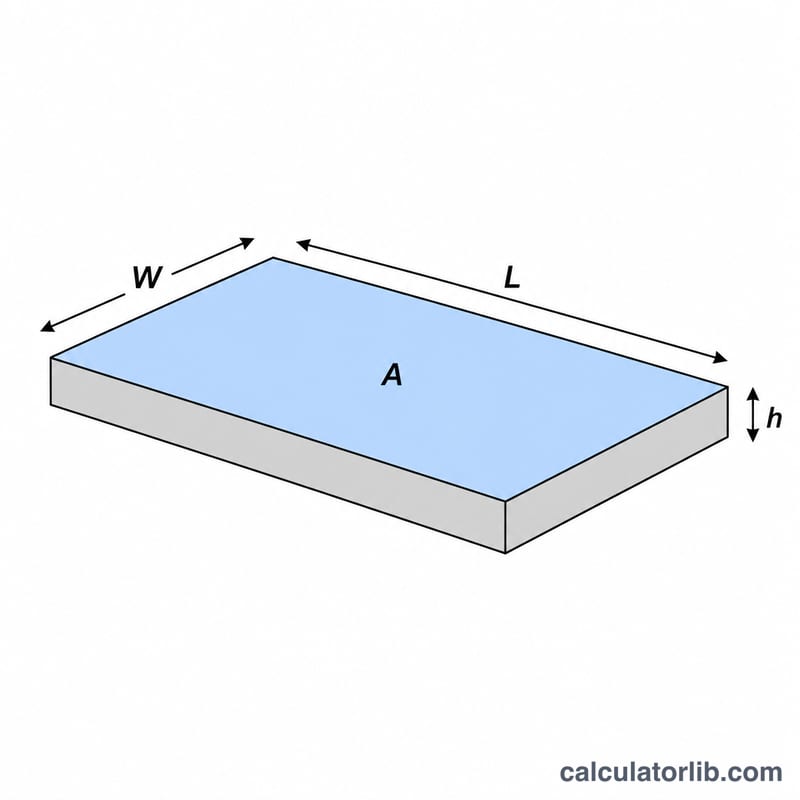
Enter the surface area of your project in square feet. Then enter how deep the material will be and choose whether that depth is in inches or feet. The calculator instantly returns the volume in cubic yards, along with the intermediate values (depth in feet and volume in cubic feet) so you can check the math.
The Formula Explained
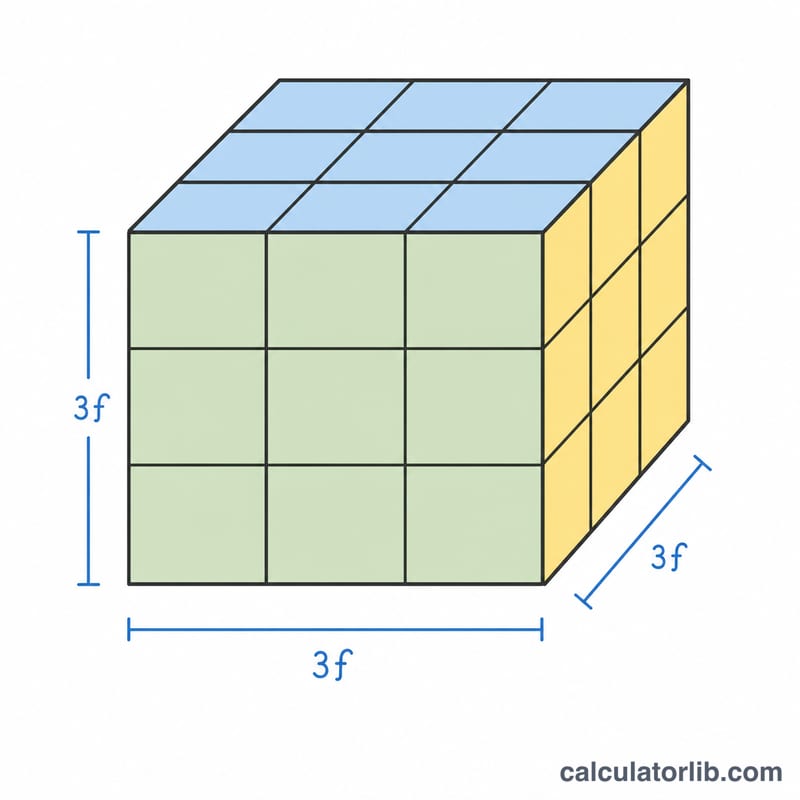
Volume in cubic feet equals area times depth, but both must use the same unit. Since depth is often given in inches, we divide it by 12 to get feet. One cubic yard equals 27 cubic feet (3 ft × 3 ft × 3 ft), so we divide the cubic-foot volume by 27:
$$\text{Cubic Yards} = \frac{\text{Area (ft}^2\text{)} \times \text{Depth (ft)}}{27}$$
Worked Example
Suppose you are pouring a concrete slab covering 1,000 square feet at a depth of 4 inches. First convert depth: \(4 \div 12 = 0.3333\) ft. Volume \(= 1{,}000 \times 0.3333 = 333.33\) ft³. Cubic yards \(= 333.33 \div 27 \approx\) 12.35 cubic yards. Most suppliers recommend ordering about 5–10% extra to allow for waste and uneven subgrade.
FAQ
Why divide by 27? A cubic yard is a cube 3 feet on each side, which equals \(3 \times 3 \times 3 = 27\) cubic feet.
Can I use this for concrete? Yes — it gives the raw volume. Add extra for spillage and over-excavation, typically 5–10%.
What if my depth is already in feet? Just select "Feet" as the depth unit and the calculator skips the inch conversion.