
What is CBM?
CBM stands for Cubic Meter, the standard unit of volume used in freight and logistics to measure how much space a shipment occupies. Whether you ship by sea, air or road, carriers price and plan loads based on volume as well as weight, so knowing the CBM of your cartons is essential for getting accurate quotes and choosing the right container or pallet configuration.
How to use this calculator
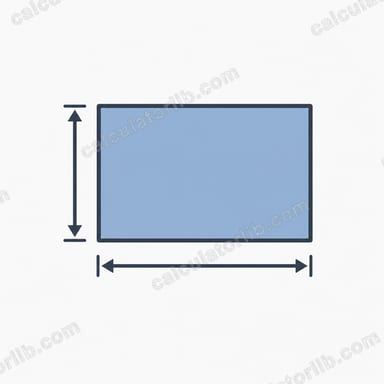
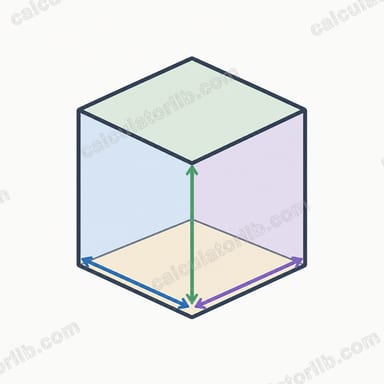
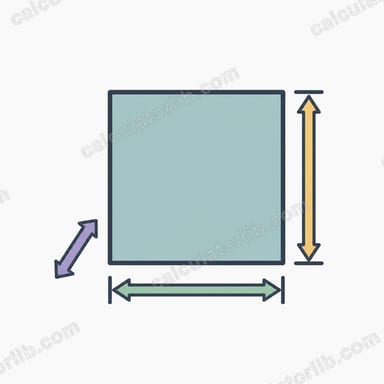
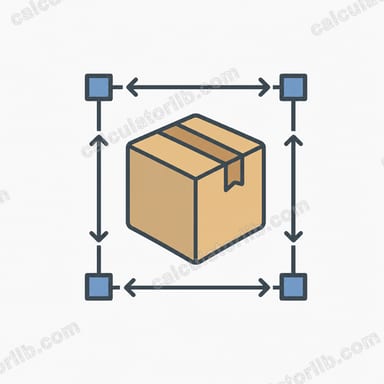
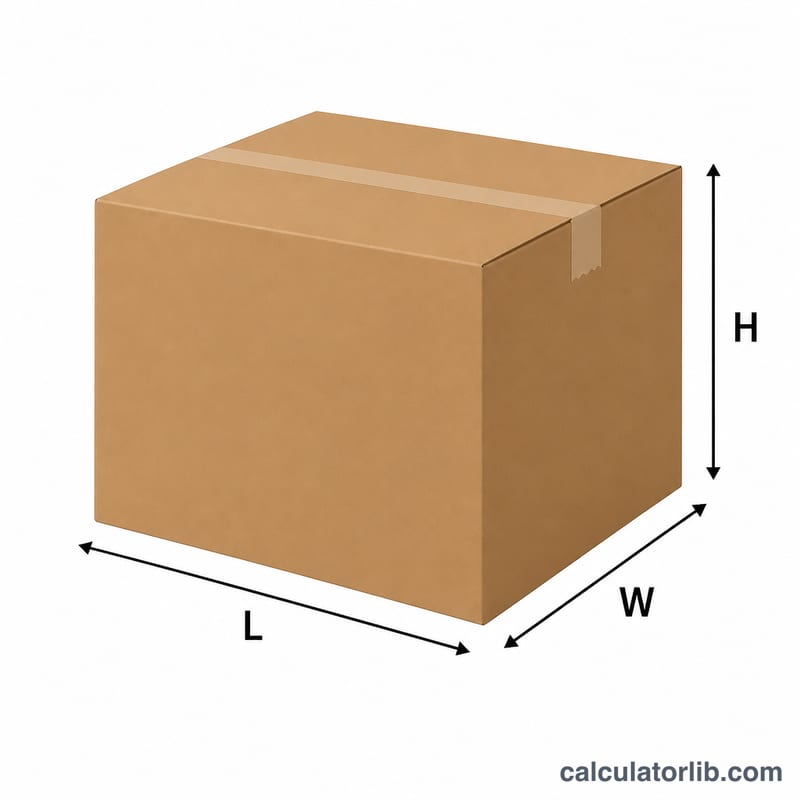
Enter the length, width and height of a single carton in metres, then enter the quantity (the number of identical cartons). The calculator multiplies the three dimensions to get the volume of one carton, multiplies that by the quantity for the total CBM, and also converts the result to cubic feet for convenience.
If your measurements are in centimetres, divide each by 100 first (e.g. 80 cm = 0.8 m). For different-sized cartons, calculate each carton type separately and add the totals.
The formula explained
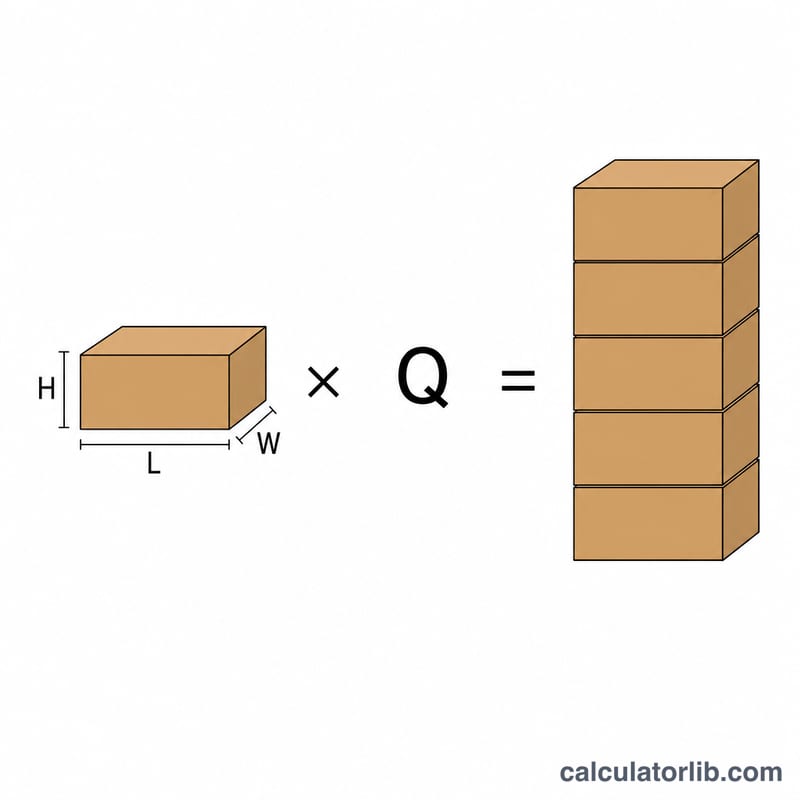
The core formula is simple: $$\text{CBM} = \text{Length} \times \text{Width} \times \text{Height} \times \text{Quantity}$$. Each dimension must be in metres so that the product comes out in cubic metres. Volume in cubic feet is then $$\text{CBM} \times 35.3147$$, since one cubic metre equals about \(35.3147\) cubic feet.
Worked example
Suppose a carton measures 1.2 m long, 0.8 m wide and 0.6 m tall, and you are shipping 10 of them. The volume of one carton is $$1.2 \times 0.8 \times 0.6 = 0.576 \text{ m}^3.$$ For 10 cartons the total is $$0.576 \times 10 = 5.76 \text{ CBM},$$ which is roughly \(203.42\) cubic feet.
FAQ
Why does CBM matter for shipping cost? Carriers charge by whichever is greater: actual weight or volumetric (dimensional) weight derived from CBM. Bulky, lightweight goods are often charged by volume.
How do I convert centimetres to metres? Divide each centimetre measurement by 100 before entering it (150 cm = 1.5 m).
What is the difference between CBM and chargeable weight? CBM measures space; chargeable weight is what the carrier bills you. For sea LCL, 1 CBM is often treated as 1000 kg, so the higher value applies.