
What Is Takt Time?
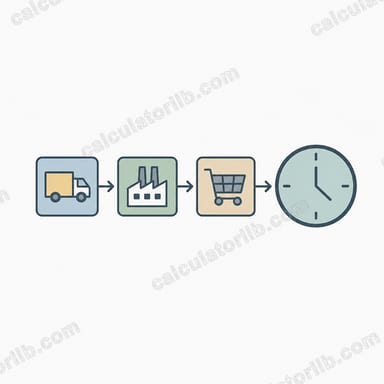
Takt time is the heartbeat of lean manufacturing. It is the maximum amount of time you can spend producing each unit while still meeting customer demand. The word comes from the German Takt, meaning beat or rhythm. By syncing your production pace to demand, you avoid both overproduction and shortages, the foundation of just-in-time and one-piece flow systems.
How to Use This Calculator
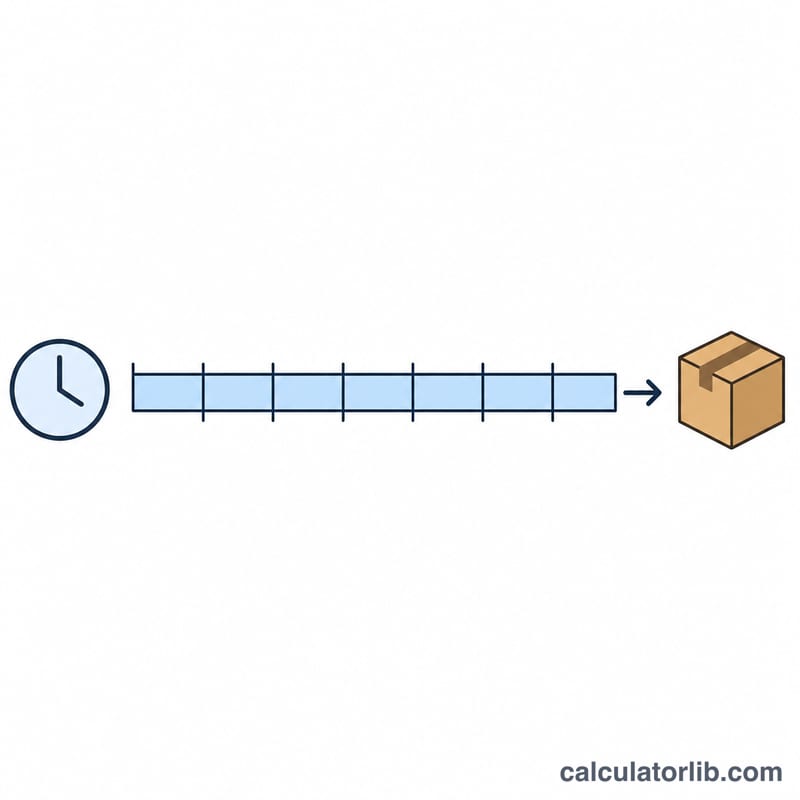
Enter the available production time for a period (for example, one shift), choose its unit, and enter the number of units customers require in that same period. The calculator divides time by demand to give you the takt time per unit, plus the production rate you must hit each hour.
The Formula Explained
The core equation is simple: Takt Time = Available Production Time ÷ Customer Demand. "Available time" should exclude breaks, maintenance, and planned downtime so it reflects real working capacity. Both values must cover the same period for the result to be meaningful.
$$\text{Takt Time (s)} = \frac{\text{Available Time (s)}}{\text{Customer Demand}}$$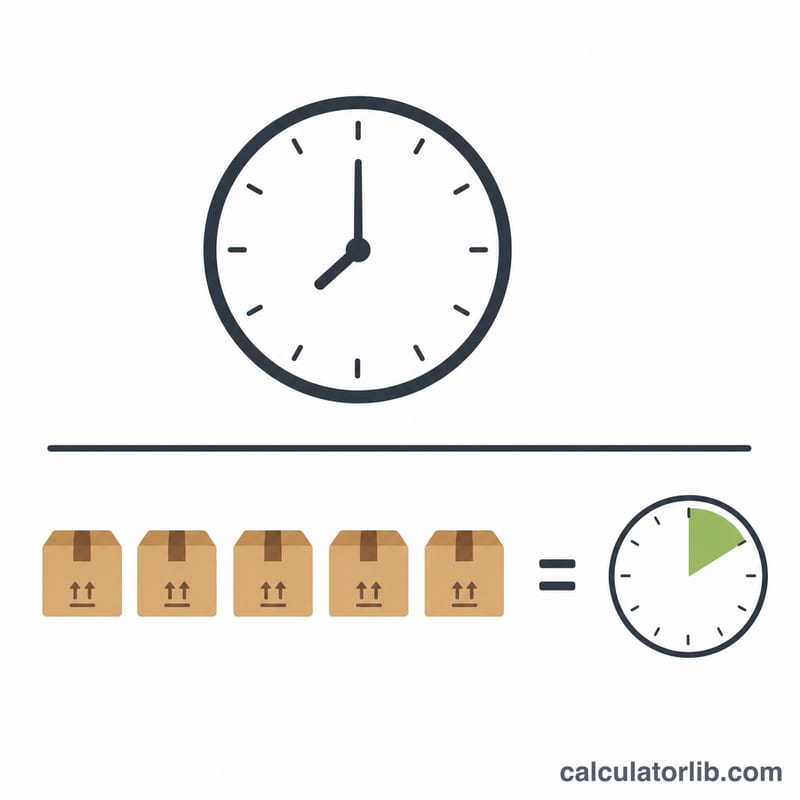
Worked Example
Suppose a line runs one 8-hour shift, which is 480 minutes, and customers demand 240 units that day. Converting 480 minutes to 28,800 seconds and dividing by 240 gives a takt time of 120 seconds per unit. That means a finished unit must leave the line every two minutes — equivalent to 30 units per hour.
$$\text{Takt Time} = \frac{28{,}800\ \text{s}}{240} = 120\ \text{s per unit}$$FAQ
Is a lower takt time better? Not necessarily — a lower takt time means you must produce faster because demand is high relative to available time. It simply reflects the required pace.
What is the difference between takt time and cycle time? Takt time is how fast you need to produce; cycle time is how fast you actually produce one unit. To meet demand, cycle time must be at or below takt time.
Should I subtract breaks from available time? Yes. Use only true productive working time so the takt time accurately represents how much time you have per unit.