
What Is a Reorder Point?
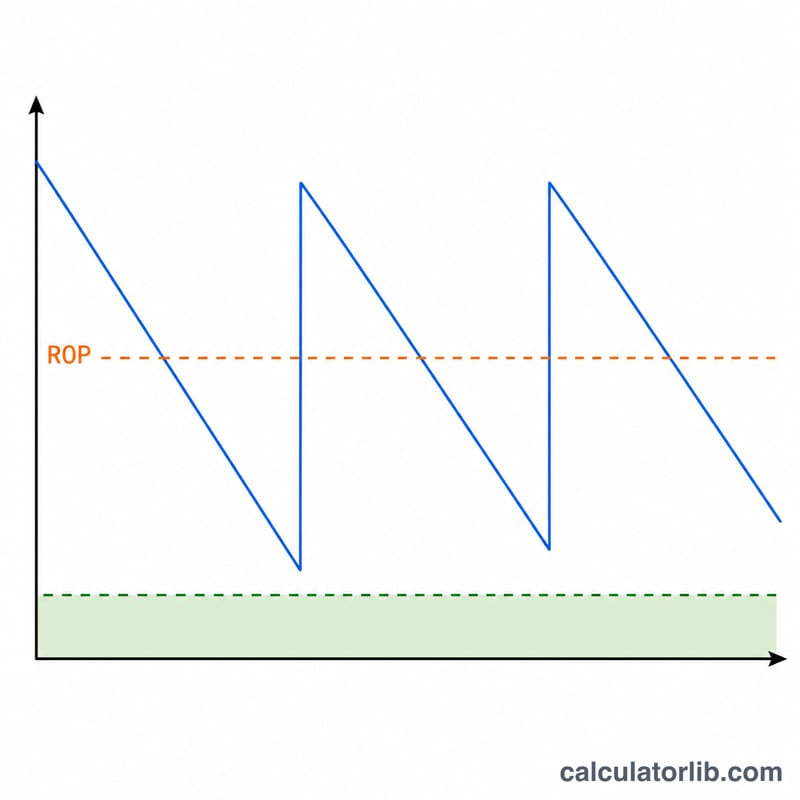
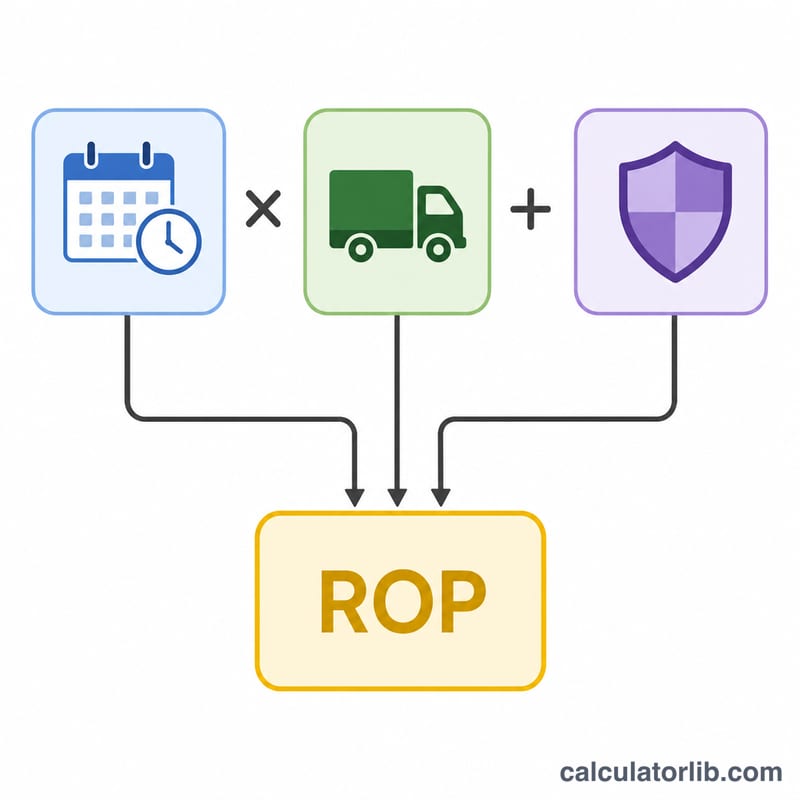
The reorder point (ROP) is the inventory level at which you should place a new purchase order so that fresh stock arrives just before you run out. Ordering at the right moment prevents costly stockouts while avoiding excess inventory that ties up cash. The reorder point combines the demand you expect during the supplier's lead time with a safety buffer that protects against unexpected spikes or delays.
How to Use This Calculator
Enter three values: your average daily usage (how many units you sell or consume per day), the lead time in days (how long it takes from placing an order to receiving it), and your safety stock (the cushion you keep on hand). The calculator instantly returns the reorder point in units, along with the lead time demand and safety stock components.
The Formula Explained
The reorder point is calculated as:
$$\text{ROP} = (\text{Average Daily Usage} \times \text{Lead Time}) + \text{Safety Stock}$$
The first term, usage \(\times\) lead time, is the "lead time demand" — the amount of stock you expect to use while waiting for the new shipment. Adding safety stock gives you a margin so that variability in demand or delivery delays does not leave you empty-handed.
Worked Example
Suppose a shop sells 50 units of a product per day, the supplier takes 7 days to deliver, and the owner keeps 100 units of safety stock. The lead time demand is \(50 \times 7 = 350\) units. Adding the 100-unit safety stock gives a reorder point of 450 units. When inventory drops to 450 units, it is time to place a new order.
FAQ
Do I need safety stock? If your demand and lead times are perfectly stable you could set it to zero, but most businesses keep some safety stock to absorb uncertainty.
What units should I use? Use the same unit consistently (e.g., individual items or cases) for usage and safety stock; lead time is always in days.
How is average daily usage found? Divide total units used over a period by the number of days in that period, ideally using recent representative data.