
What Are Linear Luggage Dimensions?
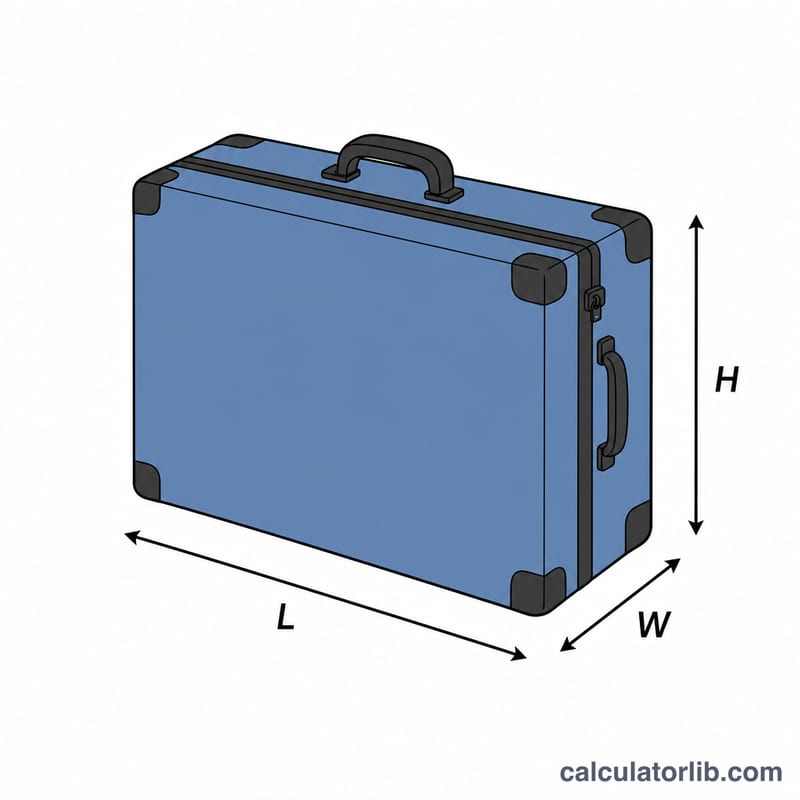
Airlines often state baggage size limits as a single "linear" number rather than three separate measurements. The linear dimension is simply the sum of a bag's length, width and height. For example, a common checked-baggage allowance is 62 linear inches (158 cm), while many carry-on limits hover around 45 linear inches. This calculator adds your three measurements and compares the total against the limit you enter, telling you immediately whether your bag fits.
How to Use It
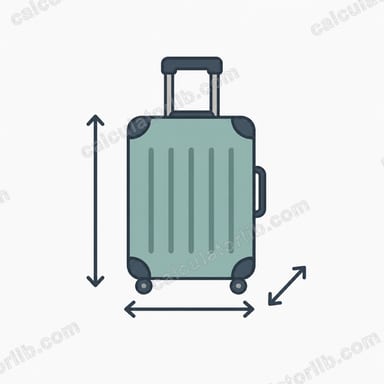
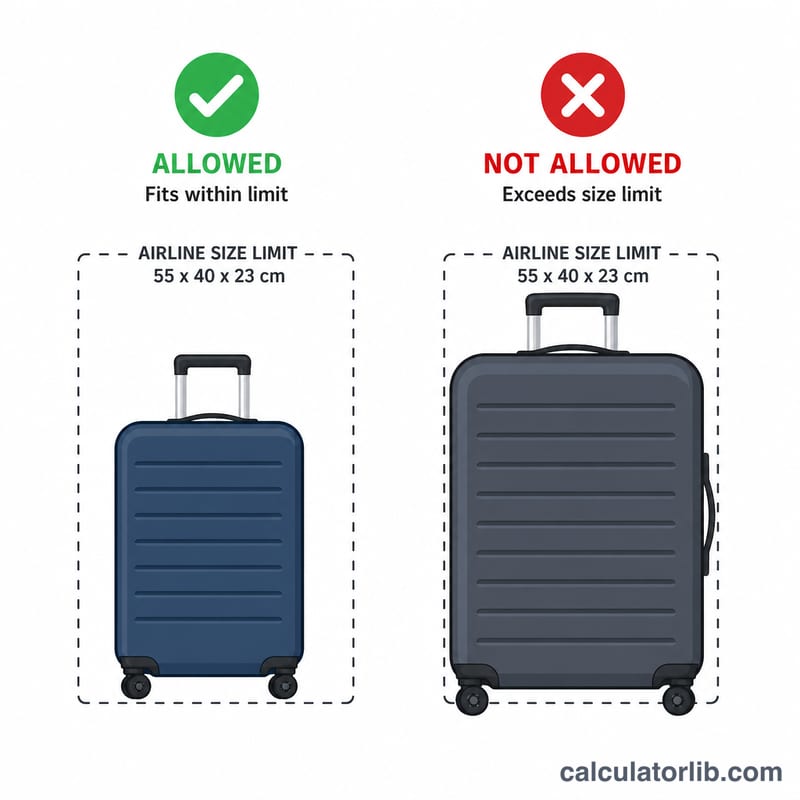
Measure your packed bag at its widest points, including wheels, handles and any bulging pockets, because airlines measure the outside of the case. Enter the length, width and height in the same unit (all inches or all centimetres), then type the airline's linear limit in that same unit. The calculator returns the linear total, the remaining allowance, and a clear pass or fail result.
The Formula Explained
The math is intentionally simple:
$$\text{Linear} = L + W + H$$Your bag is compliant when this sum is less than or equal to the published limit. The "remaining allowance" row shows how much room you have left — a negative value means you are over by that amount.
Worked Example
Suppose a suitcase measures 28 \(\times\) 18 \(\times\) 12 inches and the airline allows 62 linear inches.
$$\text{Linear} = 28 + 18 + 12 = 58 \text{ inches}$$Since \(58 \le 62\), the bag is compliant with 4 inches to spare.
FAQ
Do wheels and handles count? Yes. Airlines measure the maximum external dimensions, so include protruding wheels, handles and feet.
Can I mix inches and centimetres? No. All four values must use the same unit for the result to be meaningful.
What if I'm exactly at the limit? A bag equal to the limit is treated as compliant here, but gate agents may round up soft-sided bags, so leave a margin when possible.