
What Are Pot Odds?
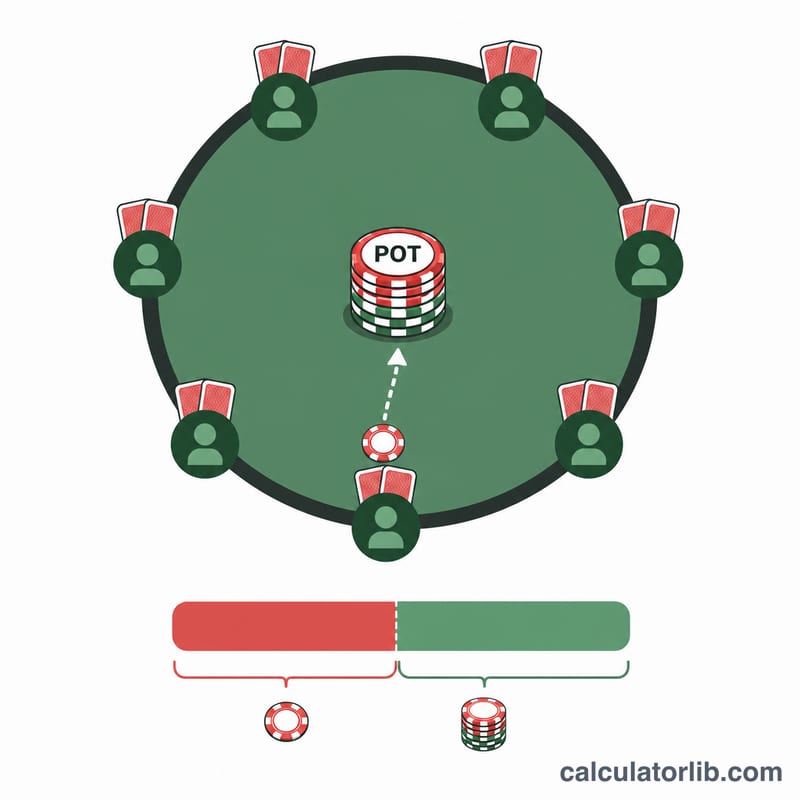
Pot odds are the ratio between the size of the pot and the cost of a call. They tell you the minimum chance of winning the hand (your equity) needed for a call to be profitable in the long run. This calculator is universal — it works for Texas Hold'em, Omaha, or any poker variant since it relies only on the money in play.
How to Use It
Enter the current pot size (all chips already in the middle, including any bet your opponent just made) and the amount to call (what you must put in to stay in the hand). The calculator returns your pot odds as a percentage, which is exactly the minimum equity you need, plus the classic ratio expression.
The Formula Explained
The math is simple. If you call, the total pot becomes pot + call, and your contribution is call. The fraction of that final pot you are risking is:
$$\text{Pot Odds \%} = \frac{\text{call}}{\text{pot} + \text{call}} \times 100$$
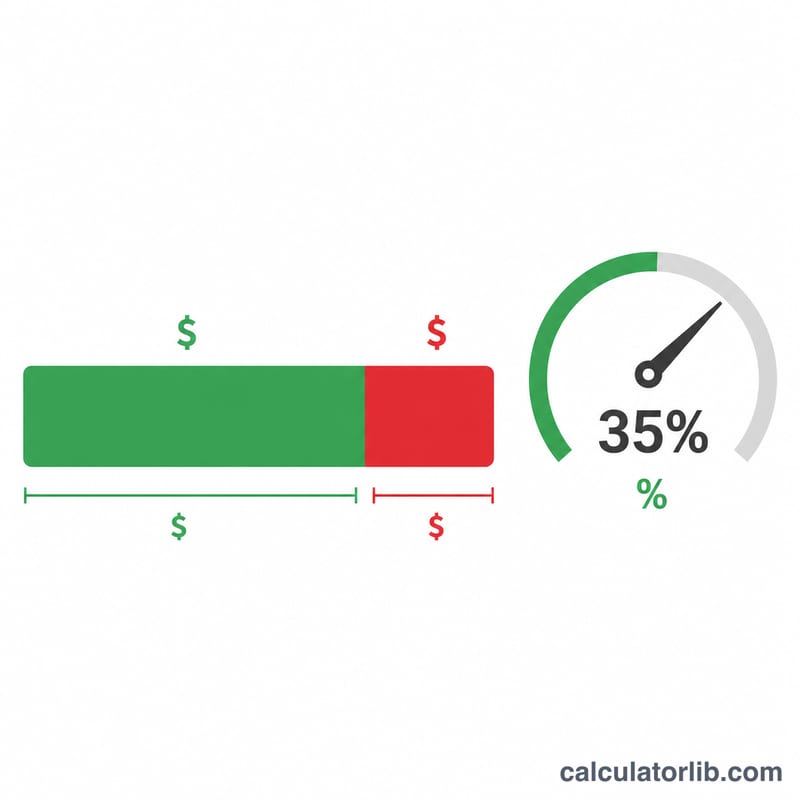
If your estimated chance of winning is higher than this number, calling is +EV (profitable). If it's lower, you should usually fold.
Worked Example
Suppose the pot is $100 and your opponent bets, making the pot $150, and it costs you $50 to call. Enter pot = 150 and call = 50. Pot odds = $$\frac{50}{150 + 50} \times 100 = \frac{50}{200} \times 100 = 25\%$$ You need at least 25% equity to call profitably — for a flush draw with ~36% equity, that's an easy call.
FAQ
Do I include my own call in the pot field? No. Enter the pot before you call; the calculator adds your call automatically.
What equity do I need? Exactly the pot-odds percentage shown. Compare it to your hand's chance of winning (e.g., via the rule of 2 and 4 for drawing hands).
Does this account for implied odds? No. It shows pure pot odds. Implied odds (future bets you can win) can justify calling with slightly less equity.