
What Is a Price Per Unit Calculator?
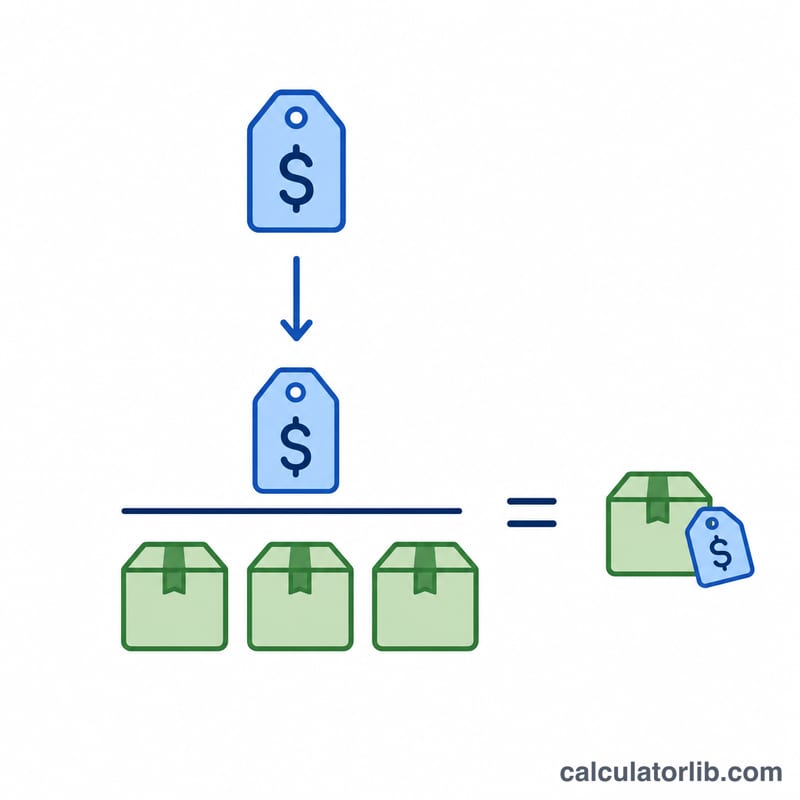
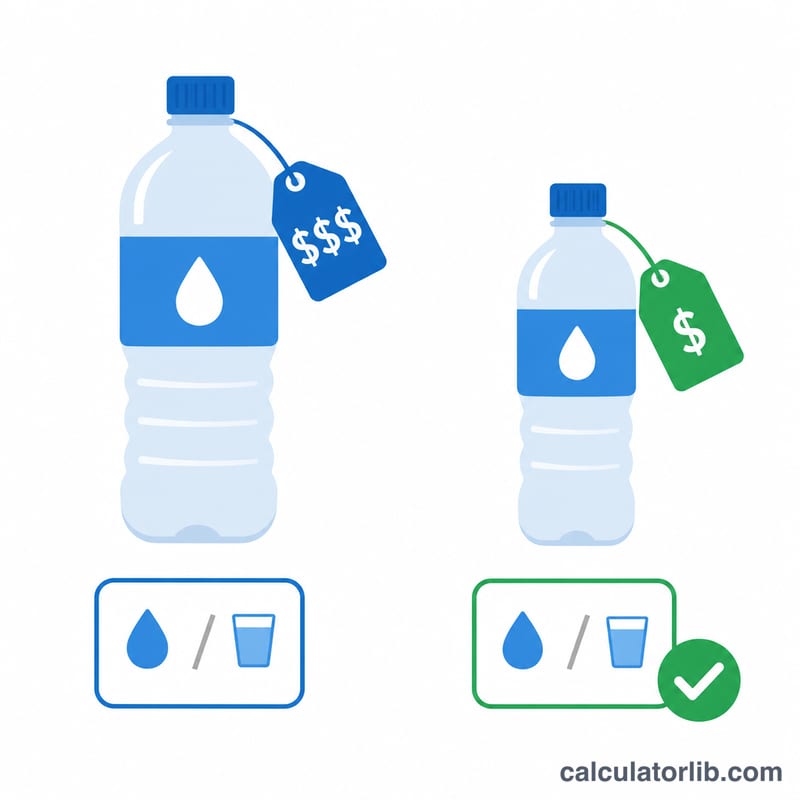
A price per unit calculator tells you how much a single unit of a product costs. By dividing the total price by the number of units, you get a standardized figure that makes it easy to compare products sold in different package sizes. This is the same "unit price" you see on supermarket shelf labels, and it's one of the most reliable ways to spot the best value.
How to Use It
Enter the total price you pay and the number of units in the package — units can be items, ounces, grams, liters, or any countable quantity. The calculator instantly returns the price per single unit. Compare that number across products: the lower the price per unit, the better the deal for the same quality.
The Formula Explained
The math is simple division:
$$\text{Price Per Unit} = \frac{\text{Total Price (\$)}}{\text{Number of Units}}$$
For example, a 12-pack of soda is one transaction, but each can has its own true cost. Dividing spreads the total across every unit so two differently sized packages can be compared fairly.
Worked Example
Suppose a box of 24 granola bars costs $18.00. The price per unit is $$\$18.00 \div 24 = \$0.75 \text{ per bar}$$ A competing box of 16 bars at $13.60 works out to $$\$13.60 \div 16 = \$0.85 \text{ per bar}$$ Even though the second box is cheaper overall, the first box is the better value per bar.
FAQ
What counts as a "unit"? Anything you want to compare by — pieces, weight, volume, or servings. Just keep the unit consistent between the products you compare.
Can I use it for weight or volume? Yes. Enter the total price and the total weight or volume (e.g. ounces or liters) to get a price per ounce or per liter.
Why does unit price matter? Larger packages aren't always cheaper per unit. Comparing unit prices removes the guesswork and helps you save money over time.