
What Is Cost Per Unit?
Cost per unit, also called unit price, tells you how much you pay for a single item, ounce, gram, or any other unit of a product. It's the simplest and most powerful tool for comparison shopping: a larger package isn't always the better deal, and a "sale" price doesn't always beat the regular size. By reducing every option to a single per-unit figure, you can compare apples to apples in seconds.
How to Use This Calculator
Enter the total price you pay for the package or batch, then enter the quantity — the number of units it contains (e.g. number of cans, kilograms, liters, or sheets). Click calculate and you'll instantly see the cost per unit. Repeat for a competing product and compare the two unit prices: the lower number is the better value.
The Formula Explained
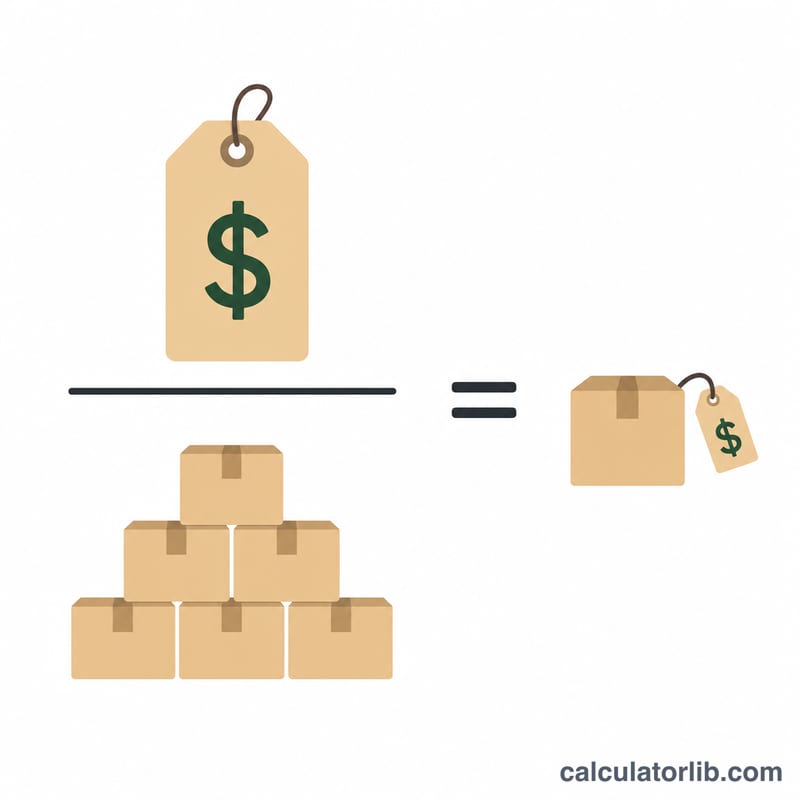
The math is straightforward:
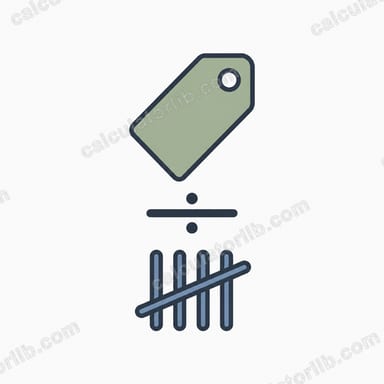
$$\text{Unit Price} = \frac{\text{Total Price}}{\text{Quantity}}$$
If a 6-pack of soda costs $12.99, the unit price is \(12.99 \div 6 = \$2.165\) per can. Keep your units consistent — if you measure quantity in grams, the result is cost per gram; if in liters, it's cost per liter.
Worked Example
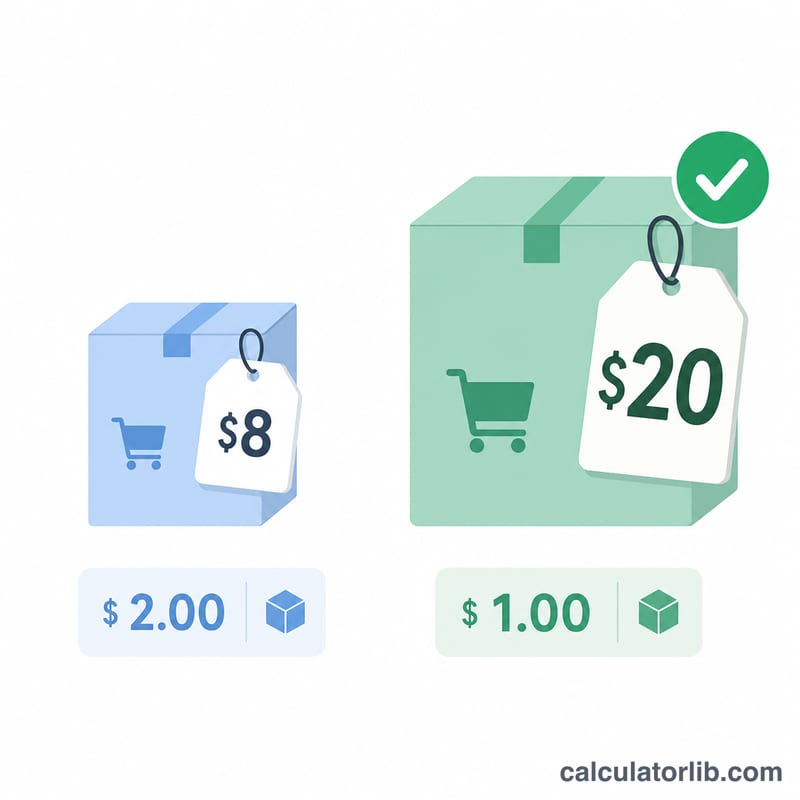
You're comparing two bags of rice. Bag A costs $8.50 for 5 kg, giving \(8.50 \div 5 = \$1.70\) per kg. Bag B costs $15.00 for 10 kg, giving \(15.00 \div 10 = \$1.50\) per kg. Even though Bag B has a higher sticker price, it's cheaper per kilogram, making it the smarter buy.
FAQ
What units can I use? Any consistent unit — pieces, ounces, grams, liters, square feet. The result is always "price per that unit."
Does a lower unit price always mean better value? Usually, but consider quality, shelf life, and whether you'll actually use the larger quantity before it expires.
How is this different from total cost? Total cost is what you pay overall; unit price normalizes it per item so you can compare differently sized packages fairly.