
What Is the REM Sleep Calculator?
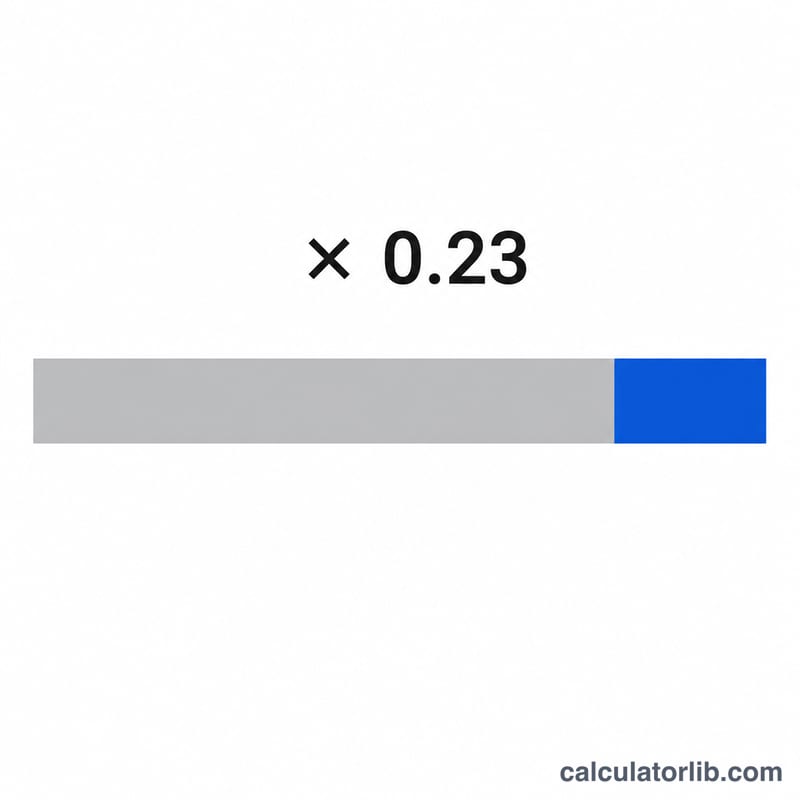
REM (Rapid Eye Movement) sleep is the dream-rich stage most associated with memory consolidation, emotional processing and learning. In a healthy adult, REM typically accounts for about 20–25% of total sleep — roughly a quarter of your night. This calculator estimates how many minutes of REM sleep you likely get based on your total time asleep, using a representative figure of 23%.
How to Use It
Enter the number of hours you sleep, plus any extra minutes. The calculator converts your input to total minutes, multiplies by 0.23 to estimate REM duration, and also shows the typical 20–25% range so you can see the realistic spread.
The Formula Explained
First, total sleep is converted to minutes: \( T = \text{hours} \times 60 + \text{minutes} \). Then REM is estimated as \( \text{REM} = T \times 0.23 \). Because REM proportion varies between individuals and across the night (it increases toward morning), we display a band from 20% (\( T \times 0.20 \)) to 25% (\( T \times 0.25 \)).
$$\text{REM} = 0.23 \times \left( \text{Hours} \times 60 + \text{Minutes} \right)$$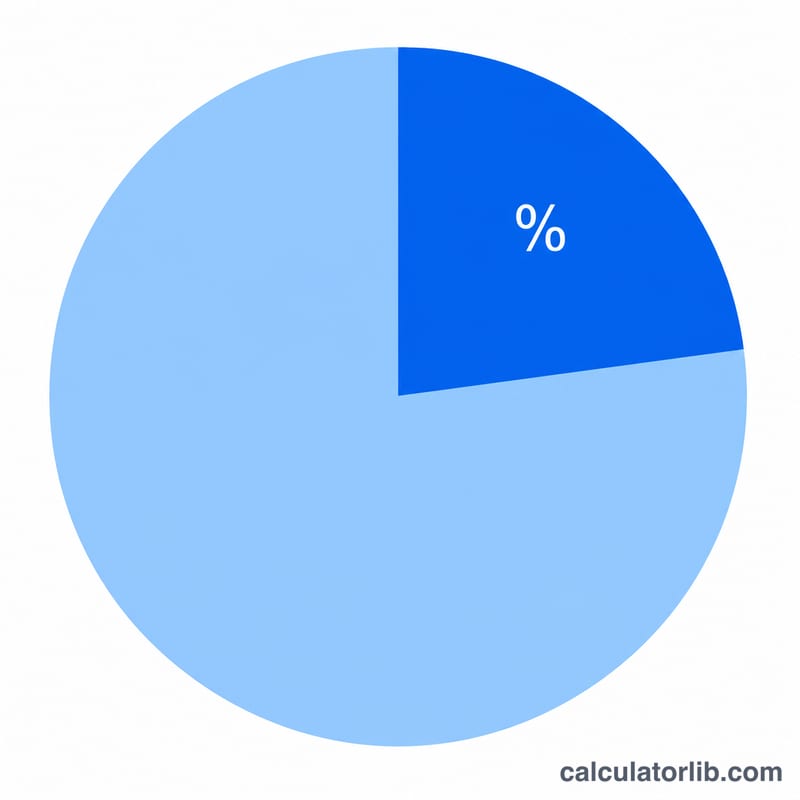
Worked Example
Suppose you sleep 8 hours. That is \( 8 \times 60 = 480 \) minutes. \( \text{REM} \approx 480 \times 0.23 = \)110.4 minutes, or about 1.84 hours. The typical range would be \( 480 \times 0.20 = 96 \) minutes up to \( 480 \times 0.25 = 120 \) minutes.
FAQ
Is this medically accurate? It is an estimate. Actual REM is measured with sleep studies (polysomnography); individual values vary with age, sleep debt, alcohol and stress.
How can I get more REM sleep? Prioritize a full night's sleep (REM concentrates in later cycles), keep a consistent schedule, and limit alcohol and late caffeine.
Does REM percentage change with age? Yes — newborns spend about 50% of sleep in REM, while adults settle around 20–25%, declining slightly in older age.