
What is a Series/Parallel Battery Calculator?
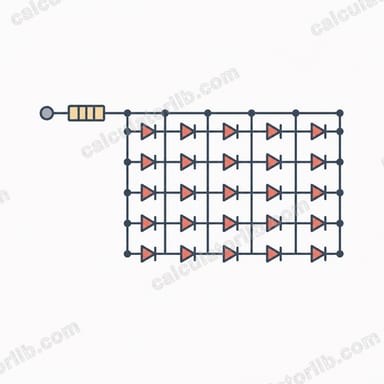
This tool determines the total voltage, capacity, and energy of a battery pack built from identical cells arranged in a series-parallel (SxP) configuration. It's essential for building e-bike packs, solar storage banks, DIY power walls, RC battery packs, and any project using 18650, LiFePO4, or pouch cells.
How to Use It
Enter your single cell's nominal voltage (e.g. 3.7 V for a typical Li-ion cell) and its capacity in amp-hours (Ah). Then enter how many cells are wired in series and how many strings are wired in parallel. The calculator instantly returns the pack voltage, pack capacity, total stored energy (Wh), and total cell count.
The Formula Explained
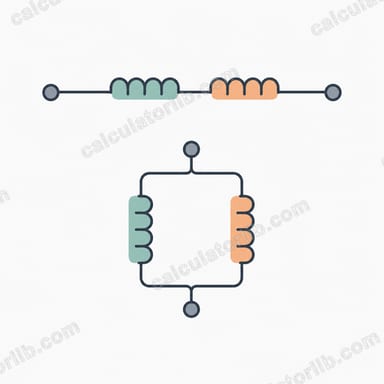
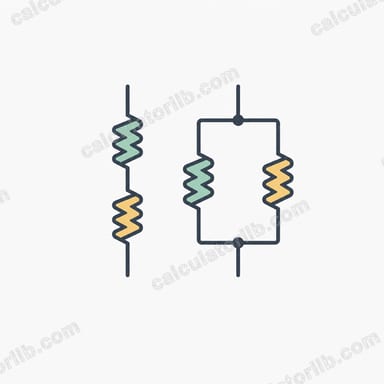
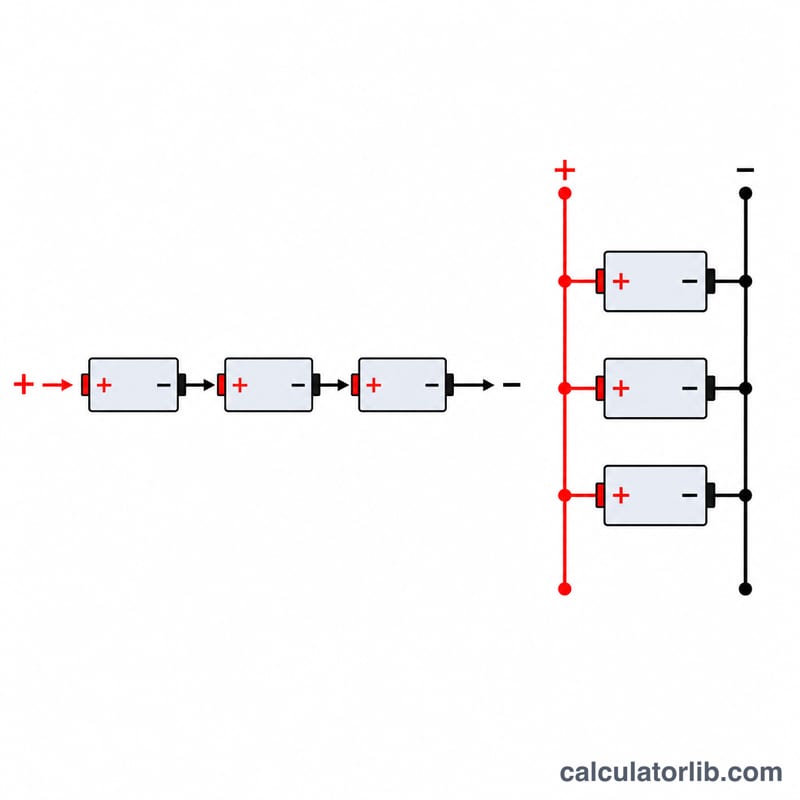
Connecting cells in series adds their voltages while capacity stays the same, so $$V_{pack} = \text{Cell V} \times \text{Series}$$ Connecting cells in parallel adds their capacities while voltage stays the same, so $$Ah_{pack} = \text{Cell Ah} \times \text{Parallel}$$ Total energy in watt-hours is simply $$Wh_{pack} = V_{pack} \times Ah_{pack}$$ Total cells = $$N_{cells} = \text{Series} \times \text{Parallel}$$
Worked Example
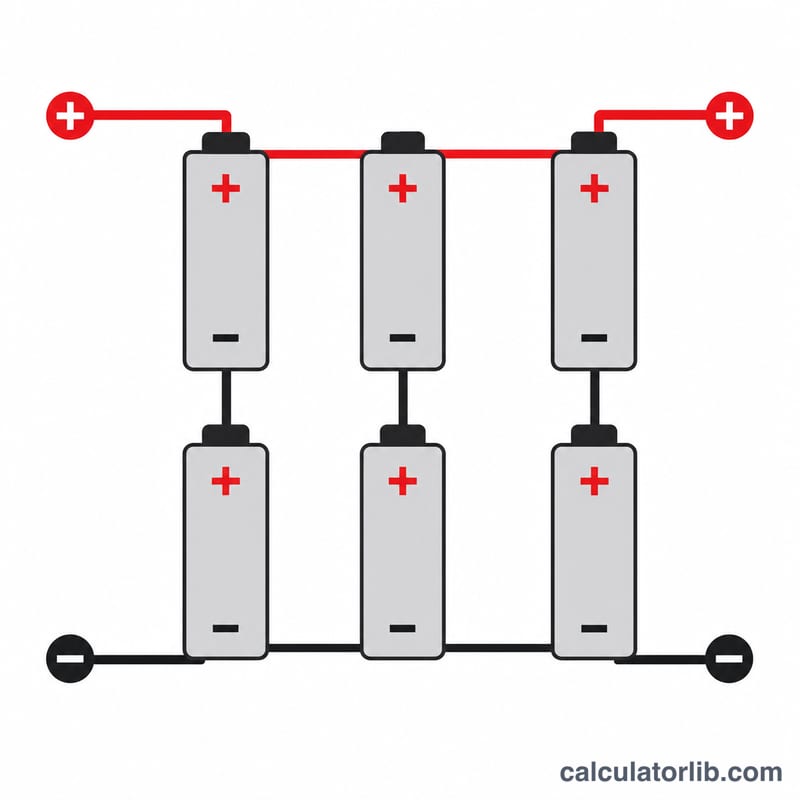
Suppose you use 3.7 V, 3.0 Ah 18650 cells in a 4S3P pack (4 in series, 3 in parallel). Pack voltage = $$3.7 \times 4 = 14.8 \text{ V}$$ Pack capacity = $$3.0 \times 3 = 9.0 \text{ Ah}$$ Energy = $$14.8 \times 9.0 = 133.2 \text{ Wh}$$ You'd need \(4 \times 3 = 12\) cells total.
FAQ
Does series increase capacity? No — series increases voltage; parallel increases capacity (Ah). Energy (Wh) increases either way.
What voltage should I use per cell? Use the nominal voltage: ~3.7 V for Li-ion, 3.2 V for LiFePO4, 2.0 V for lead-acid cells, 1.2 V for NiMH.
Why does Wh matter? Watt-hours measure total stored energy regardless of layout, making it the best way to compare packs and estimate runtime.