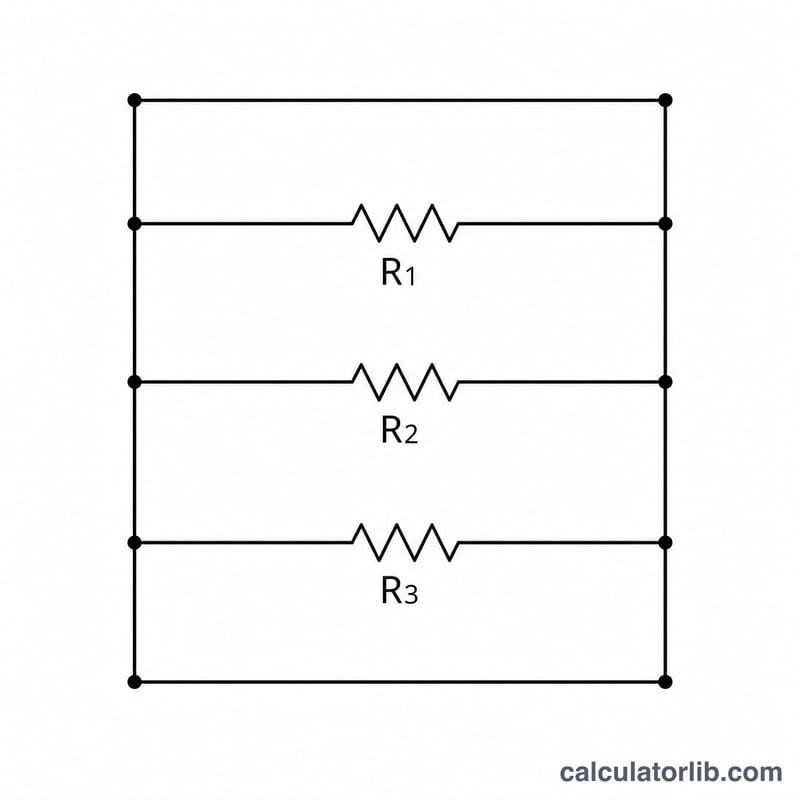

What is a Parallel Resistor Calculator?
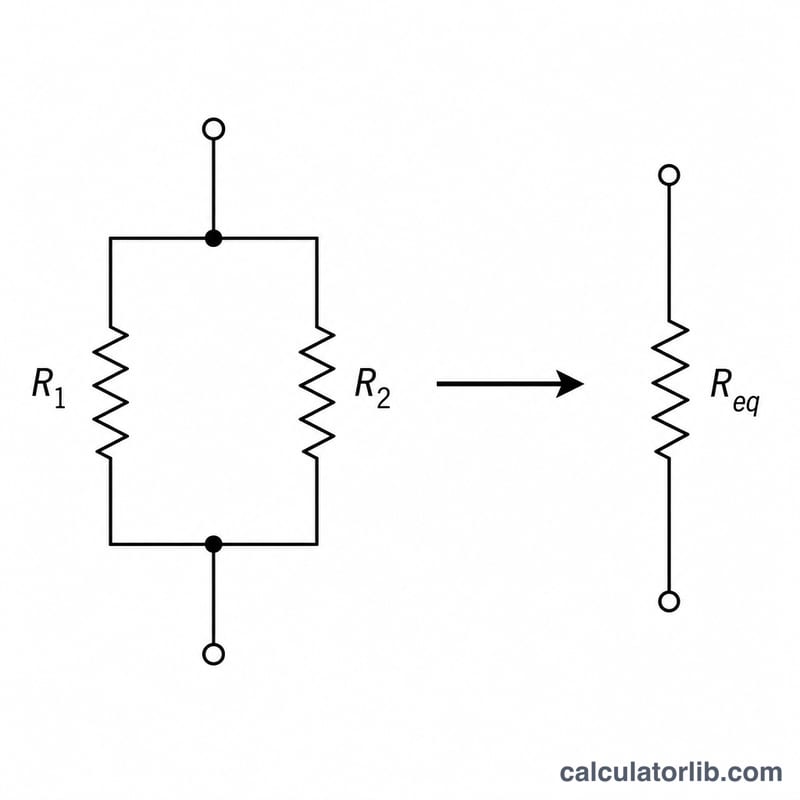
A parallel resistor calculator is a tool that calculates the equivalent resistance when multiple resistors are connected in parallel in an electrical circuit. When resistors are connected in parallel, the total resistance is always less than the smallest individual resistor value in the circuit.
When to Use a Parallel Resistor Calculator
You might need to use a parallel resistor calculator in the following scenarios:
- Designing electrical circuits where specific resistance values are required but not available as standard components
- Analyzing complex circuits to determine the effective resistance in parallel branches
- Calculating current distribution in parallel circuits for power management and circuit protection
Examples
Example 1: Two Resistors in Parallel
Calculate the equivalent resistance of a 100 Ω resistor and a 220 Ω resistor connected in parallel.
| Parameter | Value |
|---|---|
| R1 | 100 Ω |
| R2 | 220 Ω |
| Equivalent Resistance (Req) | 68.75 Ω |
Using the formula:
$$R_{eq} = \frac{R_1 \times R_2}{R_1 + R_2} = \frac{100 \times 220}{100 + 220} = \frac{22000}{320} = 68.75 \ \Omega$$Related Calculators
You may also find these related calculators useful:
- Resistors in Series Calculator - Calculate total resistance when resistors are connected in series
- Ohm's Law Calculator - Calculate voltage, current, resistance, and power in electrical circuits
- LED Light Resistor Calculator - Determine the appropriate resistor value for LED circuits
Advertisement