

What Is Sleep Debt?
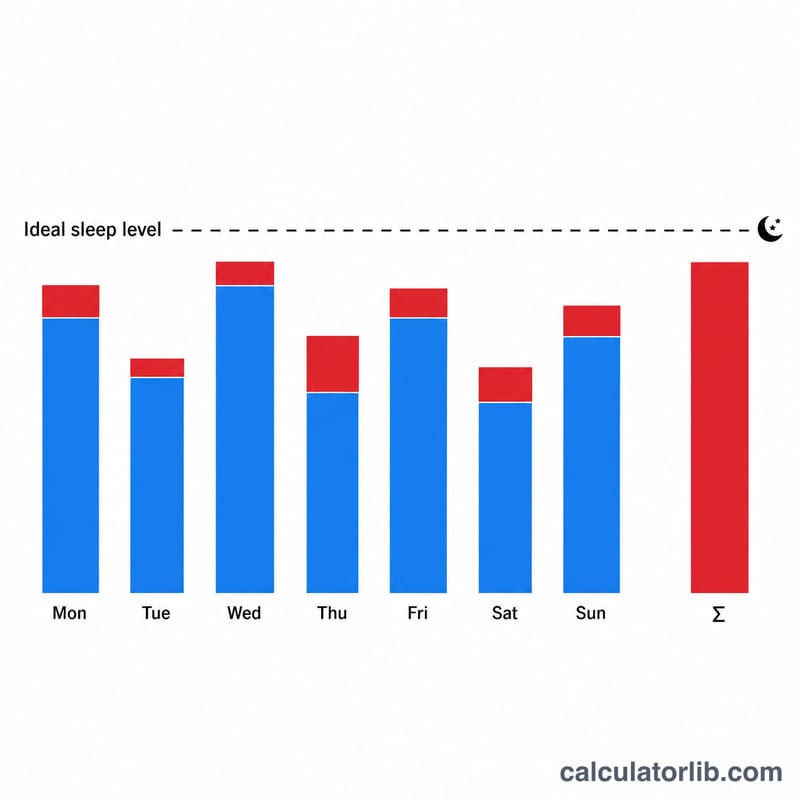
Sleep debt (also called a sleep deficit) is the cumulative difference between the amount of sleep your body needs and the amount you actually get. If you need 8 hours but only sleep 6.5, you build a 1.5-hour debt each night. Over a week that quietly adds up to more than 10 lost hours — enough to noticeably impair focus, mood, and reaction time. This calculator turns your nightly shortfall into a single, easy-to-grasp number.
How to Use This Calculator
Enter three values: your ideal sleep per night (most adults need 7–9 hours), your average actual sleep per night over the period you're reviewing, and the number of nights in that period. The calculator multiplies the nightly gap by the number of nights to show your total accumulated sleep debt, along with your per-night shortfall and the total ideal and actual sleep hours.
The Formula Explained
The math is straightforward:
$$\text{Sleep Debt} = \left( \text{Ideal (hrs)} - \text{Actual (hrs)} \right) \times \text{Nights}$$This is equivalent to summing the shortfall every night. A positive result means you owe your body sleep; a negative result means you actually slept more than your target.
Worked Example
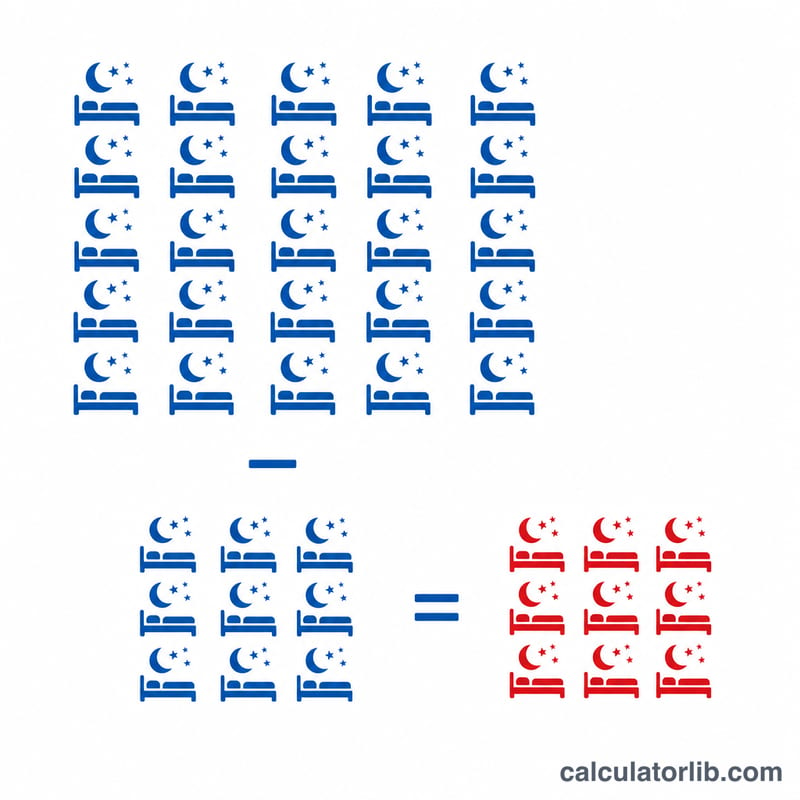
Suppose you aim for 8 hours but average 6 hours over 7 nights. The per-night shortfall is \(8 - 6 = 2\) hours. Multiplied by 7 nights gives a sleep debt of:
$$\left( 8 - 6 \right) \times 7 = 14 \text{ hours}$$— almost two full nights of missed sleep in a single week.
FAQ
Can I pay off sleep debt? Short-term debt can be partly recovered with a few nights of extra sleep, but chronic debt is harder to reverse and consistency matters more than catch-up.
What's the right ideal sleep value? Most adults need 7–9 hours; teenagers and children need more. Use what leaves you alert without an alarm.
Is more than 9 hours bad? Occasionally sleeping in is fine, but routinely needing very long sleep can signal an underlying issue worth discussing with a doctor.