
What Is Cardiac Output?
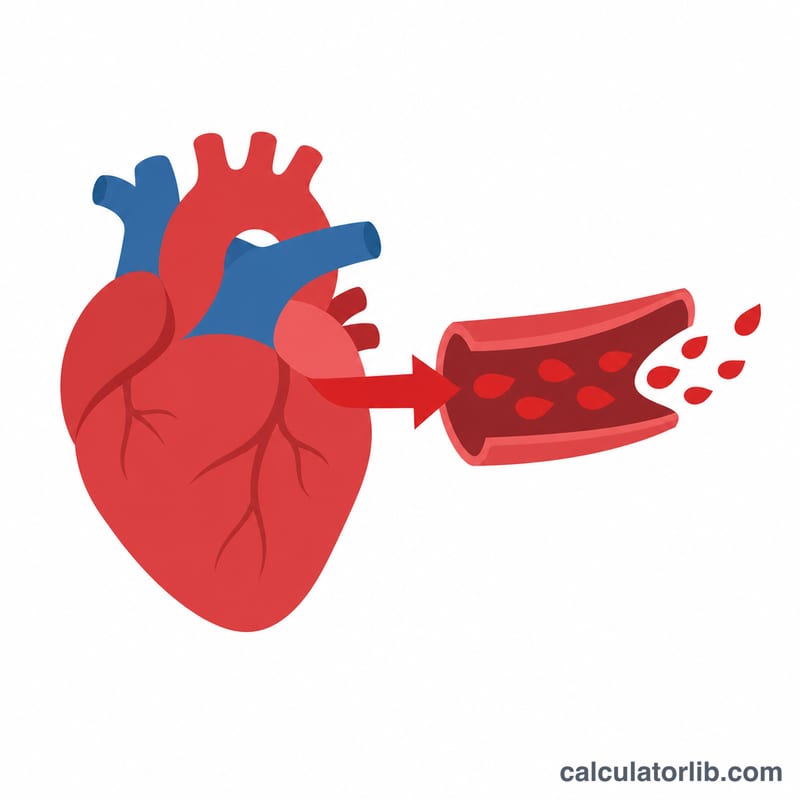
Cardiac output (CO) is the volume of blood the heart pumps each minute. It is one of the most important measures of cardiovascular function, reflecting how effectively the heart meets the body's demand for oxygen and nutrients. Cardiac output is determined by two factors: the amount of blood ejected with each beat (stroke volume) and the number of beats per minute (heart rate).
How to Use the Calculator
Enter your stroke volume in millilitres per beat (mL/beat) and your heart rate in beats per minute (bpm). The calculator multiplies the two values to give cardiac output in mL/min, then converts it to litres per minute (L/min) — the units most commonly used clinically.
The Formula Explained
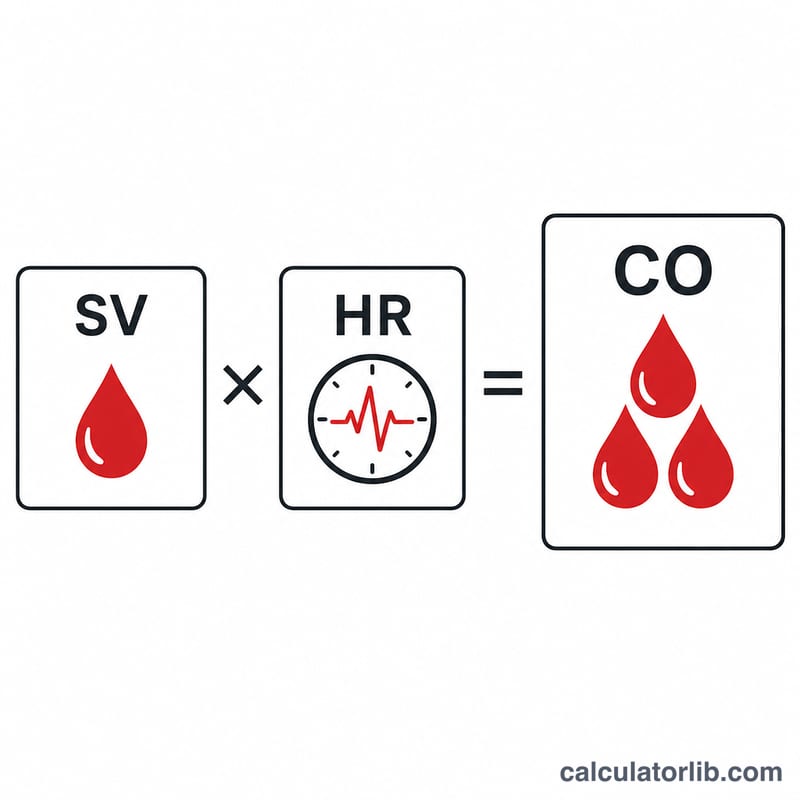
The equation is simply:
$$\text{Cardiac Output} = \text{Stroke Volume} \times \text{Heart Rate}$$
For example, a stroke volume of 70 mL/beat is multiplied by the heart rate in beats per minute. Dividing the result (in mL/min) by 1000 converts it into litres per minute. A typical resting cardiac output for a healthy adult is roughly 4–8 L/min.
Worked Example
Suppose stroke volume is 70 mL/beat and heart rate is 70 bpm:
$$\text{CO} = 70 \times 70 = 4{,}900 \text{ mL/min} = 4.9 \text{ L/min}$$
This falls comfortably within the normal resting range.
FAQ
What is a normal cardiac output? For a resting adult, normal cardiac output is generally between 4 and 8 L/min, though it varies with body size, fitness, and activity.
What is stroke volume? Stroke volume is the amount of blood pumped out of the left ventricle with each heartbeat, typically around 60–100 mL in adults.
Is this a medical diagnostic tool? No. This calculator is for educational and informational purposes only and should not replace assessment by a qualified healthcare professional.