
What Is Sleep Efficiency?
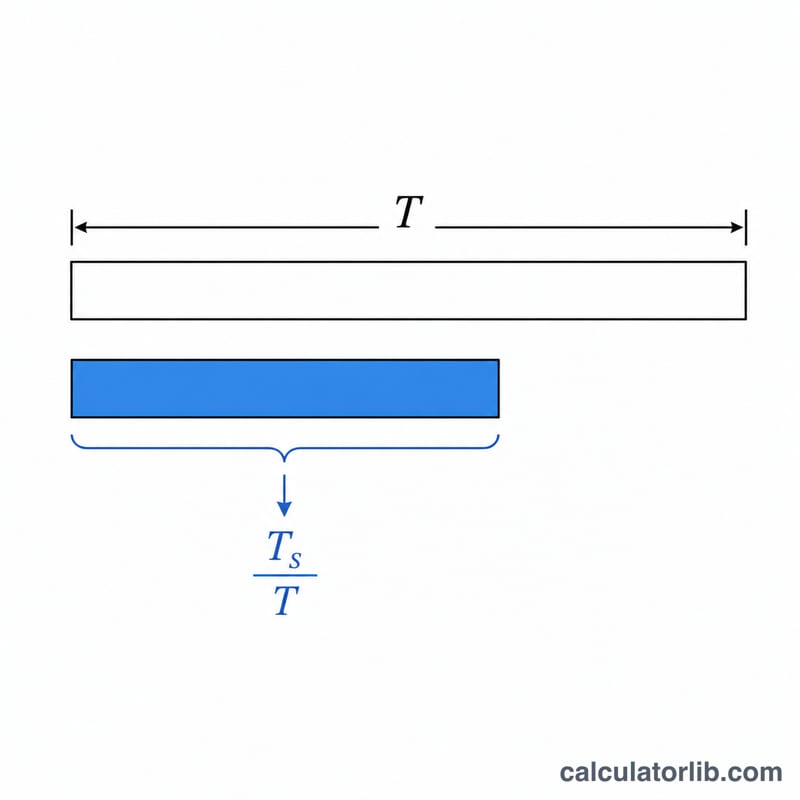
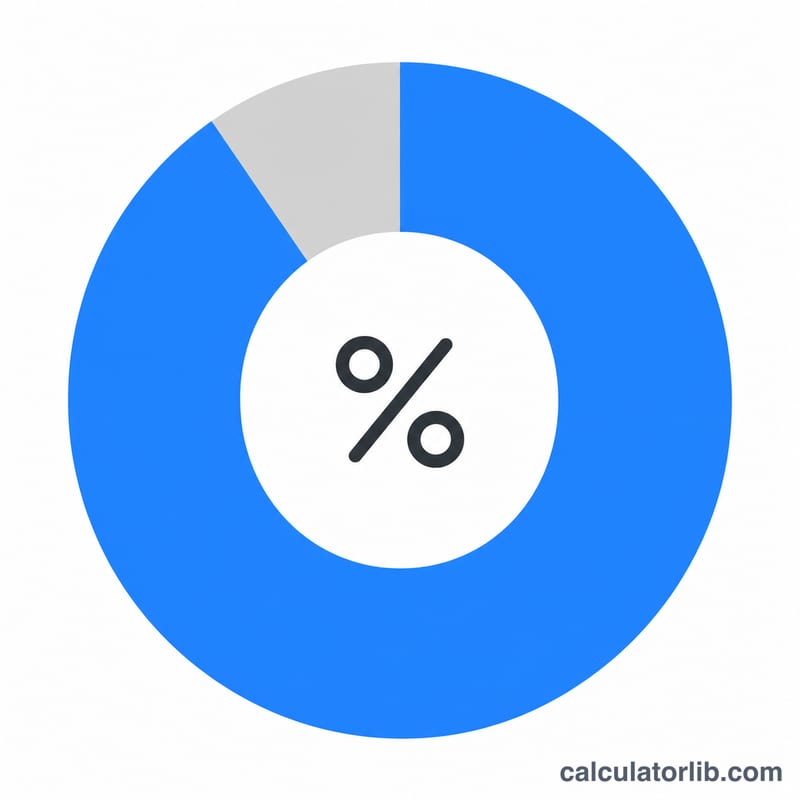
Sleep efficiency is a simple but widely used measure of sleep quality. It compares how long you actually slept (Total Sleep Time, TST) with how long you spent in bed (Time in Bed, TIB), expressed as a percentage. A higher percentage means you spent most of your time in bed asleep rather than lying awake. Sleep researchers and clinicians commonly consider 85% or above to be healthy, while consistently low values may point to insomnia or disrupted sleep.
How to Use This Calculator
Enter the total minutes you spent in bed (from when you lay down trying to sleep until you got up) and the total minutes you were actually asleep. The calculator returns your sleep efficiency as a percentage, along with the number of minutes you were awake in bed. If you only know hours, multiply by 60 first — for example 8 hours is 480 minutes.
The Formula Explained
The core equation is $$\text{Sleep Efficiency} = \frac{\text{Total Sleep (min)}}{\text{Time in Bed (min)}} \times 100\%$$. Time awake in bed is simply Time in Bed minus Total Sleep Time. Because efficiency is a ratio, it cannot meaningfully exceed 100% — if you entered more sleep than time in bed, double-check your numbers.
Worked Example
Suppose you were in bed for 480 minutes (8 hours) but only slept 420 minutes (7 hours). Your sleep efficiency is $$(420 \div 480) \times 100 = 87.5\%,$$ and you spent 60 minutes awake in bed. That falls comfortably in the healthy range.
FAQ
What is a good sleep efficiency? Generally 85% or higher is considered good for adults; 90%+ is excellent.
Does this diagnose a sleep disorder? No. It is an informational metric only. Persistently low efficiency or poor sleep should be discussed with a healthcare professional.
Should I count naps? This calculator is designed for a single sleep period. Track each sleep episode separately for the most accurate picture.