
What Is the Sphere Circumference?
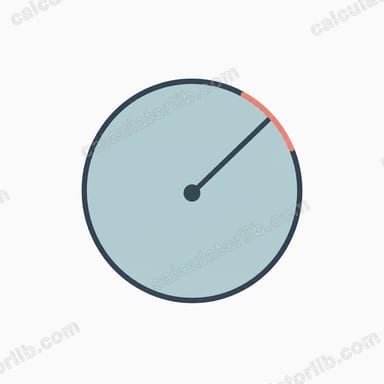
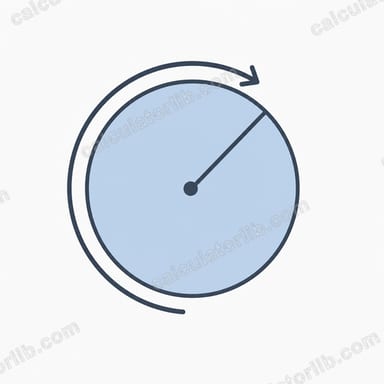
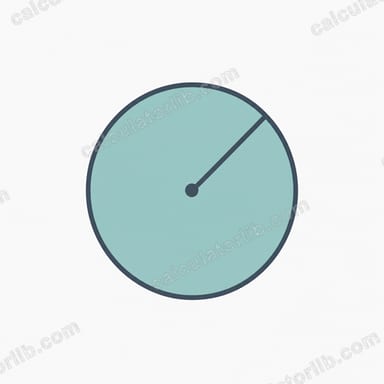
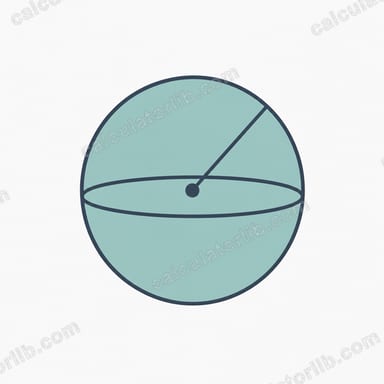
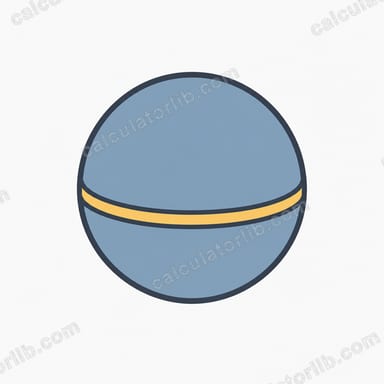
The circumference of a sphere refers to the length of its great circle — the largest circle that can be drawn on the sphere's surface, passing through its center. Earth's equator is a familiar example of a great circle. Because every great circle of a sphere has a radius equal to the sphere's radius, the circumference is calculated exactly like the circumference of an ordinary circle.
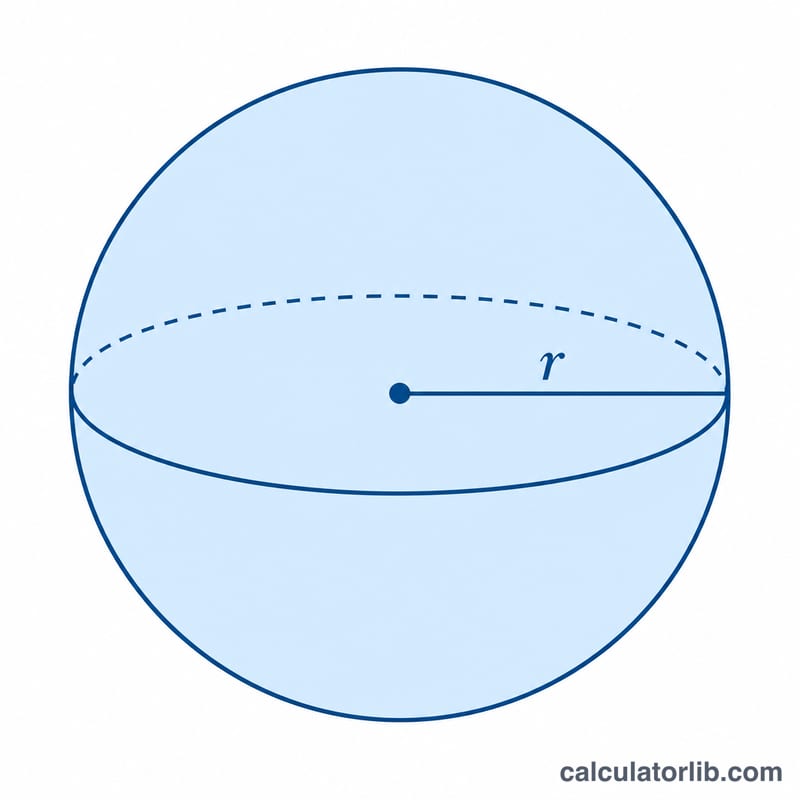
How to Use This Calculator
Choose whether you are entering the radius or the diameter of the sphere, type in the value, and the calculator instantly returns the great-circle circumference along with the corresponding radius and diameter. Any consistent length unit works (cm, m, inches, etc.) — the result is in the same unit.
The Formula Explained
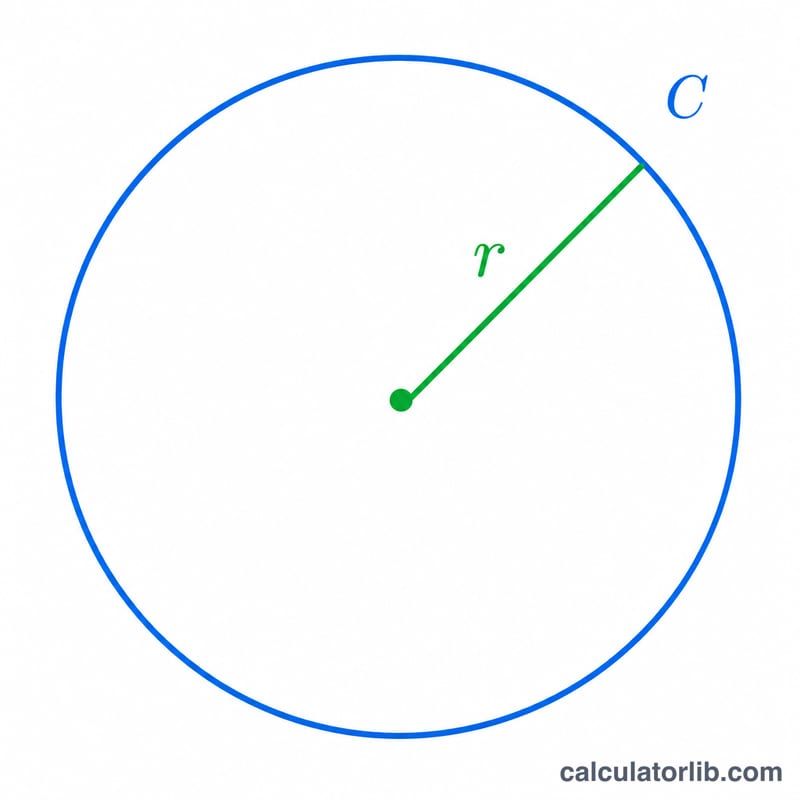
The core equation is $$C = 2\pi r$$ where r is the radius and \(\pi \approx 3.14159\). If you only know the diameter d, the calculator first converts it to a radius (\(r = d/2\)), which is the same as using $$C = \pi d$$ These are universal geometric relationships and require no special units or jurisdiction.
Worked Example
Suppose a ball has a radius of 5 cm. Then $$C = 2 \times \pi \times 5 = 10\pi \approx 31.4159 \text{ cm}$$ If instead you were given a diameter of 10 cm, the radius is \(10 \div 2 = 5\) cm, and the circumference is the same 31.4159 cm.
FAQ
Is sphere circumference the same as a circle's circumference? Yes — the great circle of a sphere is identical to a circle with the same radius, so the same formula applies.
What if I have the surface area or volume instead? First solve for the radius (\(r = \sqrt{A/4\pi}\) or \(r = \sqrt[3]{3V/4\pi}\)), then use \(C = 2\pi r\).
Why "great circle"? A sphere has infinitely many circles on its surface, but only those passing through the center are "great circles" and share the sphere's full radius — making them the largest and the standard measure of circumference.