
What this calculator does
The Travel Money & Daily Spending Calculator helps you turn a single travel budget into a clear daily allowance in the currency you'll actually be spending. Instead of guessing how much cash you can use each day abroad, you get an exact figure based on your trip length and the current exchange rate. This is a universal tool — it works for any pair of currencies, simply enter the rate that applies to your trip.
How to use it
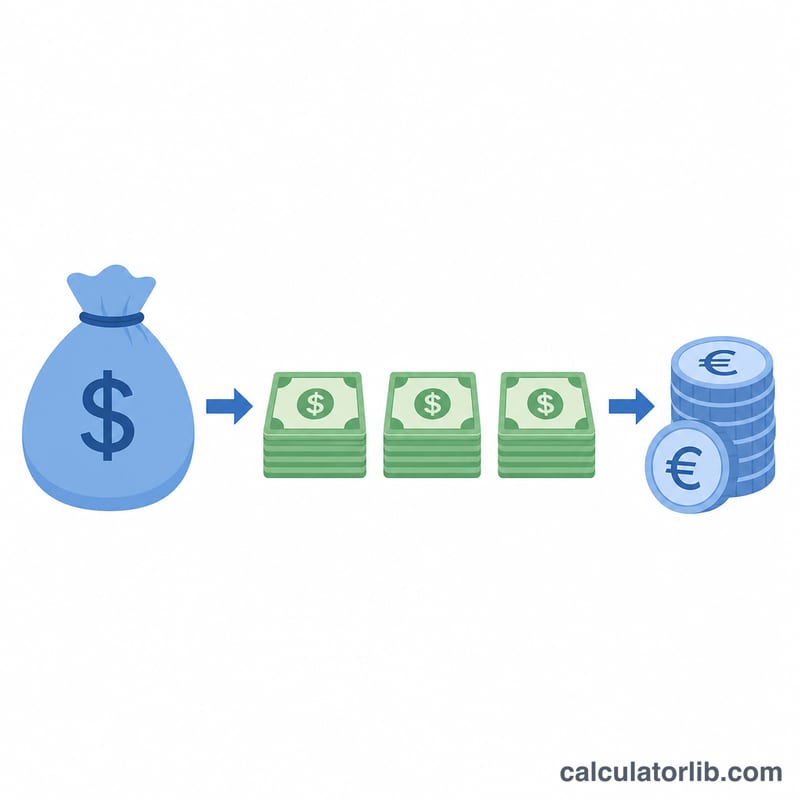
Enter three values: your total travel budget in your home currency, the number of days you'll be travelling, and the exchange rate expressed as how many units of the foreign currency you get for 1 unit of your home currency. For example, if 1 USD = 0.92 EUR, enter 0.92. The calculator returns your daily spending power in the destination currency, plus your daily home-currency budget and your full budget converted abroad.
The formula explained
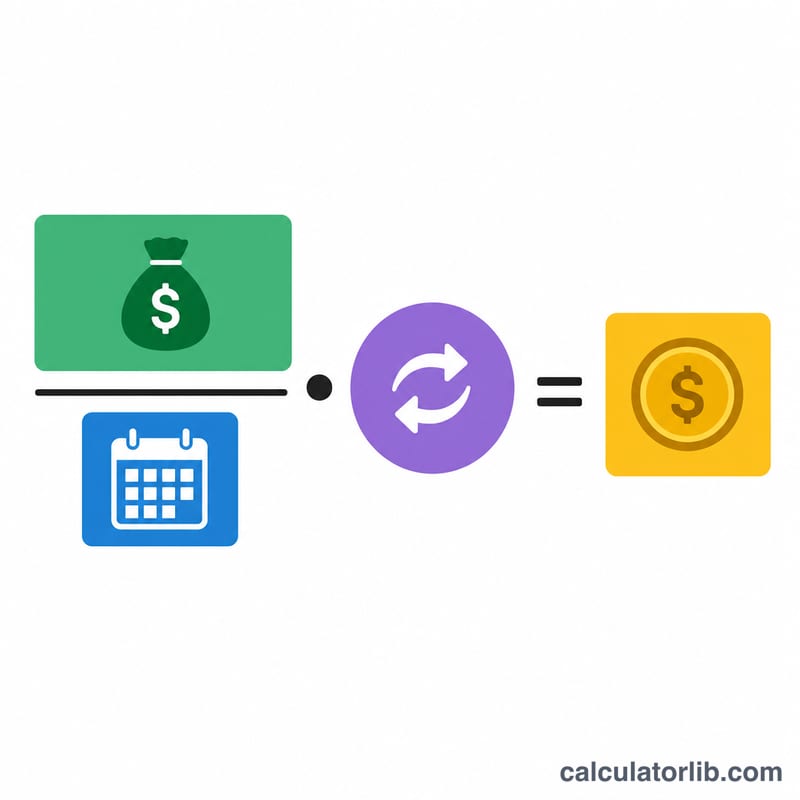
The core equation is foreign amount = (budget ÷ days) × exchange rate. First the budget is divided by the number of days to find a daily home-currency allowance. That daily figure is then multiplied by the exchange rate to express it in the local currency you'll hand over at restaurants, shops, and ticket counters.
$$\text{Daily Spending} = \frac{\text{Budget}}{\text{Days}} \times \text{Exchange Rate}$$
Worked example
Suppose you have a budget of 2,000 (home currency) for a 10-day trip, and the exchange rate is 1.08 foreign units per home unit. Daily home budget = \(2{,}000 \div 10 = 200\). Daily spending money = \(200 \times 1.08 = \mathbf{216}\) in the local currency. Your whole budget converts to \(2{,}000 \times 1.08 = 2{,}160\) abroad.
FAQ
Which direction should the exchange rate go? Enter the number of foreign currency units you receive for one unit of your home currency. If you only know the inverse rate, divide 1 by it.
Does it include flights or hotels? No — for a pure daily spending figure, subtract pre-paid costs like flights and accommodation from your budget before entering it here.
Should I add a buffer? Yes. Exchange rates move and fees apply, so keeping 5–10% in reserve is a sensible cushion.