
What Is a Unit Price Calculator?
A unit price calculator tells you how much one single unit of a product costs. It divides the total price you pay by the quantity you receive, giving you a per-unit figure that makes it easy to compare products of different sizes or pack counts. Whether you're shopping for groceries, building materials, or bulk supplies, the unit price reveals which option is truly the better deal.
How to Use It
Enter the total price you pay and the quantity (number of units, weight, volume, or count). The calculator instantly returns the price per unit. To compare two products, run each one through the calculator and pick the lower unit price.
The Formula Explained
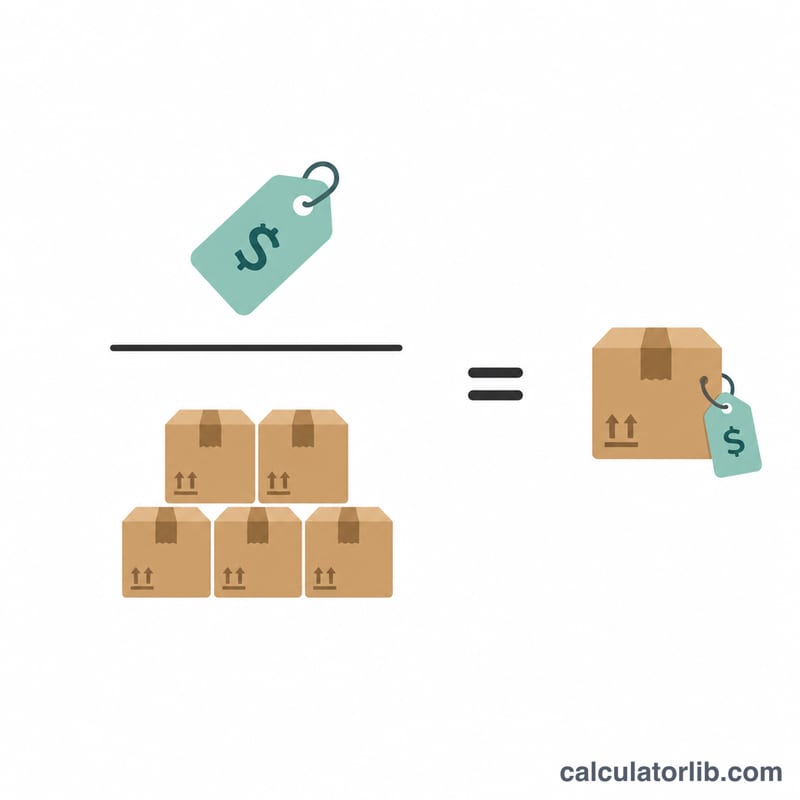
The math is simple division:
$$\text{Unit Price} = \frac{\text{Total Price (\$)}}{\text{Quantity (units)}}$$If a 4-pack of batteries costs $10, the unit price is \(\$10 \div 4 = \$2.50\) per battery. The "quantity" can be anything measurable — items, kilograms, liters, square feet — as long as you keep it consistent between products you compare.
Worked Example
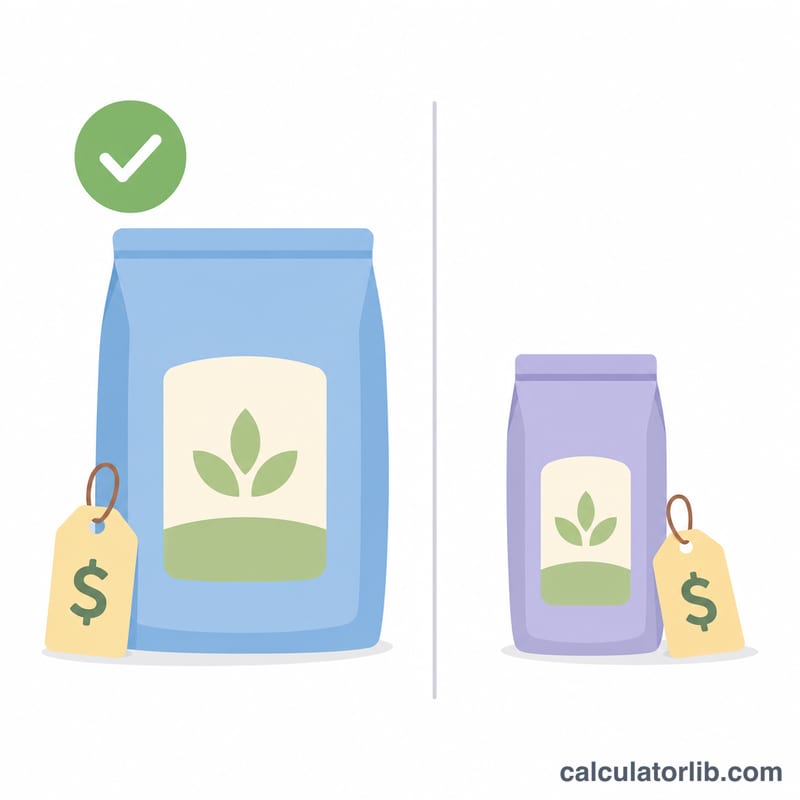
Suppose a 2-liter bottle of juice costs $4.50 and a 1.5-liter bottle costs $3.60. The big bottle: \(\$4.50 \div 2 = \$2.25\) per liter. The small bottle: \(\$3.60 \div 1.5 = \$2.40\) per liter. The 2-liter bottle is cheaper per liter, so it offers better value.
FAQ
Does a lower unit price always mean better value? Usually, but consider waste — buying more than you can use before it expires may cost more overall.
What units should I use? Any consistent measure: count, weight, or volume. Just compare like with like.
What if quantity is zero? Division by zero is undefined, so the calculator returns 0. Enter a quantity greater than zero for a valid result.