
What is a unit rate?
A rate is a ratio that compares two quantities measured in different units, such as miles and hours or dollars and apples. A unit rate expresses that same comparison with exactly 1 in the denominator. For example, "30 miles in 2.5 hours" becomes the unit rate "12 miles per hour." When the numerator is a price, the unit rate is often called the unit price or unit cost - for instance "$1.80 for 3 apples" is "$0.60 per apple."
How to use this calculator
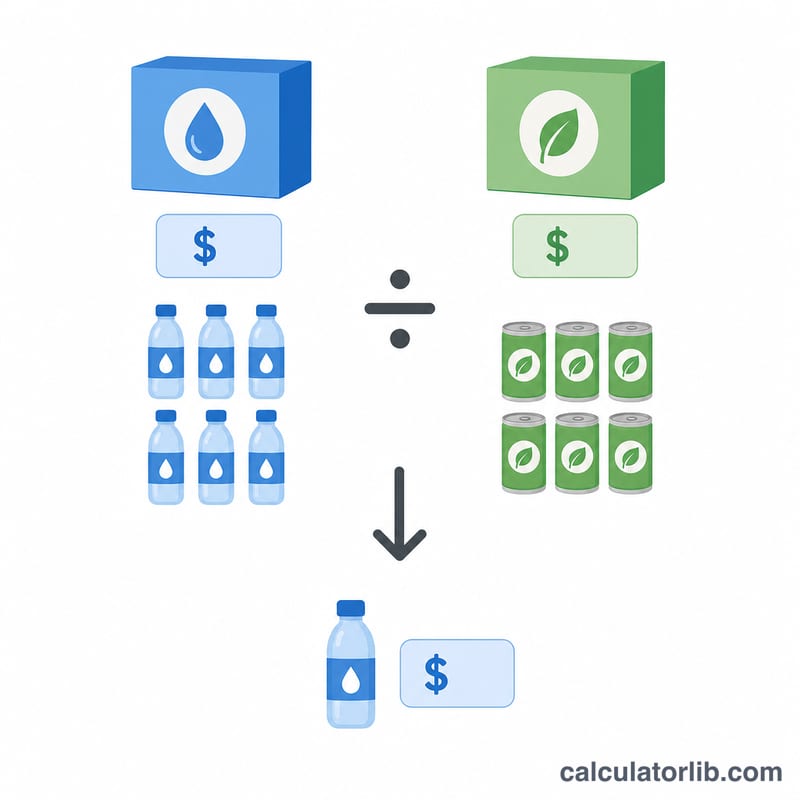
Enter the numerator quantity (the top number) and an optional text label for it, then the denominator quantity (the bottom number) and its label. Click calculate. The tool divides the numerator by the denominator and shows both the numeric unit rate and a plain-English result statement, along with the full reduction steps. The unit labels are cosmetic - they only shape the wording of the answer and never affect the arithmetic. Negative numbers and decimals are accepted.
The formula explained
The unit rate is simply \(r = a / b\), where a is the numerator quantity and b is the denominator quantity. Conceptually, you divide both the top and the bottom of the original rate by b: the bottom becomes \(b / b = 1\), and the top becomes \(a / b = r\). That leaves the rate as "r per 1," which is exactly a unit rate.
$$\text{Unit Rate} = \frac{\text{Numerator Qty}}{\text{Denominator Qty}}$$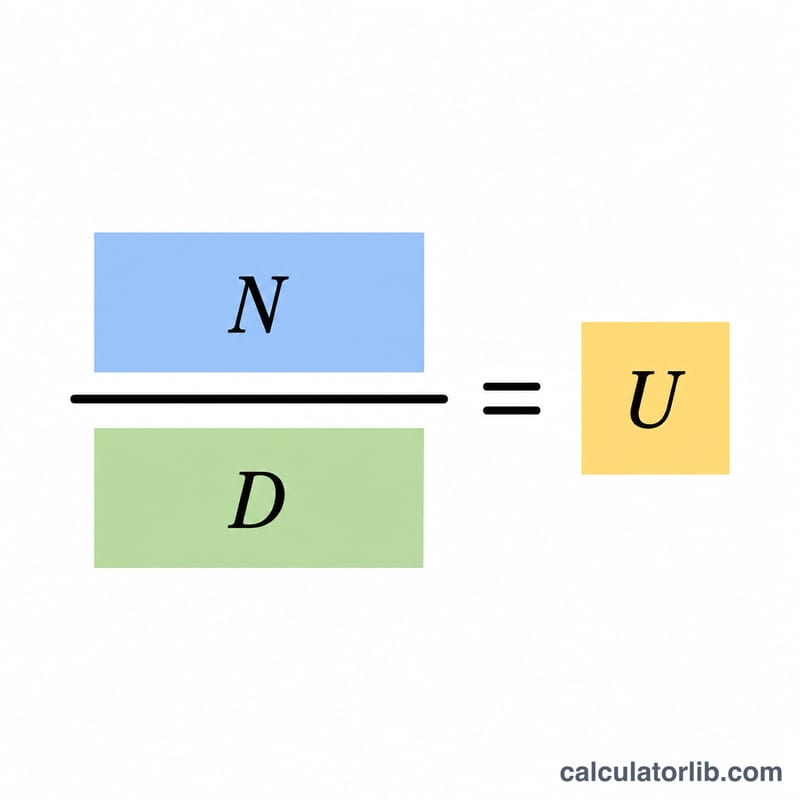
Worked example
Suppose a car travels 30 miles in 2.5 hours. Numerator quantity = 30 (miles), denominator quantity = 2.5 (hours). Unit rate = \(30 / 2.5 = \mathbf{12}\). Dividing top and bottom by 2.5 gives 12 miles over 1 hour, so the result is "= 12 miles per hour."
$$\text{Unit Rate} = \frac{30}{2.5} = 12$$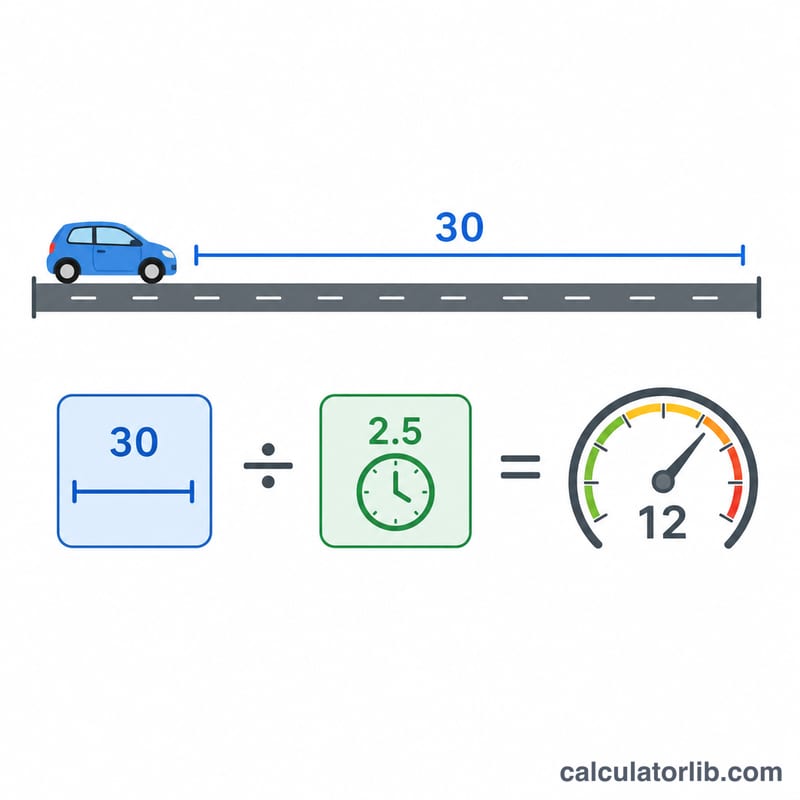
FAQ
Why must the denominator not be zero? A unit rate puts 1 in the denominator by dividing by the denominator quantity. Dividing by zero is undefined, so a zero denominator cannot form a rate.
Can the answer be negative? Yes. If either quantity is negative the quotient simply carries the sign, e.g. \(-30 / 2.5 = -12\).
Does the unit label change the math? No. The unit names are text labels used only to phrase the answer; the result is the pure quotient of the two numbers.