
What Is the Box Volume Calculator?
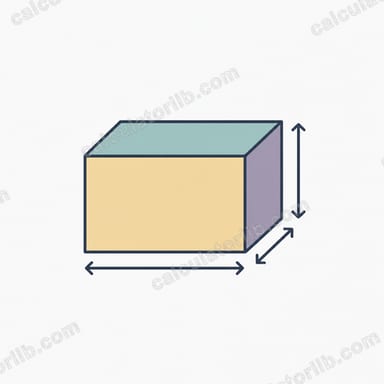
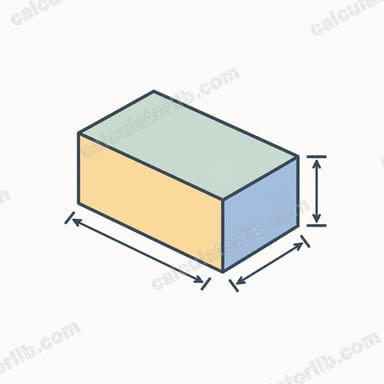
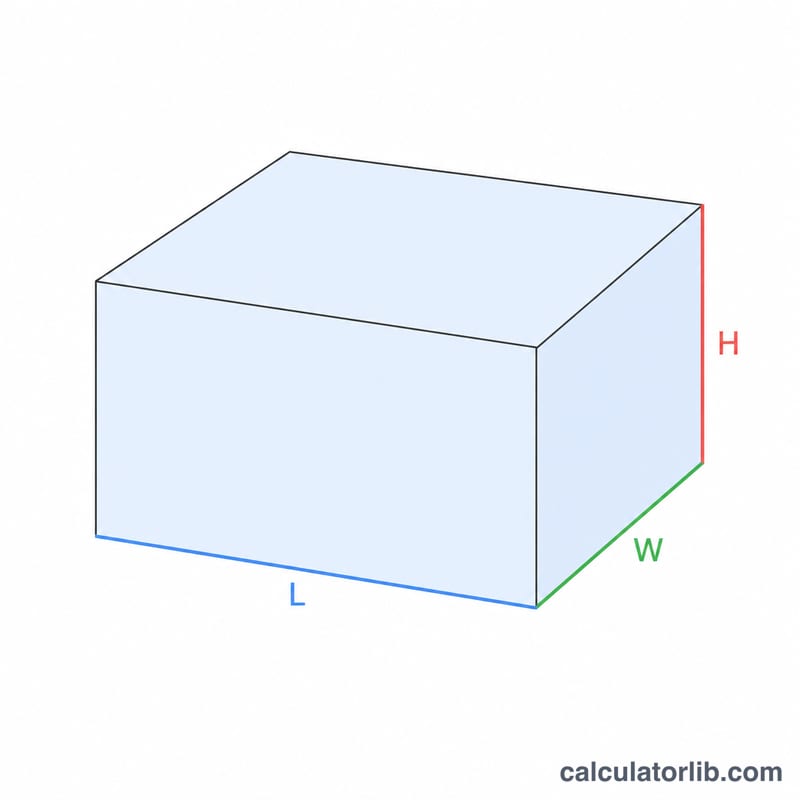
This calculator finds the internal volume of any rectangular box (cuboid) from its three dimensions — length, width and height. Enter the measurements in inches, feet, centimeters or meters and the tool returns the raw volume plus handy conversions to cubic inches, cubic feet, liters and US gallons. It works for shipping boxes, aquariums, storage bins, planters, crates and any other rectangular container.
How to Use It
Measure the three inside dimensions of your box. Type the length, width and height into the form, then choose the unit you measured in. Press calculate to see the volume. The large number shows the volume in the cube of your chosen unit (for example, cubic inches if you picked inches), while the table below converts it into the most common volume units.
The Formula Explained
The volume of a rectangular box is simply the product of its three dimensions: V = L × W × H. Because all three are lengths, the result is in cubic units. To convert between systems, each linear dimension is first converted to centimeters, then cubed: 1 cm³ = 0.001 liters, 1 liter ≈ 0.264172 US gallons, and 1 cubic inch = 16.387064 cm³.
Worked Example
A box measures 12 in long, 10 in wide and 8 in tall. The volume is 12 × 10 × 8 = 960 cubic inches. Converting: 960 in³ × 16.387064 = 15,731.58 cm³ ≈ 15.73 liters, or about 4.16 US gallons, and 960 ÷ 1728 ≈ 0.556 cubic feet.
Volume Unit Conversion Table
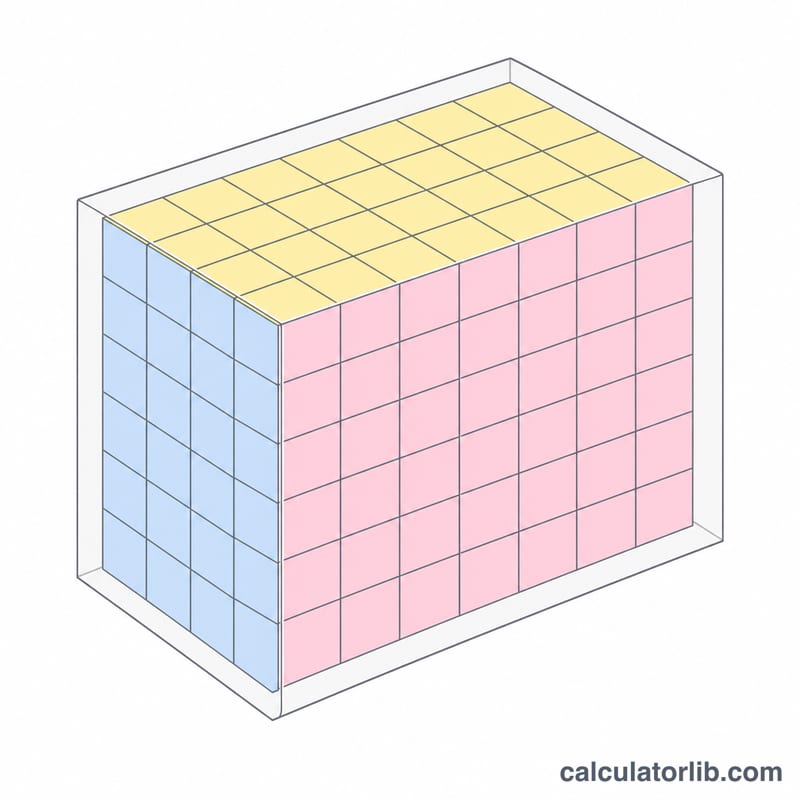
Box volume is found by multiplying length, width and height: \(V = \text{Length} \times \text{Width} \times \text{Height}\). The raw result is in cubic units, which you can then convert to whatever measure you need. The factors below are exact (or rounded to the stated precision) and let you move between cubic inches, cubic feet, cubic centimeters, liters, US gallons and UK (imperial) gallons.
| From | cubic inches (in³) | cubic feet (ft³) | cubic cm (cm³) | liters (L) | US gallons | UK gallons |
|---|---|---|---|---|---|---|
| 1 in³ | 1 | 0.000578704 | 16.387064 | 0.016387 | 0.004329 | 0.003605 |
| 1 ft³ | 1728 | 1 | 28316.85 | 28.3168 | 7.480519 | 6.228835 |
| 1 cm³ | 0.061024 | 0.0000353147 | 1 | 0.001 | 0.000264172 | 0.000219969 |
| 1 L | 61.0237 | 0.0353147 | 1000 | 1 | 0.264172 | 0.219969 |
| 1 US gal | 231 | 0.133681 | 3785.41 | 3.785412 | 1 | 0.832674 |
| 1 UK gal | 277.42 | 0.160544 | 4546.09 | 4.546092 | 1.200950 | 1 |
Key relationships worth memorizing: 1 ft³ = 1728 in³ = 28.3168 L = 7.48 US gal, 1 in³ = 16.387064 cm³, and 1 L = 0.264172 US gal = 0.219969 UK gal. The cubic inch and cubic foot definitions are exact because 1 inch = 2.54 cm exactly and 1 foot = 12 inches.
Practical Tips for Using Your Box Volume
- Measure inside dimensions for capacity. Box and carton walls have thickness. If you need to know how much a container actually holds, measure the interior length, width and height — using outside dimensions can overstate capacity by several percent on a small box.
- Leave room for packing material. When shipping fragile goods, plan to fill only about 70–85% of the calculated volume with product and reserve the rest for bubble wrap, foam or air pillows. Tightly packed items with no cushioning are more likely to break.
- Don't fill tanks and aquariums to 100%. A box-shaped aquarium's true water volume is less than its geometric volume — allow for substrate, rocks, equipment and a few inches of freeboard at the top. Filling to roughly 90% is a safer working figure.
- Round up when ordering boxes. Real contents are irregular, so choose a box with 10–20% more volume than your items' combined volume to ensure everything fits with cushioning.
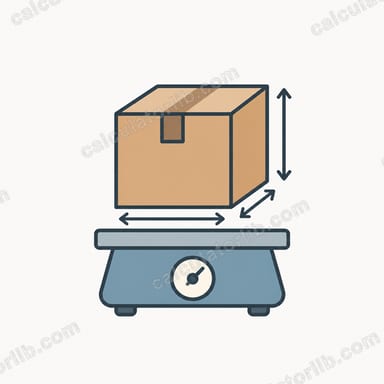
- Use outside dimensions for shipping (DIM) weight. Carriers charge by the larger of actual and dimensional weight. Dimensional weight is computed from the box's outside size divided by a DIM factor (commonly 139 for US domestic in³/lb, or 5000/6000 for cm³/kg internationally). Round each dimension up to the next inch before calculating.
- Match your units to the task. Use cubic feet for storage and freight, liters or gallons for liquids and containers, and cubic inches for small parcels and DIM-weight inputs. Convert with the factors in the table above rather than re-measuring.
This is general information to help with planning and estimating, not professional engineering, shipping-compliance or safety advice. For critical applications, confirm exact dimensions and carrier rules with the relevant provider.
FAQ
Does this work for any box? Yes, as long as it is rectangular (all corners are right angles). For irregular shapes the formula does not apply.
Should I use inside or outside dimensions? Use inside dimensions for capacity (how much it holds) and outside dimensions for shipping or storage space.
Why are the gallons US gallons? The conversion uses the US liquid gallon (3.785411784 liters). A UK imperial gallon is about 4.546 liters, so divide liters by that figure instead.