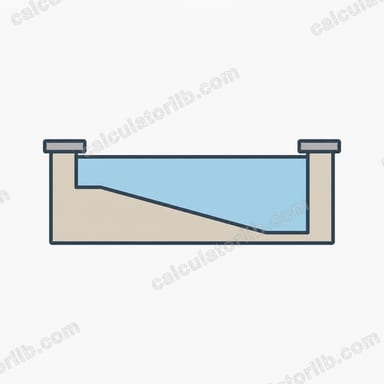

What This Calculator Does
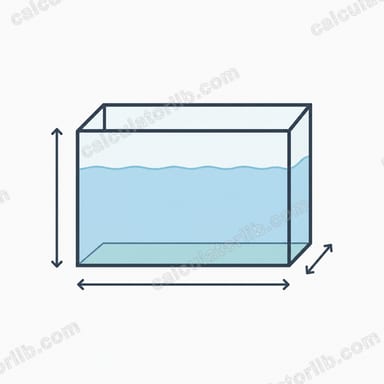
The Rectangular Pool Gallons Calculator estimates how much water a rectangular swimming pool holds, in US gallons. Knowing your pool's volume is essential for dosing chemicals correctly, sizing a pump or heater, calculating water-fill costs, and planning maintenance. This tool works for any rectangular in-ground or above-ground pool with a flat or sloping bottom.
How to Use It
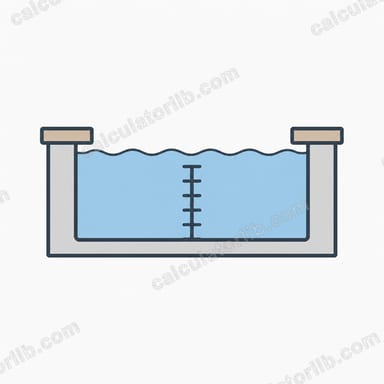
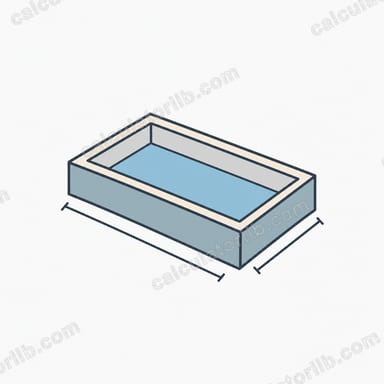
Measure your pool in feet: the length, the width, the depth at the shallow end, and the depth at the deep end. Enter the four values and the calculator returns the volume in gallons, the average depth, the volume in cubic feet, and the equivalent in liters. If your pool has a constant depth, enter the same number for both shallow and deep.
The Formula Explained
A rectangular pool's volume in cubic feet equals length × width × average depth. One cubic foot of water equals about 7.48 US gallons, so multiplying by 7.48 converts cubic feet to gallons. For pools that slope from a shallow to a deep end, the average depth is simply the mean of the two depths: \((\text{shallow} + \text{deep}) \div 2\).
$$\text{Gallons} = \text{Length} \times \text{Width} \times \frac{\text{Shallow} + \text{Deep}}{2} \times 7.48$$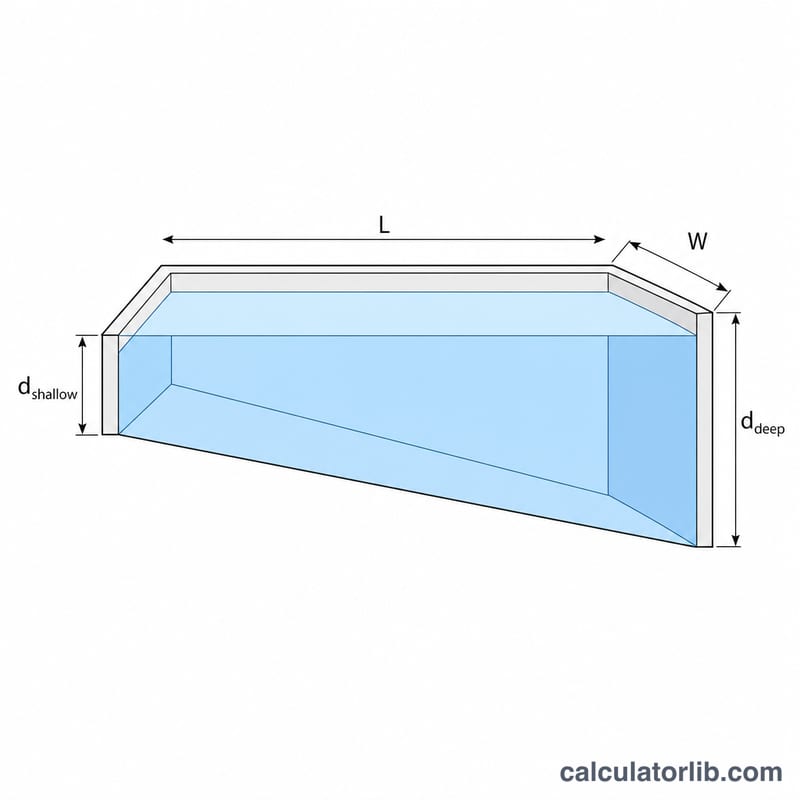
Worked Example
Consider a pool that is 32 ft long, 16 ft wide, 3 ft deep at the shallow end, and 8 ft deep at the deep end. The average depth is \((3 + 8) \div 2 = 5.5\) ft. The volume is \(32 \times 16 \times 5.5 = 2{,}816\) cubic feet. Multiplying by 7.48 gives 21,063.68 gallons of water.
$$32 \times 16 \times 5.5 \times 7.48 = 21{,}063.68 \text{ gallons}$$FAQ
Why 7.48 and not 7.5? 7.48052 is the precise conversion; 7.48 is the common rounded value used by pool professionals and is accurate enough for chemical dosing.
What if my pool has a constant depth? Enter the same depth for both the shallow and deep fields; the average will equal that depth.
Does this work for above-ground pools? Yes, as long as the pool is rectangular. Use the actual water depth, not the wall height, since pools are rarely filled to the brim.