
What Are Chill Hours?
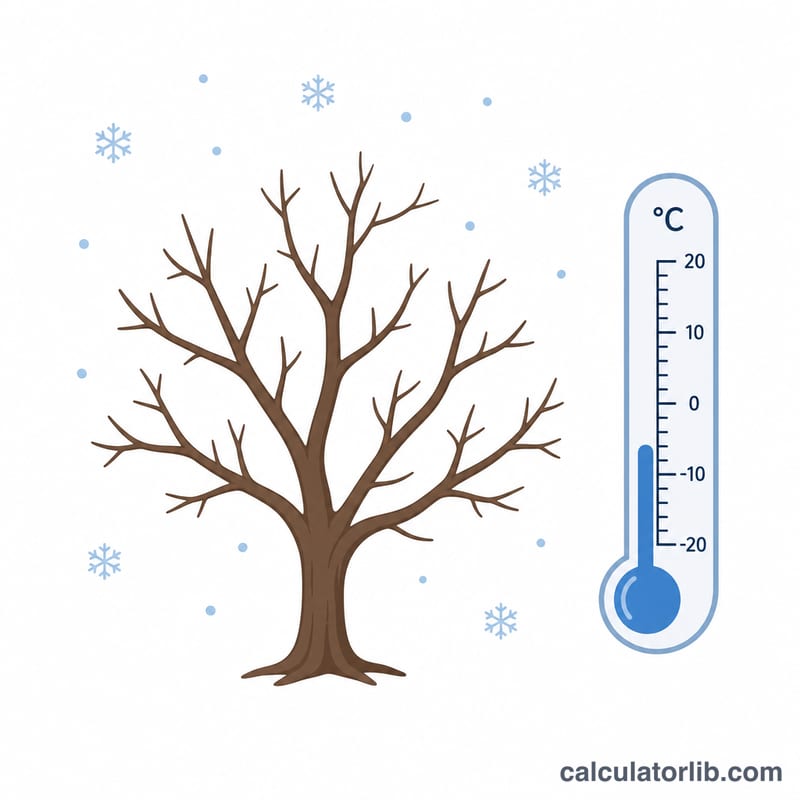
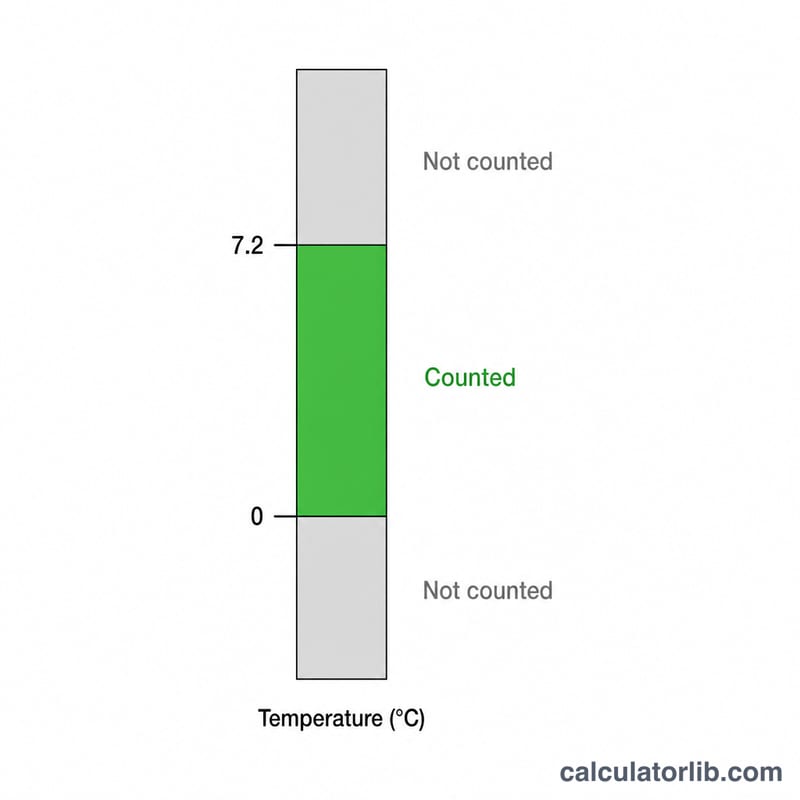
Chill hours measure the amount of cold a deciduous fruit tree experiences during winter dormancy. Most varieties of apple, peach, cherry, pear and other temperate fruits must accumulate a minimum number of chilling hours before they will break dormancy and flower properly in spring. The most widely used standard is the 0–7.2°C model: every hour with a temperature between 0°C (32°F) and 7.2°C (45°F) counts as one chill hour. Hours that are colder than freezing or warmer than 7.2°C do not count.
How to Use This Calculator
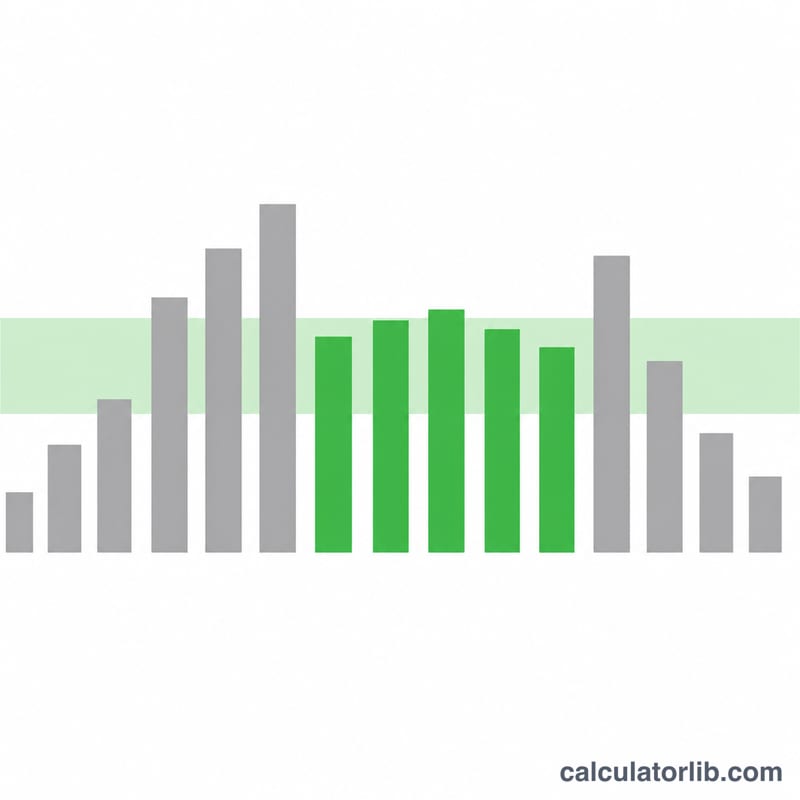
Enter the total number of hours you tracked over the dormant season (for example, 2,160 hours for a 90-day period), then the percentage of those hours that fell within the chilling band of 0–7.2°C. Optionally enter the chill-hour requirement for your specific variety to see how close you are. The calculator multiplies total hours by the chilling fraction to estimate accumulated chill hours and compares it against your target.
The Formula Explained
$$\text{Chill Hours} = \text{Total Hours} \times \frac{\text{Fraction in band}}{100}$$ For instance, if you logged 2,160 hours and 40% of them were between 0°C and 7.2°C, you accumulated \(2{,}160 \times 0.40 = 864\) chill hours. If your peach variety needs 800 hours, you have met the requirement with 64 hours to spare (108% of target).
Worked Example
A grower tracks 1,000 hours and finds 50% fell in the chilling range: $$1{,}000 \times 0.50 = 500 \text{ chill hours}.$$ Their apple variety requires 700 hours, so \(700 - 500 = 200\) chill hours are still needed (71% complete).
FAQ
Which chill model is this? The classic 0–7.2°C (Below-45°F adapted) hours model, the simplest and most common standard worldwide.
Why does my fruit set poorly with too few chill hours? Insufficient chilling causes delayed, irregular flowering, weak bud break and reduced fruit set. Choosing a low-chill variety suited to your climate solves this.
How do I get the fraction of hours in the band? If you have hourly temperature logs, count the hours between 0°C and 7.2°C and divide by the total hours, then enter that as a percentage.