
What Is the Concrete Slab Calculator?
This calculator estimates the surface area and the amount of concrete you need to pour a rectangular slab — such as a patio, driveway, shed base, or garage floor. Enter the slab's length, width, and thickness and instantly see the area in square feet, the volume in cubic feet and cubic yards, and an approximate number of 60 lb concrete bags. It is a universal geometry tool that works with any imperial measurements.
How to Use It
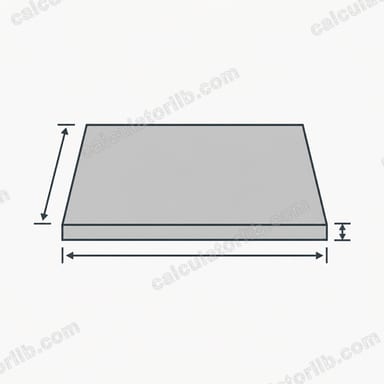
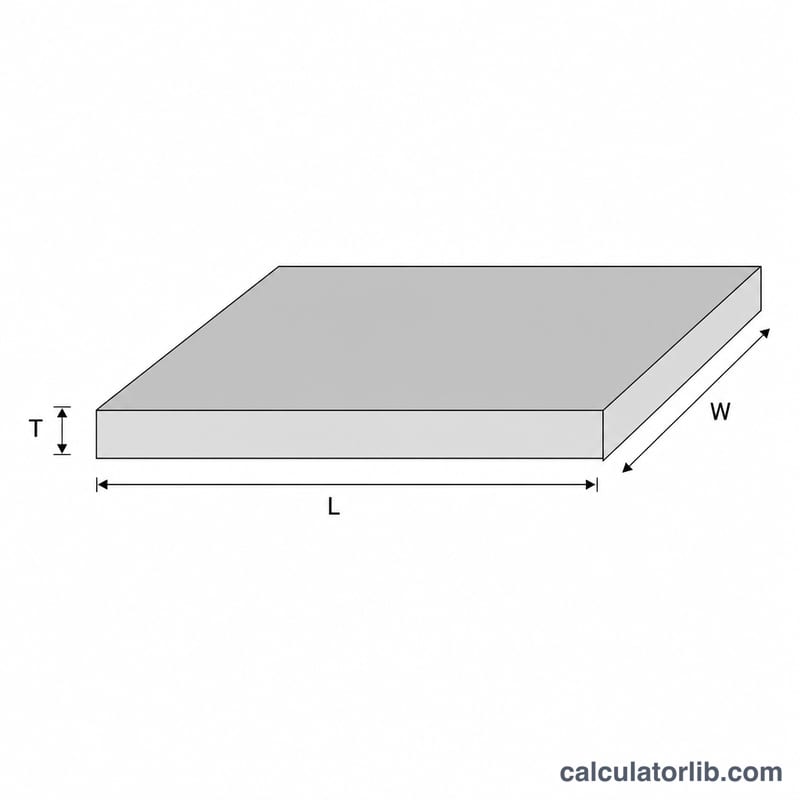
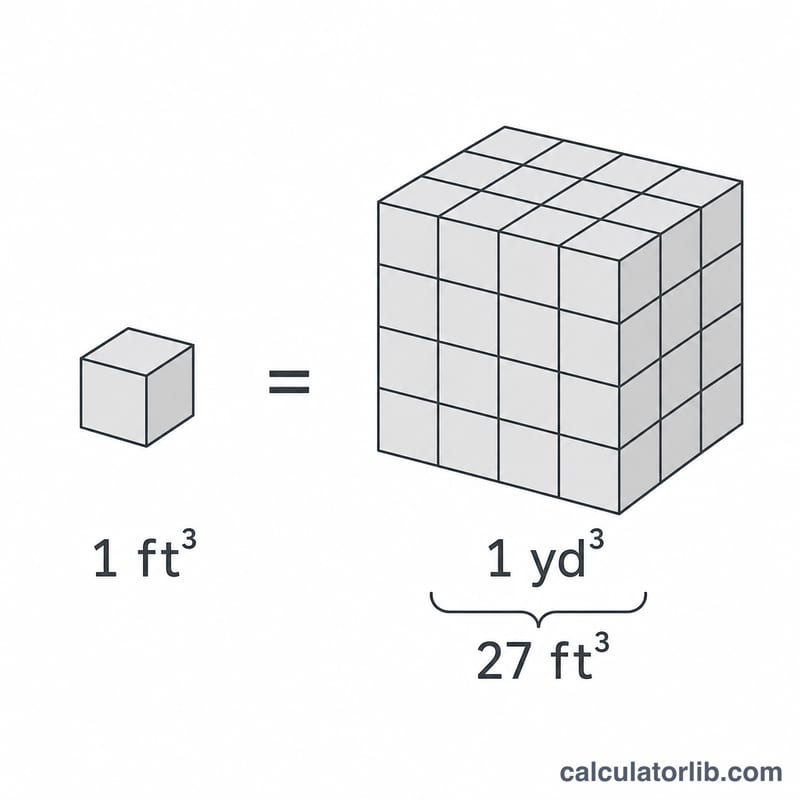
Enter the slab length and width in feet, and the thickness in inches (4 inches is typical for patios and walkways; 6 inches for driveways). The calculator converts thickness to feet, multiplies the three dimensions for volume, and divides by 27 to convert cubic feet to cubic yards — the unit concrete is usually ordered in.
The Formula Explained
The core equations are:
$$A = L \times W$$
$$V = L \times W \times \frac{T}{12}$$
Thickness is divided by 12 to convert inches to feet so all dimensions share the same unit. The resulting volume in cubic feet is divided by 27 (since 1 cubic yard = 27 cubic feet) to get cubic yards.
Worked Example
For a 10 ft × 10 ft slab at 4 inches thick: Area = \(10 \times 10 = 100\) sq ft. Volume:
$$V = 10 \times 10 \times \frac{4}{12} = 33.33 \text{ cubic feet} = 1.235 \text{ cubic yards}$$That is roughly 74 sixty-pound bags — for a job that size, ordering ready-mix is far easier.
FAQ
How thick should my slab be? Patios and walkways are commonly 4 inches; driveways and heavier loads use 5–6 inches.
Should I add extra concrete? Yes — order about 5–10% extra to account for spillage, uneven subgrade, and waste.
How many bags per cubic yard? A 60 lb bag yields about 0.45 cubic feet, so roughly 60 bags fill one cubic yard. Bag estimates here use that approximation.