
What Is the Dog Ideal Weight Calculator?
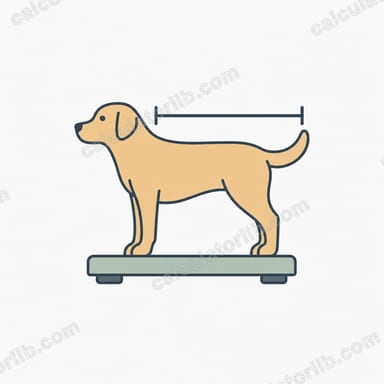
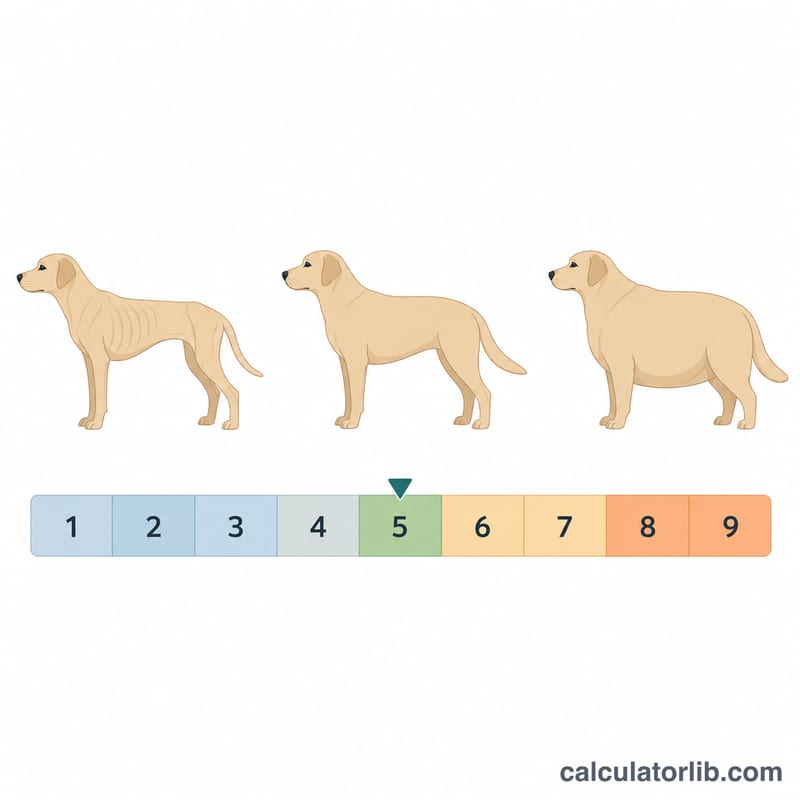
This tool estimates your dog's ideal (target) body weight based on its current weight and its Body Condition Score (BCS) on the common 9-point scale. A BCS of 5/9 is considered ideal. The widely used veterinary rule of thumb is that each point above 5 corresponds to roughly 10% above ideal weight, so the calculator reverses that relationship to estimate what your dog "should" weigh.
How to Use It
Enter your dog's current weight, choose kilograms or pounds, then select the Body Condition Score your vet assigned (or your own honest assessment). The calculator returns the estimated ideal weight plus how much weight needs to be lost or gained and the percentage over or under ideal.
The Formula Explained
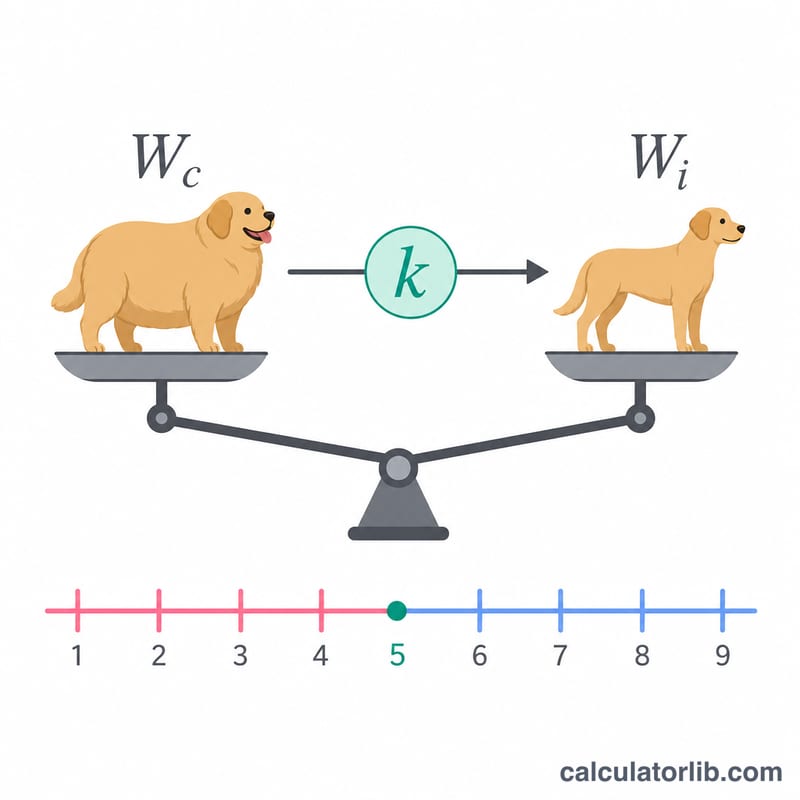
$$\text{Ideal Weight} = \frac{\text{Current Weight}}{1 + \left(\text{BCS} - 5\right)\times 0.1}$$ For example, a BCS of 7 implies the dog is about 20% over ideal, so the divisor becomes \(1 + (7 - 5) \times 0.1 = 1.2\). A score below 5 produces a divisor less than 1, indicating an underweight dog whose ideal weight is higher than its current weight.
Worked Example
A Labrador weighs 30 kg with a BCS of 7. Divisor \(= 1 + (7 - 5) \times 0.1 = 1.2\). Ideal weight \(= 30 / 1.2 = 25\) kg. The dog should lose about 5 kg, which is 20% over its ideal weight.
FAQ
Is this a substitute for a vet? No. This is an estimate. Body Condition Scoring is subjective, and breed, frame, and muscle mass vary. Always confirm a weight-loss plan with your veterinarian.
What is Body Condition Score? BCS is a standardized 1-9 scale where 5 is ideal: you should easily feel the ribs with a slight fat cover and see a visible waist from above.
What if my dog is underweight? Choose a BCS below 5 and the calculator will show a higher target weight, meaning your dog may need to gain weight under veterinary guidance.