
What this calculator does
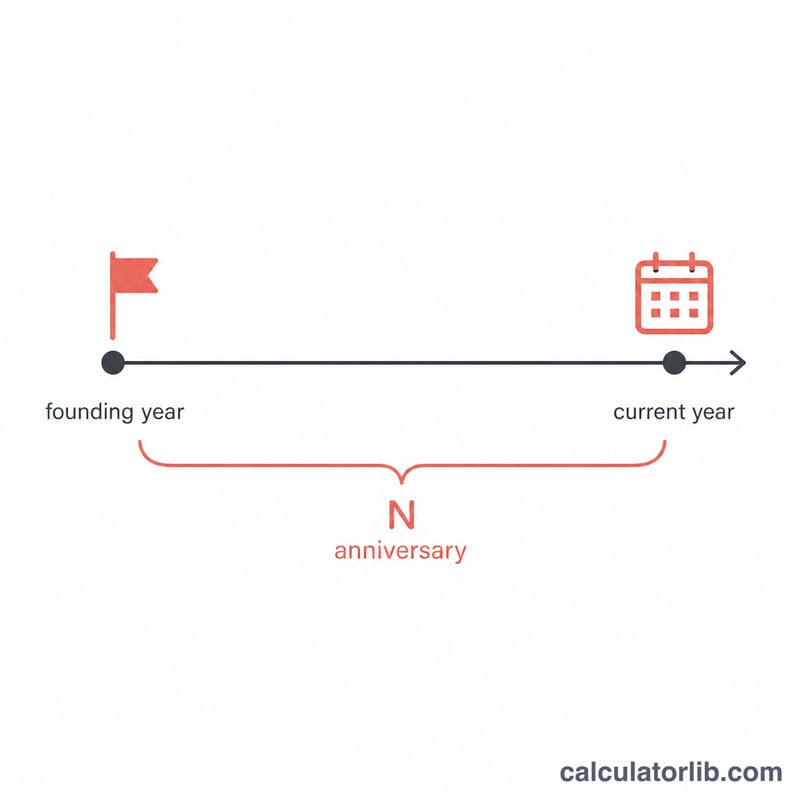
This tool answers a simple but common question: "If something is celebrating its Nth anniversary this year, what year did it begin?" Give it the current (Western/Gregorian) year and the anniversary number, and it returns the founding, establishment, opening, or birth year. The core arithmetic is universal, but this calculator also shows the founding year in the Japanese imperial era (nengo / wareki), which is Japan-specific. Non-Japanese users can simply read the Western year; the Japanese-era output is provided for Japanese context.
How to use it
Enter the current year (it defaults to the live calendar year, but you can override it). Then enter the anniversary number — the count of years since the event, such as a company's "65th anniversary." The result shows the founding year both as a Gregorian year and as a Japanese era year (for example, Heisei 18).
The formula explained
The relationship used here is:
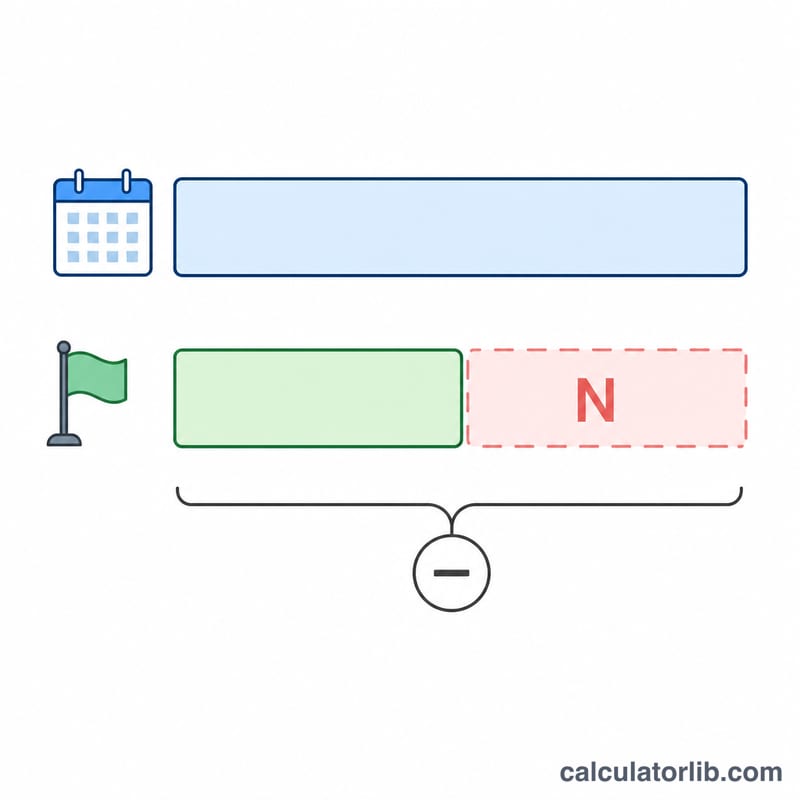
$$\text{foundingYearWestern} = \text{currentYear} - \text{anniversaryCount}$$
In the Japanese anniversary counting used on the source page, an "Nth anniversary" means N full years have elapsed since the event. So a firm marking its 65th anniversary in 2021 was founded in \(2021 - 65 = 1956\). The Japanese era is then determined from the era in effect on January 1 of that founding year — which is why transition years such as 1989 fall in the older era (Showa 64, not Heisei 1).
Worked example
Current year = 2024, anniversary = 18. Then \(2024 - 18 = 2006\). Since \(2006 \geq 1990\), the Japanese era is Heisei, and the era year is \(2006 - 1988 = 18\). Result: founded in 2006 (Western) = Heisei 18.
FAQ
Why don't you add 1? Because the anniversary count equals the number of elapsed years (current year minus founding year). A 65th anniversary in 2021 corresponds exactly to a 1956 founding (\(2021 - 1956 = 65\)).
Why is the era based on January 1? The source page states the Japanese era is displayed as of January 1 of the founding year. Eras changed mid-year, so the boundary years use the older era.
What if the founding year is before Meiji (1868)? The Japanese-era output is not defined and only the Western year is shown.