
What This Calculator Does
The Livestock Fence Cost Calculator gives you a quick materials estimate for fencing a pasture, paddock, or enclosure. By combining the cost of the fencing run (per foot or per meter) with the cost of the posts that support it, you get a single, realistic figure to plan your budget before you order materials.
How to Use It
Enter the total perimeter length you need to fence, the cost per unit length of your wire, rail, or mesh, the number of posts you plan to set, and the price of each post. The calculator multiplies and adds these to produce the total. Use any consistent unit and currency — if you measure in feet, enter cost per foot; if in meters, enter cost per meter.
The Formula Explained
The estimate uses a simple two-part cost model:
$$\text{Total Cost} = (\text{Perimeter Length} \times \text{Cost per Unit Length}) + (\text{Number of Posts} \times \text{Cost per Post})$$
The first term covers the linear fencing material that runs along the entire perimeter. The second term covers the structural posts. Keeping the two separate lets you see where your money goes and adjust either part — for example, spacing posts farther apart or choosing cheaper wire.
Worked Example
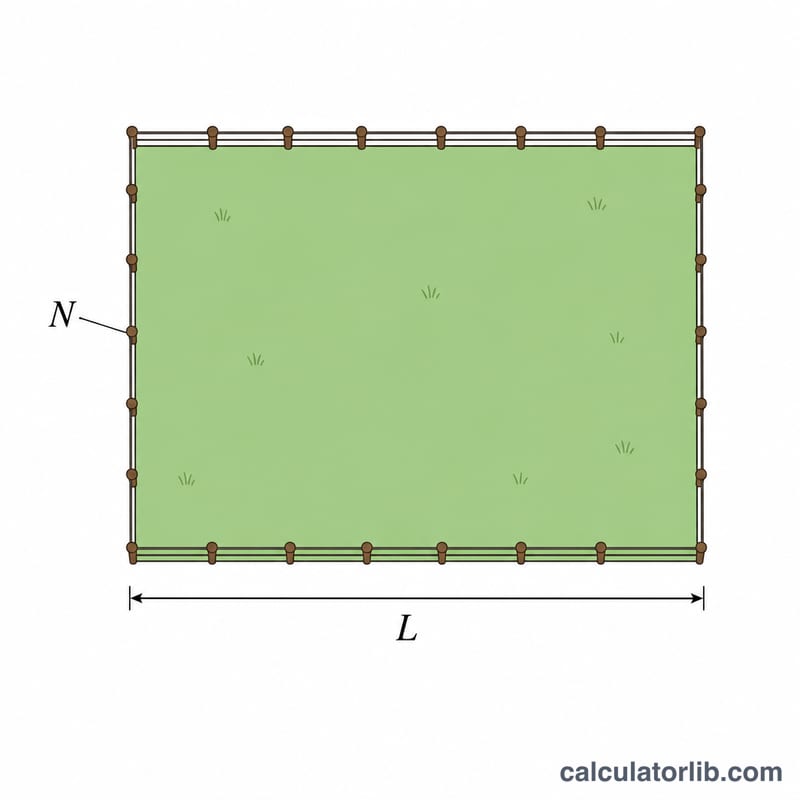
Suppose you are fencing a 1,000-foot perimeter with wire costing $2.50 per foot, and you need 80 posts at $12 each. Fencing cost = \(1{,}000 \times \$2.50 = \$2{,}500\). Post cost = \(80 \times \$12 = \$960\). Total = \(\$2{,}500 + \$960 = \$3{,}460\) $3,460.
FAQ
How many posts do I need? Divide your perimeter by your chosen post spacing (commonly 8–12 ft), then add extra posts for corners, gates, and ends.
Does this include labor? No — this is a materials-only estimate. Add labor, gates, hardware, and a contingency margin (typically 10–15%) for a full project budget.
Can I use metric units? Yes. Just enter the perimeter in meters and the cost per meter; the math is unit-agnostic as long as you stay consistent.