

What Is the EV Charging Cost Calculator?
This calculator estimates how much it costs to charge an electric vehicle (EV) for a single charging session. By combining your battery capacity, the amount of charge you add (as a percentage of the battery), and your local electricity price per kilowatt-hour (kWh), it gives you a quick, accurate cost figure. The formula is universal and works with any currency — just enter the price in whatever currency you pay.
How to Use It
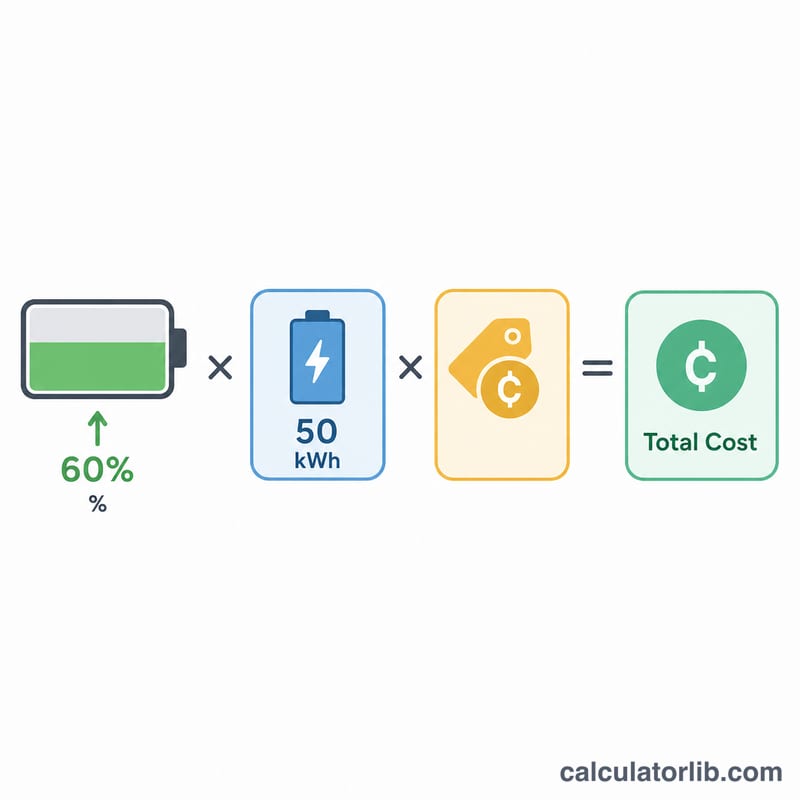
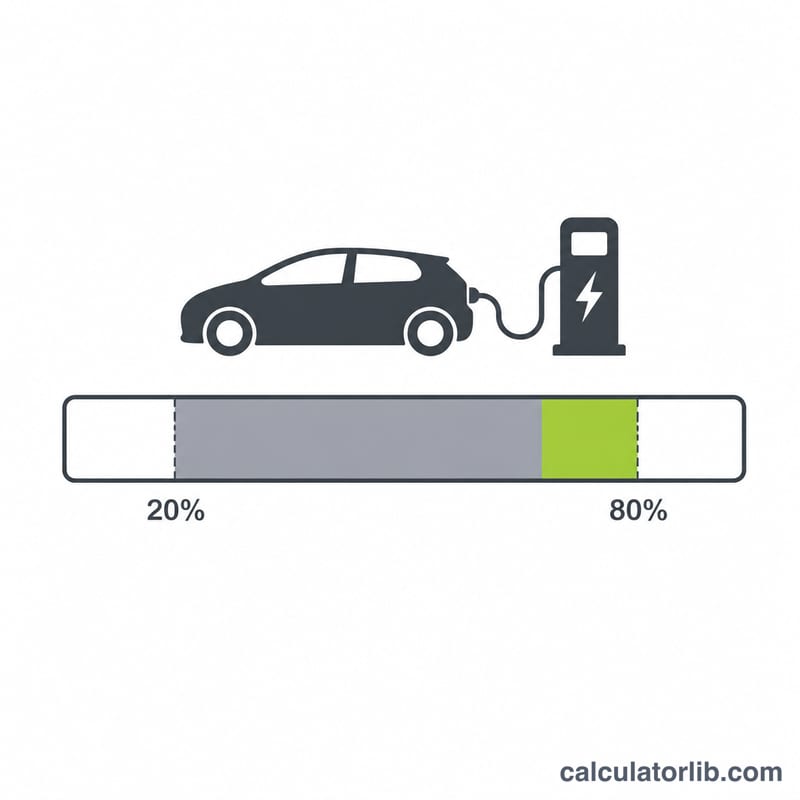
Enter three values: your vehicle's usable battery capacity in kWh (for example 60), the percentage of charge you intend to add in this session (for example going from 20% to 100% means 80%), and the price you pay per kWh of electricity. The calculator multiplies these to show both the energy delivered and the total cost.
The Formula Explained
First the energy added is found: $$\text{kWh added} = \text{battery capacity} \times \left(\frac{\text{charge \%}}{100}\right)$$ Then the cost is simply $$\text{cost} = \text{kWh added} \times \text{price per kWh}$$ This assumes you pay only for the energy that lands in the battery. Real-world charging may add 10–20% extra due to charging losses, so consider raising your price slightly to account for inefficiency, especially with home AC charging.
Worked Example
Suppose you have a 60 kWh battery and add 80% of charge at a price of 0.15 per kWh. Energy added = \(60 \times 0.80 = 48\) kWh. Cost = \(48 \times 0.15 = 7.20\). So this charging session costs 7.20 in your currency.
FAQ
Does this include charging losses? No. It calculates the cost of energy stored in the battery. Actual grid consumption can be a little higher.
What if I only charged from 30% to 70%? That is 40% of charge added, so enter 40 in the charge added field.
Can I use it for public fast chargers? Yes. Just enter the per-kWh price your charging network bills; some networks charge per minute instead, in which case this estimate won't apply directly.