
What Is the Luteal Phase?
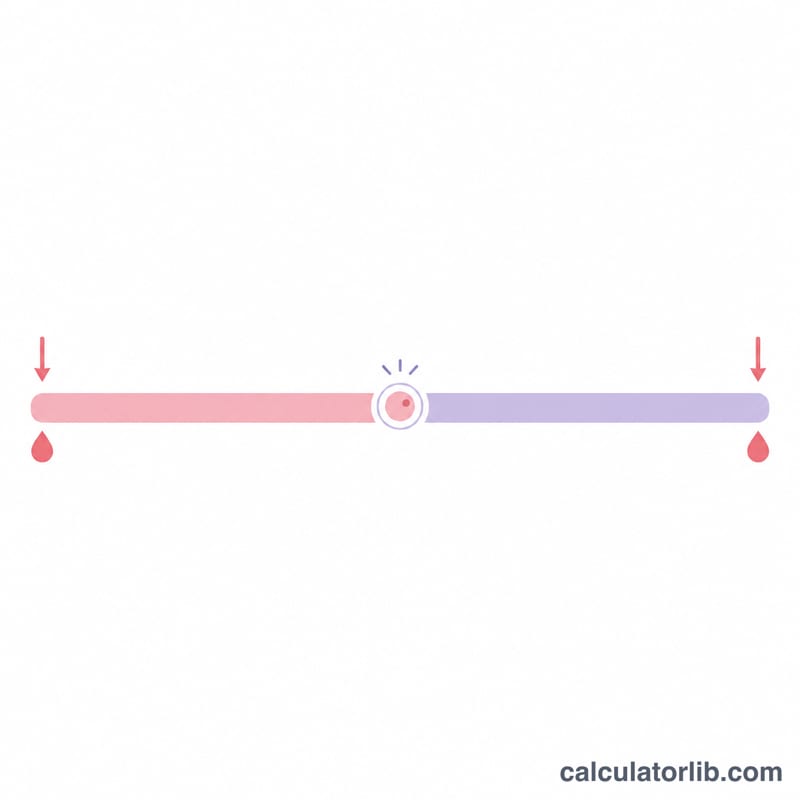
The luteal phase is the part of your menstrual cycle that begins right after ovulation and ends when your next period starts. During this time the ruptured follicle becomes the corpus luteum, which secretes progesterone to prepare the uterine lining for a possible pregnancy. A typical luteal phase lasts about 12 to 14 days, though anywhere from roughly 11 to 16 days is generally considered normal.
How to Use This Calculator
Enter the date you ovulated and the date your next period started. The calculator subtracts the ovulation date from the period start date to give the luteal phase length in days, and classifies it as short, normal, or long. If you don't know your exact ovulation date, you can estimate it from an ovulation predictor kit, basal body temperature charting, or fertility tracking apps.
The Formula Explained
The calculation is a simple date difference:
$$\text{Luteal Phase (days)} = \text{Next Period Start Date} - \text{Ovulation Date}$$
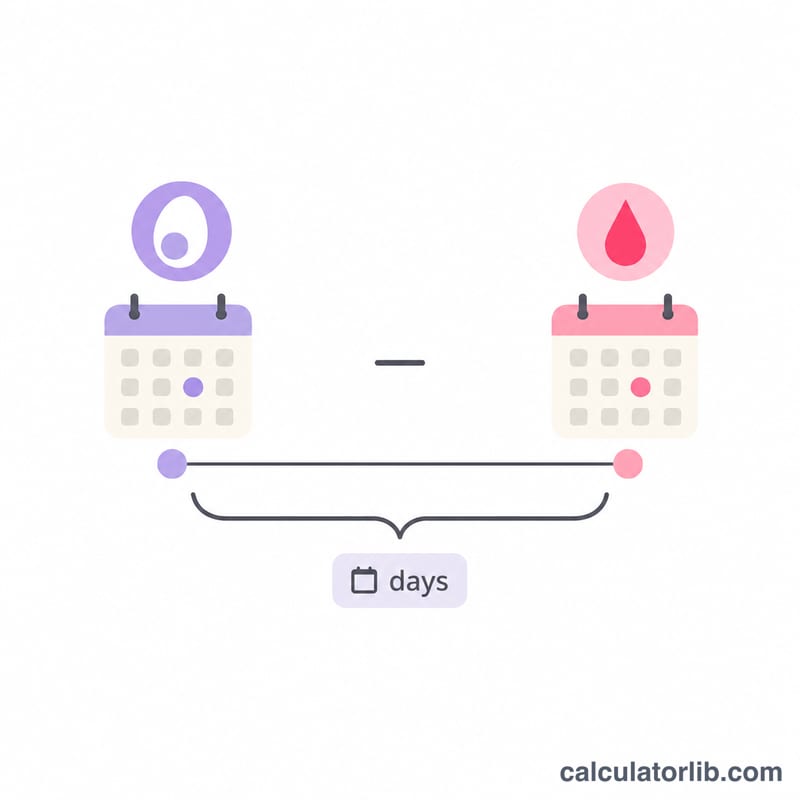
For example, if you ovulated on January 14 and your period began on January 28, the luteal phase length is \(28 - 14 = 14\) days, which is a healthy, normal length.
Worked Example
Ovulation date: March 10. Next period start date: March 22. The difference is \(12\) days, placing it comfortably in the normal range. A consistently normal luteal phase suggests adequate progesterone production to support implantation.
FAQ
What is a short luteal phase? A luteal phase shorter than about 10 days is sometimes called a luteal phase defect and may make it harder for a fertilized egg to implant. Discuss persistent short phases with your doctor.
Does the luteal phase length change? Unlike the follicular phase, the luteal phase is usually quite stable from cycle to cycle, typically varying by only a day or two.
Is this calculator a medical diagnosis? No. It is an educational estimate. For fertility concerns or irregular cycles, consult a healthcare professional.