What Is the Material Yield Calculator?
The Material Yield Calculator estimates how much coverage or finished output a given quantity of raw material will produce. Whether you are working with paint, flooring, fabric, concrete, feed, or manufacturing stock, it converts a supply of material into a realistic usable total by accounting for expected waste. This helps you order the right amount and avoid costly shortfalls or overspending.
The Formula Explained
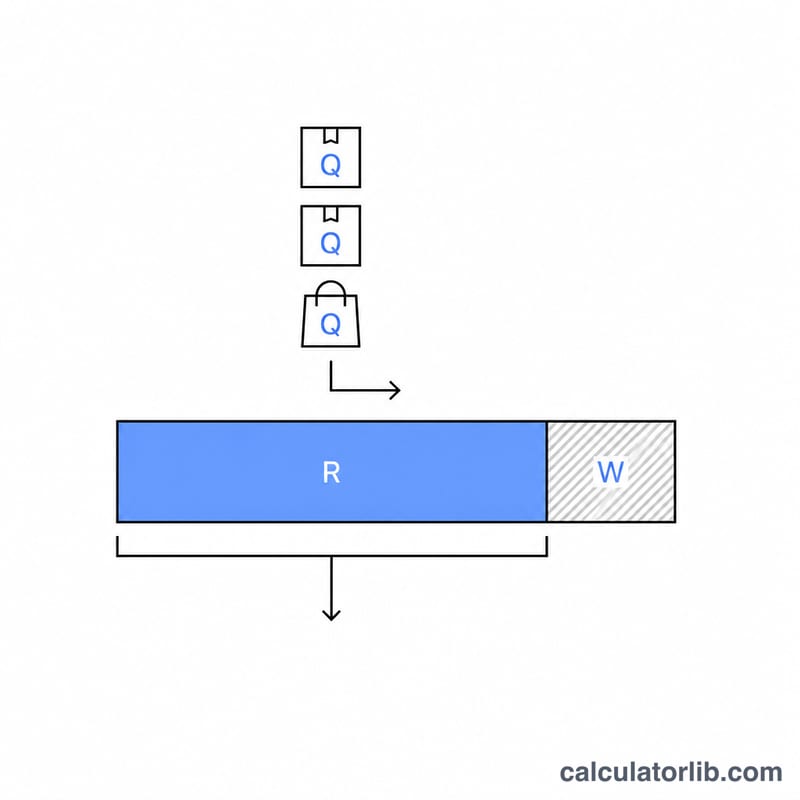
The gross output multiplies the quantity of material by the yield each unit provides:
$$\text{Gross Yield} = Q \times R$$The usable, or net, yield then removes a waste allowance:
$$\text{Net Yield} = Q \times R \times \left(1 - \frac{W}{100}\right)$$Here \(Q\) = quantity of material, \(R\) = yield or coverage per unit, and \(W\) = waste percentage. The material lost is simply \(\text{Gross} - \text{Net}\).
How to Use It
Enter the quantity of material you have, the yield each unit delivers (for example square feet per gallon or parts per kilogram), and an optional waste allowance. The calculator returns your usable net yield, the gross yield before waste, and the amount lost to waste.
Worked Example
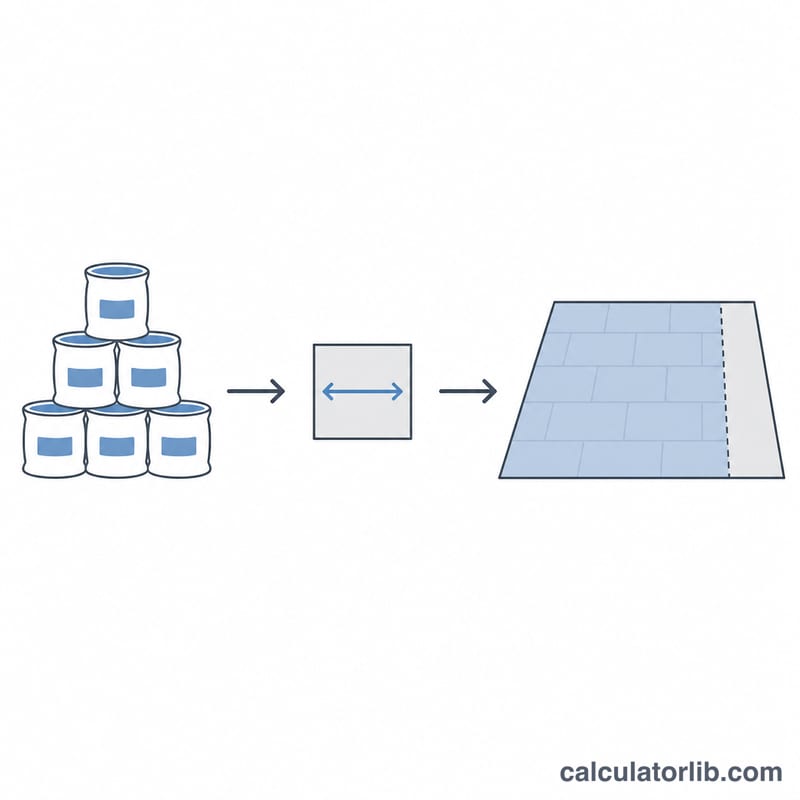
Suppose you have 20 gallons of paint that each cover 15 square feet, with a 10% waste allowance:
$$\text{Gross} = 20 \times 15 = 300$$$$\text{Net} = 300 \times \left(1 - \frac{10}{100}\right) = 270$$You can reliably cover \(270\) square feet, losing \(30\) to waste.
FAQ
What should I use for the waste allowance? Typical values range from 5% to 15% depending on cut complexity, spillage, or trimming; use 0% for an ideal theoretical figure.
What units does it use? Any consistent units. If yield per unit is in square feet, the result is in square feet.
Can it work in reverse? To find material needed, divide your target output by the net yield of one unit.