
What Is the Quarterly Estimated Tax Calculator?
This tool applies to United States federal taxes (IRS Form 1040-ES). It estimates the four equal quarterly payments you should send the IRS when you have income that isn't subject to withholding — such as self-employment, freelance, investment, rental, or business income. Figures are general estimates for the current tax year and do not replace professional tax advice.
How to Use It
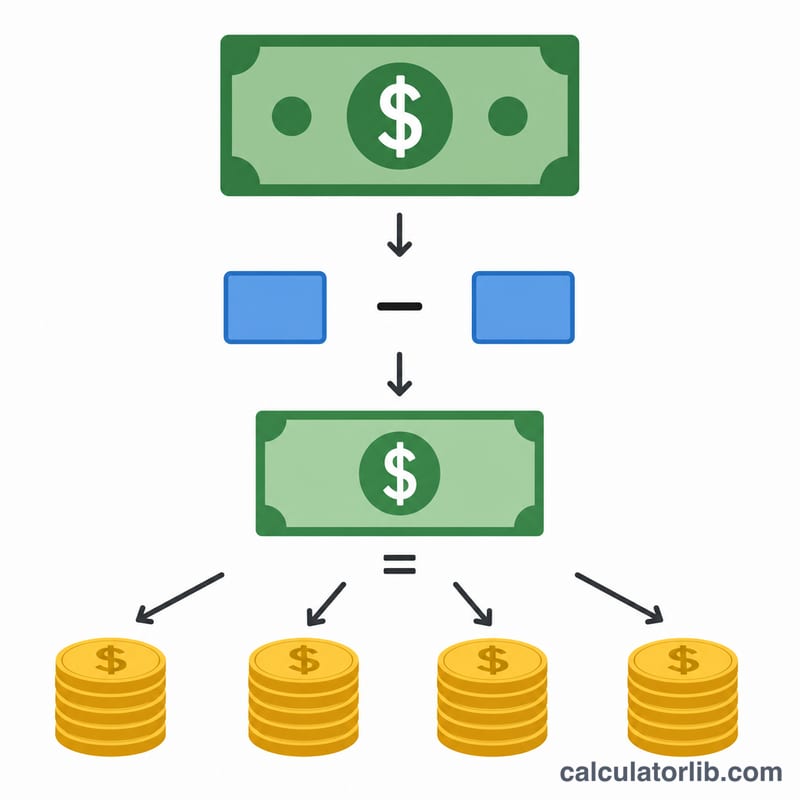
Enter the total tax you expect to owe for the whole year, the amount already withheld or paid (from a W-2 job, prior estimated payments, etc.), and any refundable credits you expect. The calculator subtracts withholding and credits from your expected tax, then divides the remaining balance by four to give the amount due at each IRS deadline.
The Formula Explained
The math is simple but the inputs matter:
$$\text{Quarterly Payment} = \frac{\max\left(0,\; \text{Expected Tax} - \text{Withheld} - \text{Credits}\right)}{4}$$
Net Tax Due = Expected Annual Tax − Withholding − Credits, then Quarterly Payment = Net Tax Due ÷ 4. If withholding plus credits already cover your tax, the net due is zero and no estimated payments are required.
Worked Example
Suppose you expect to owe $20,000 in federal tax, your W-2 job withholds $8,000, and you have no extra credits. Net tax due = \(\$20{,}000 - \$8{,}000 = \$12{,}000\). Divided by four, each quarterly payment is $3,000.
$$\text{Quarterly Payment} = \frac{20{,}000 - 8{,}000}{4} = \frac{12{,}000}{4} = 3{,}000$$
FAQ
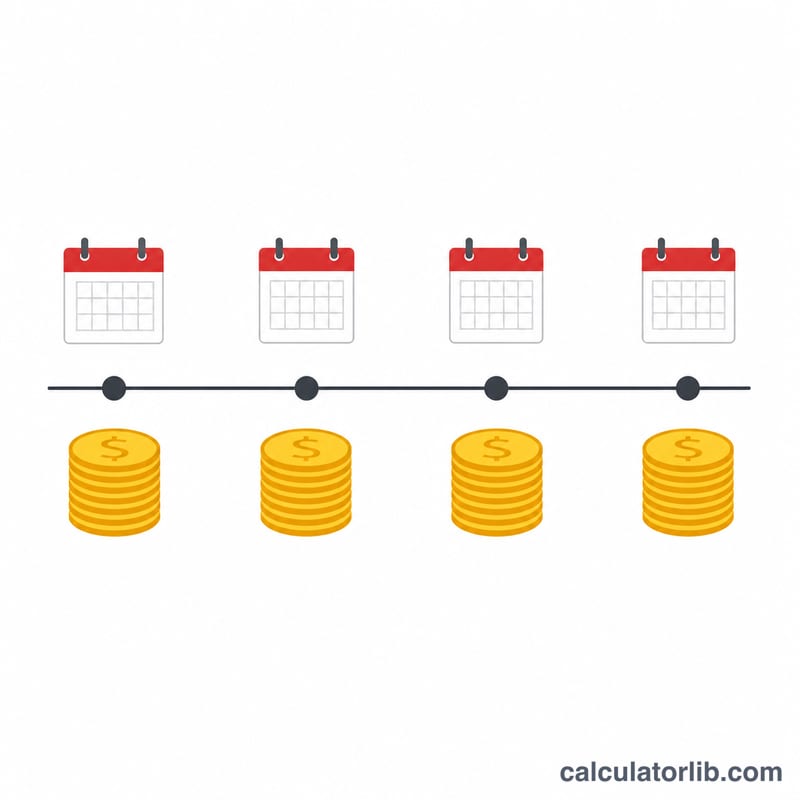
When are the payments due? Generally April 15, June 15, September 15, and January 15 of the following year. Dates shift if they fall on a weekend or holiday.
Do I have to pay estimated tax? Usually if you expect to owe at least $1,000 after withholding and credits. Check the IRS safe-harbor rules (90% of this year's tax or 100%/110% of last year's).
What counts as withholding? Federal income tax taken from paychecks, pensions, or other payments, plus any estimated payments you've already made.