
What Is Shift Differential Pay?
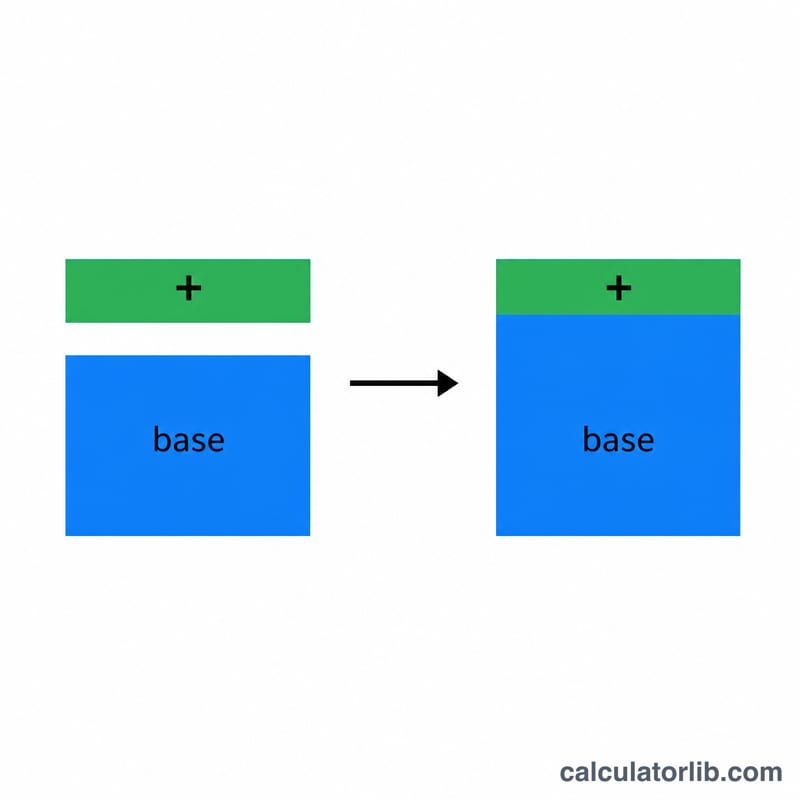
Shift differential pay is extra compensation employers offer to encourage staff to work less-desirable hours — typically evenings, overnight shifts, weekends, or holidays. It is usually expressed as a percentage premium on top of your normal hourly rate (for example, an extra 10%). This calculator estimates your total gross pay by combining your standard base pay with the differential premium earned on qualifying hours.
How to Use the Calculator
Enter four values: your base hourly rate, the total hours you worked, the shift differential percentage your employer pays, and the number of differential hours (hours that actually qualify for the premium). The tool returns your total gross pay, plus a breakdown of base pay, the per-hour differential rate, and the differential pay portion.
The Formula Explained
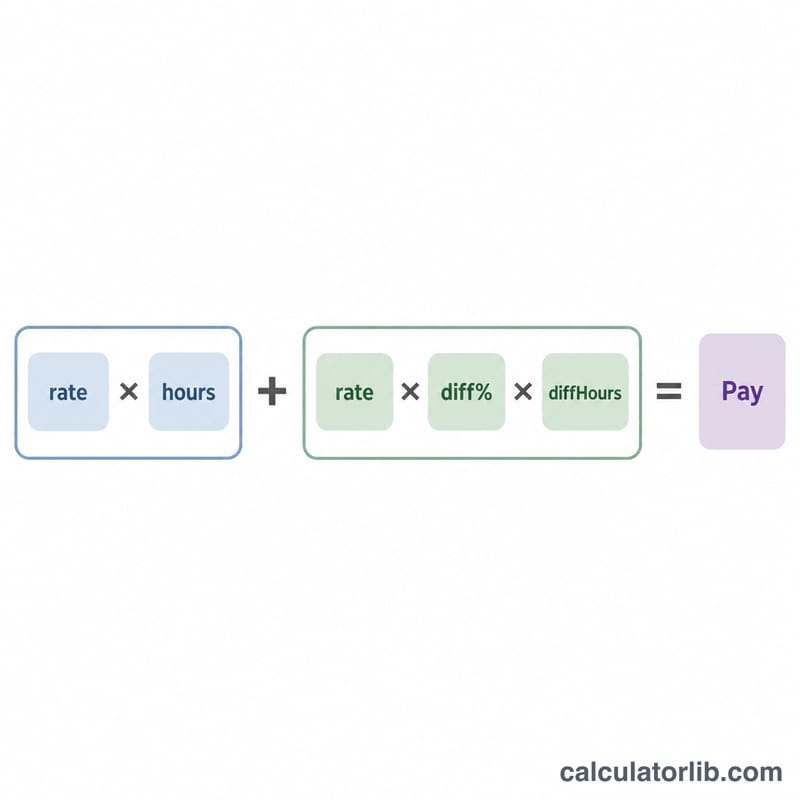
The calculation has two parts. First, base pay is simply your rate times total hours. Second, the differential is the premium rate (rate × diff% ÷ 100) multiplied by the number of differential hours:
$$\text{Pay} = (\text{rate} \times \text{hours}) + \left(\text{rate} \times \frac{\text{diff\%}}{100}\right) \times \text{diffHours}$$Note that differential hours are usually a subset of total hours, but this calculator treats them independently so it works whether the premium applies to all hours or only some of them.
Worked Example
Suppose you earn $20/hour, work 40 hours total, receive a 10% night differential, and 8 of those hours qualify for the premium. Base pay = \(20 \times 40 = \$800\). The differential rate is \(20 \times 10 \div 100 = \$2/\text{hour}\), so differential pay = \(2 \times 8 = \$16\). Total gross pay = \(800 + 16 =\) $816.
FAQ
Does this include overtime? No. This estimates straight-time base pay plus the differential premium. Overtime rules vary and should be calculated separately.
Is the differential applied to all hours? Only to the differential hours you enter. If every hour qualifies, set differential hours equal to total hours.
Is this gross or net pay? It's gross pay, before taxes and deductions.