

What Is Gross Pay?
Gross pay is the total amount an employee earns in a pay period before any taxes, benefits, or other deductions are subtracted. For hourly workers, it combines pay for regular hours worked with any overtime earnings. This calculator gives you a quick, accurate gross pay figure so you can verify a paycheck, plan a budget, or estimate labor costs.
How to Use the Calculator
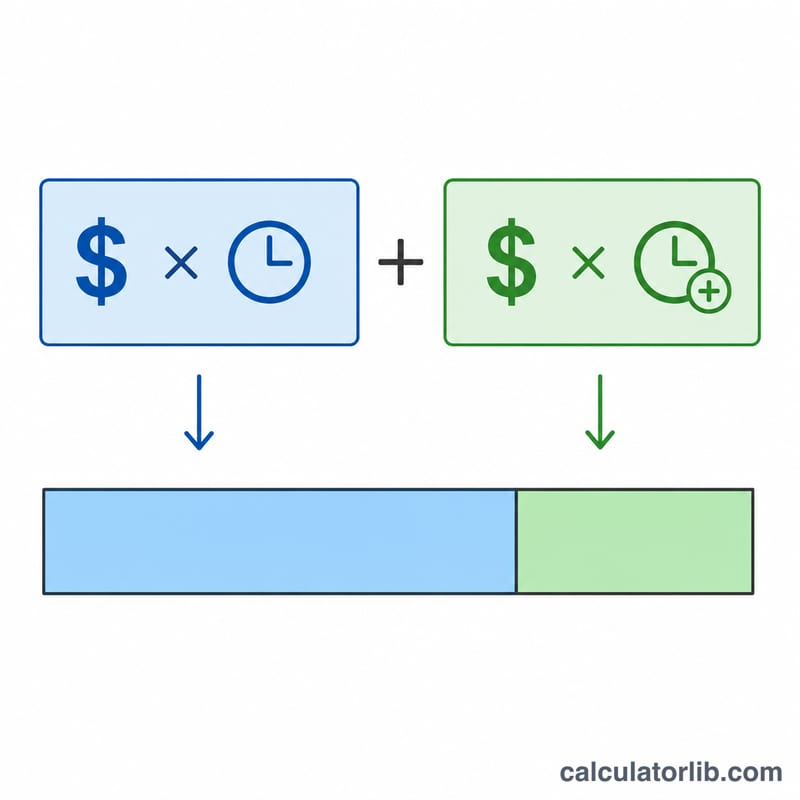
Enter four values: your hourly rate, the number of regular hours worked, your overtime rate (often 1.5\(\times\) the base rate), and the number of overtime hours. The calculator multiplies each pair and adds them to show your total gross pay, broken down into regular and overtime components. If you have no overtime, simply leave those fields at zero.
The Formula Explained
The math is straightforward:
$$\text{Gross Pay} = (\text{Hourly Rate} \times \text{Hours Worked}) + (\text{Overtime Rate} \times \text{Overtime Hours})$$
Regular pay is your base rate times the hours you worked. Overtime pay uses a separate (usually higher) rate multiplied by the overtime hours. Summing the two gives gross pay.
Worked Example
Suppose you earn $20/hour and work 40 regular hours, plus 5 overtime hours at $30/hour. Regular pay = \(20 \times 40 = \$800\). Overtime pay = \(30 \times 5 = \$150\). Gross pay = \(800 + 150 =\) $950.
FAQ
Is this take-home pay? No. Gross pay is before taxes, insurance, and retirement deductions. Net (take-home) pay is what remains after those are subtracted.
What overtime rate should I use? In many jurisdictions overtime is 1.5\(\times\) the regular rate, so for a $20 base rate you would enter $30. Check your local labor rules.
Can I use it for salaried pay? This tool is designed for hourly pay. For salary, divide annual salary by the number of pay periods instead.