

What this calculator does
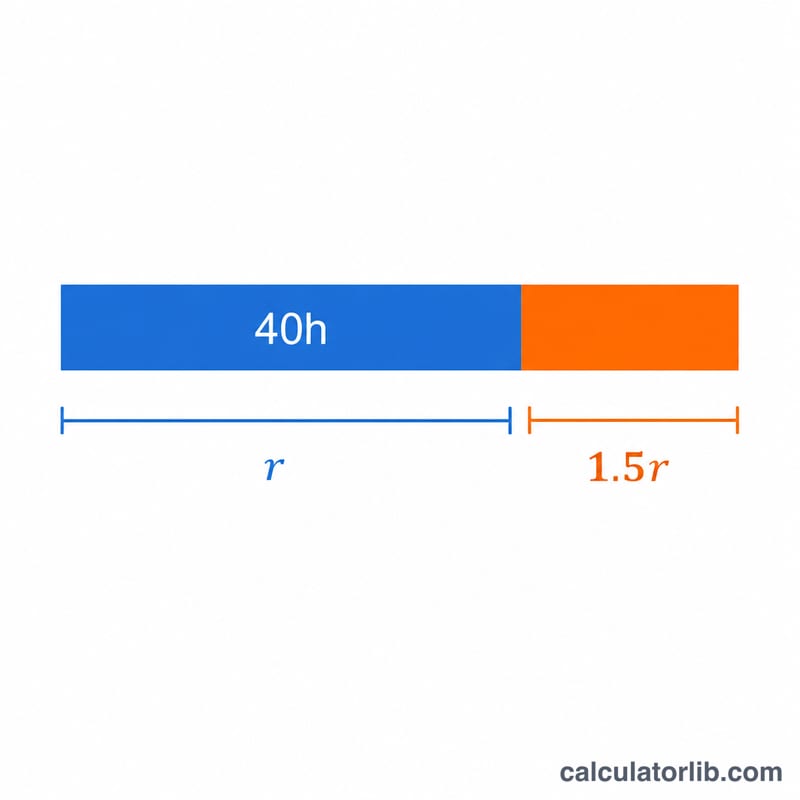
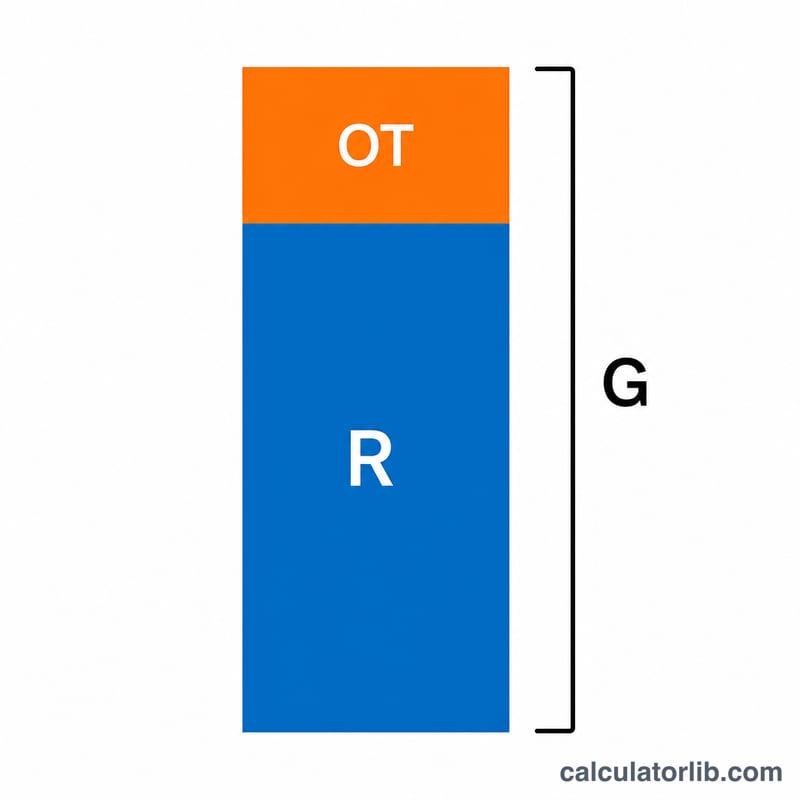
This Gross Pay Calculator turns a weekly time card into a paycheck estimate. Enter the total hours worked in a week and your hourly pay rate, and it splits your hours into regular and overtime, then totals the gross pay you earn before taxes and deductions. The overtime rule used here follows the common US FLSA standard: hours over 40 in a workweek are paid at 1.5× (time-and-a-half).
How to use it
Type the total hours you worked for the week (for example, 45) and your hourly rate (for example, $20). The calculator shows your regular hours (capped at 40), regular pay, overtime hours, overtime pay, and total gross pay. Adjust the numbers to compare scenarios such as taking extra overtime shifts.
The formula explained
$$\text{Gross} = \min(\text{hours}, 40) \times \text{rate} + \max(\text{hours} - 40, 0) \times \text{rate} \times 1.5$$ The first term pays your standard rate for up to 40 hours. The second term applies only when you work more than 40 hours, paying those extra hours at 1.5 times your rate. If you work 40 hours or fewer, the overtime term is zero.
Worked example
Suppose you work 45 hours at $20/hour. Regular pay = \(40 \times \$20 = \$800\). Overtime = \(5 \text{ hours} \times \$20 \times 1.5 = \$150\). Gross pay = \(\$800 + \$150 = \$950\) for the week.
FAQ
Is this my take-home pay? No — this is gross pay, before income tax, Social Security, Medicare, and other deductions.
Does it handle daily overtime? No. It uses the weekly 40-hour threshold. Some states (e.g., California) require daily overtime, which this simple tool does not model.
What overtime multiplier is used? 1.5× (time-and-a-half) for all hours above 40 in the week.