

What Is the Overtime Pay Calculator?
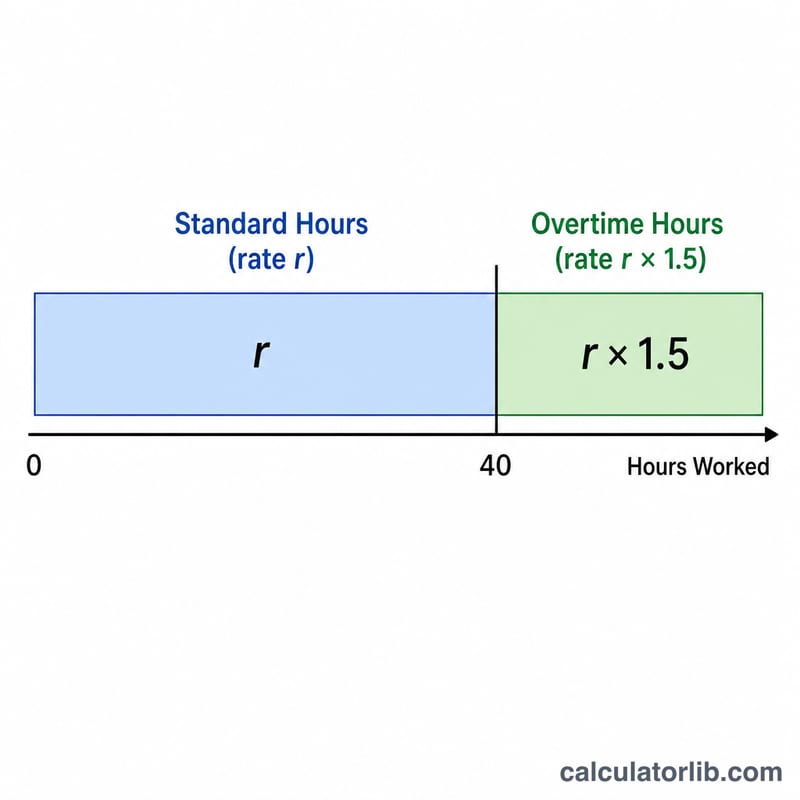
This calculator estimates your total gross pay for a work period by combining earnings from regular hours and overtime hours. Overtime is typically paid at a higher rate — commonly "time and a half" (1.5×) — so the tool lets you set the multiplier to match your pay agreement. It is a general-purpose wage tool; check your local labour rules for the exact overtime threshold and multiplier that apply to you.
How to Use It
Enter your standard hourly rate, the number of regular hours worked, the number of overtime hours, and the overtime multiplier (1.5 by default). The calculator returns your total pay along with a breakdown of regular pay, overtime pay, and the effective overtime hourly rate.
The Formula Explained
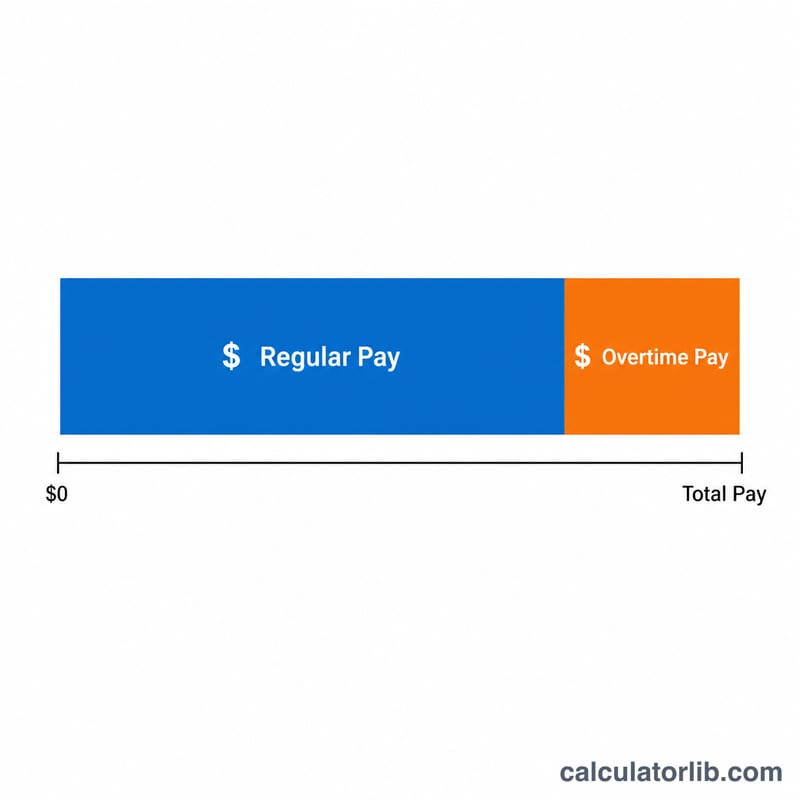
$$\text{Total Pay} = \left(\text{Regular Hours} \times \text{Hourly Rate}\right) + \left(\text{Overtime Hours} \times \text{Hourly Rate} \times \text{Multiplier}\right)$$ Regular pay is simply hours times rate. Overtime pay uses a boosted rate: your hourly rate multiplied by the overtime factor, then multiplied by the overtime hours worked.
Worked Example
Suppose you earn $20/hour, work 40 regular hours and 5 overtime hours at 1.5×. Regular pay = \(40 \times 20 = \$800\). Overtime rate = \(20 \times 1.5 = \$30\). Overtime pay = \(5 \times 30 = \$150\). Total pay = \(800 + 150 =\) $950.
FAQ
What multiplier should I use? Many regions mandate 1.5× for hours over a weekly threshold (often 40). Some pay 2× ("double time") for holidays. Adjust the multiplier field to match your situation.
Is this pre-tax? Yes. The result is gross pay before income tax, deductions, or benefits.
Can I use fractional hours? Yes — you can enter decimal hours such as 7.5 to reflect partial hours worked.