
What This Calculator Does
The Hourly to Salary with Overtime Calculator converts an hourly wage into an estimated annual, monthly and weekly salary while accounting for overtime hours paid at a premium rate. It is ideal for hourly workers, freelancers and HR staff who want to understand the full annual earning potential of a job that includes regular overtime.
How to Use It
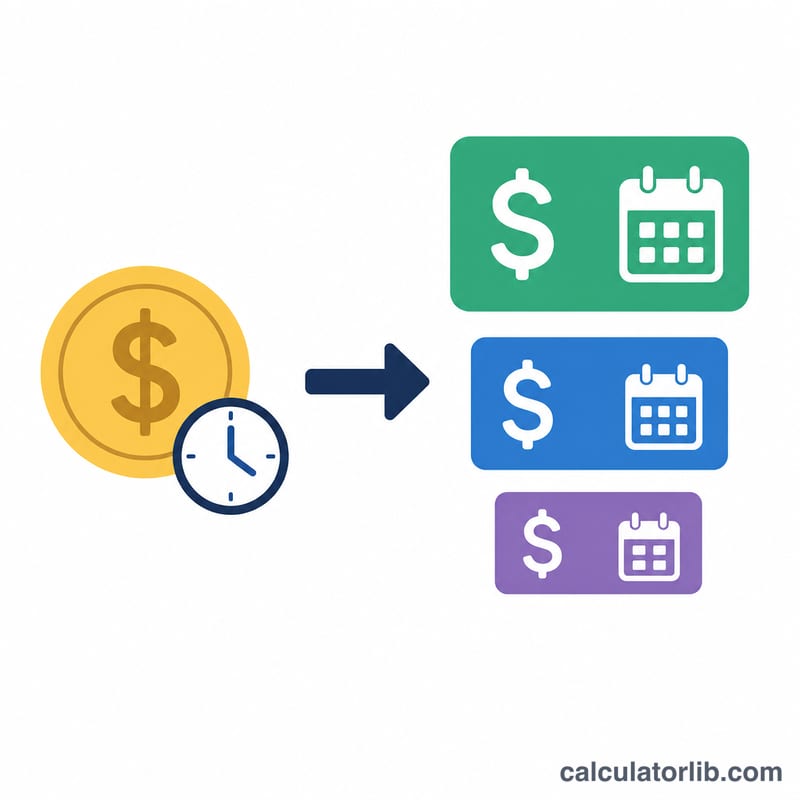
Enter your hourly rate, the number of regular hours you work each week, your weekly overtime hours, the overtime multiplier (commonly 1.5 for "time-and-a-half") and how many weeks you actually work in a year. A full year is 52 weeks; reduce this number if you take unpaid time off. The calculator returns your total annual salary plus a breakdown of weekly and monthly pay.
The Formula Explained
The core equation is:
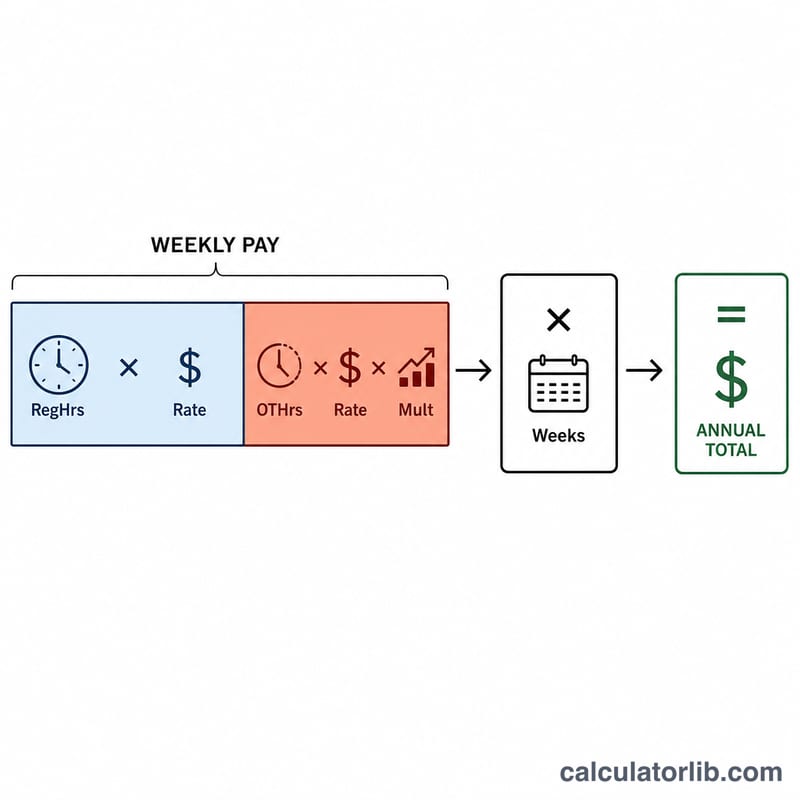
$$\text{Annual} = \left( \text{Regular Hours} \times \text{Rate} + \text{Overtime Hours} \times \text{Rate} \times \text{Multiplier} \right) \times \text{Weeks per Year}$$
Regular pay is your base hours times your rate. Overtime pay multiplies the rate by the premium (\(1.5\times\)) before multiplying by overtime hours. Adding the two gives weekly pay, which is then multiplied by weeks worked to project the year. Monthly pay is simply the annual figure divided by 12.
Worked Example
Suppose you earn $20/hour, work 40 regular hours and 5 overtime hours each week at \(1.5\times\) pay, across 52 weeks. Regular pay = $$40 \times 20 = \$800.$$ Overtime pay = $$5 \times 20 \times 1.5 = \$150.$$ Weekly total = $950. Annual = $$950 \times 52 = \$49{,}400,$$ or about $4,116.67 per month.
FAQ
What overtime multiplier should I use? Most jurisdictions use 1.5 ("time-and-a-half"). Some pay 2.0 ("double time") for holidays or excessive hours — adjust accordingly.
Does this account for taxes? No. The result is gross (pre-tax) income. Your take-home pay will be lower after taxes and deductions.
How many weeks should I enter? Use 52 for full-year work with paid leave. If you have unpaid weeks off, subtract them — for example enter 50 if you take two unpaid weeks.