

What This Calculator Does
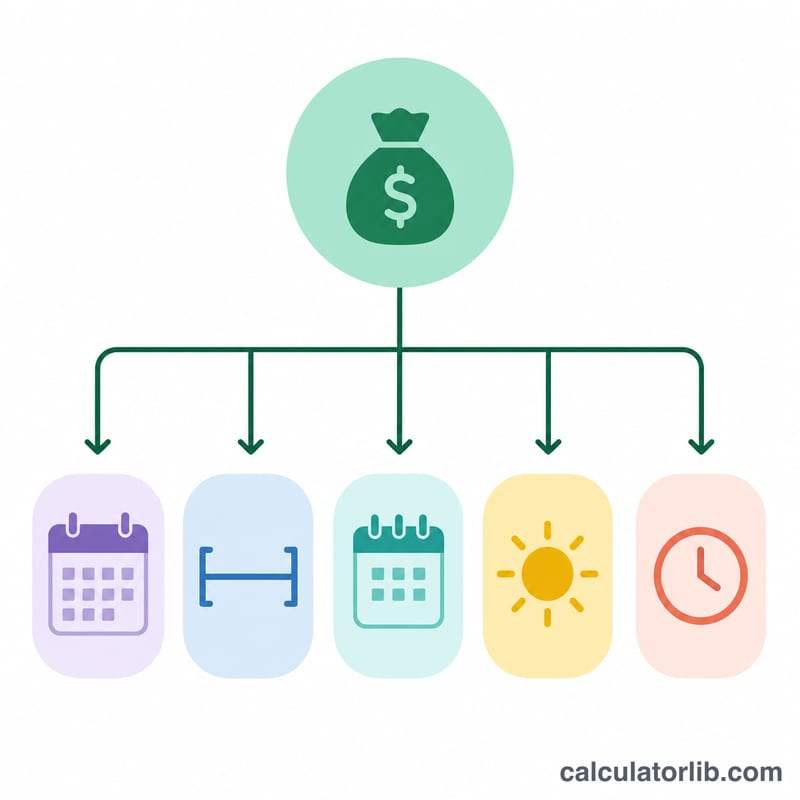
The Hourly to Yearly Salary Calculator converts an hourly wage into annual, monthly, bi-weekly, weekly, and daily pay totals. It's useful for comparing job offers, budgeting, or understanding what an hourly contract role is really worth over a full year. The tool works with any currency, since it only multiplies and divides the numbers you enter.
The Inputs You Provide
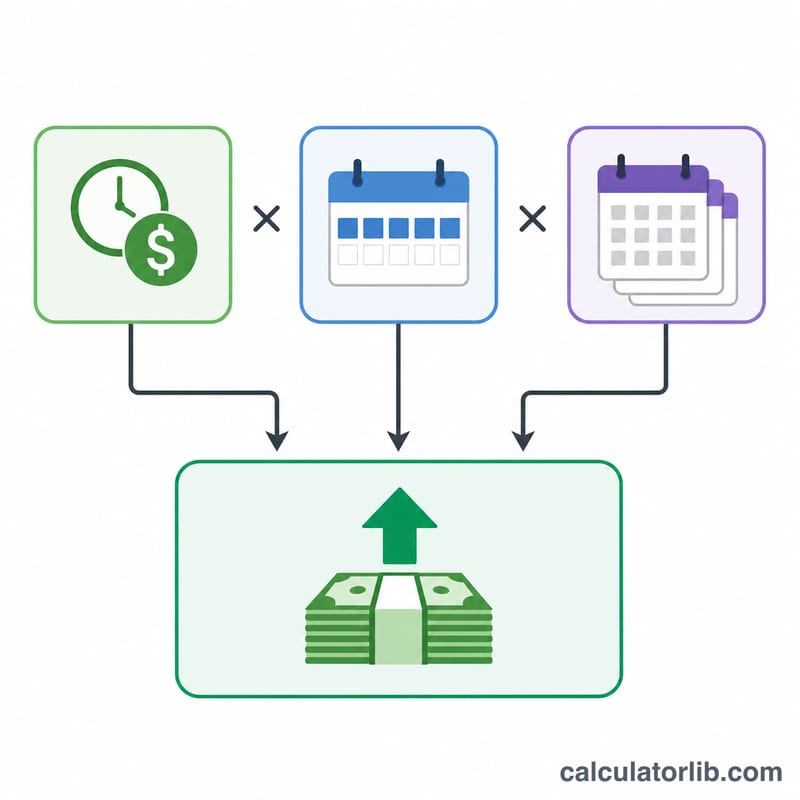
- Hourly Rate – how much you earn for one hour of work.
- Hours Per Week – the number of hours you typically work each week (for example, 40 for full-time).
- Weeks Worked Per Year – how many weeks you actually work in a year. Use 52 if you work every week, or fewer if you take unpaid time off.
The Formulas Used
Each result is derived directly from your three inputs:
- Yearly salary = Hourly Rate × Hours Per Week × Weeks Per Year
- Monthly rate = Yearly salary ÷ 12
- Bi-weekly rate = Hourly Rate × Hours Per Week × 2
- Weekly rate = Hourly Rate × Hours Per Week
- Daily rate = Hourly Rate × (Hours Per Week ÷ 5)
Note that the daily and bi-weekly figures assume a standard 5-day work week and two-week pay period, independent of the weeks-per-year value.
Worked Example
Suppose you earn $25 per hour, work 40 hours per week, and work 50 weeks per year:
- Yearly: 25 × 40 × 50 = $50,000
- Monthly: 50,000 ÷ 12 = $4,166.67
- Bi-weekly: 25 × 40 × 2 = $2,000
- Weekly: 25 × 40 = $1,000
- Daily: 25 × (40 ÷ 5) = $200
Frequently Asked Questions
Should I use 52 weeks or fewer? Use 52 if you're paid for every week of the year, including holidays. If you take unpaid weeks off, subtract those to get a more realistic annual figure.
Does this include taxes? No. All results are gross (pre-tax) pay. Your take-home amount will be lower after income tax and other deductions.
Why is the daily rate based on dividing by 5? The calculator assumes a standard five-day work week, so it splits your weekly hours evenly across five days to estimate a daily wage.