What Is a Subtraction Calculator?
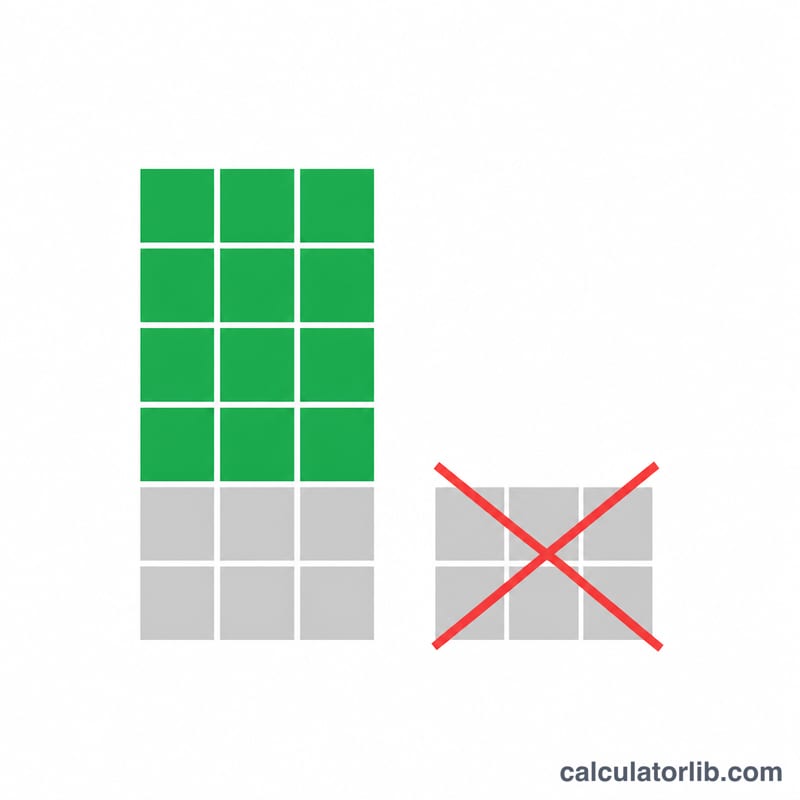
A subtraction calculator finds the difference between two numbers by subtracting the second number from the first. Subtraction is one of the four basic arithmetic operations and answers the question "how much is left?" or "what is the gap between two values?" This tool handles whole numbers, decimals, and produces negative results when the second number is larger than the first.
How to Use It
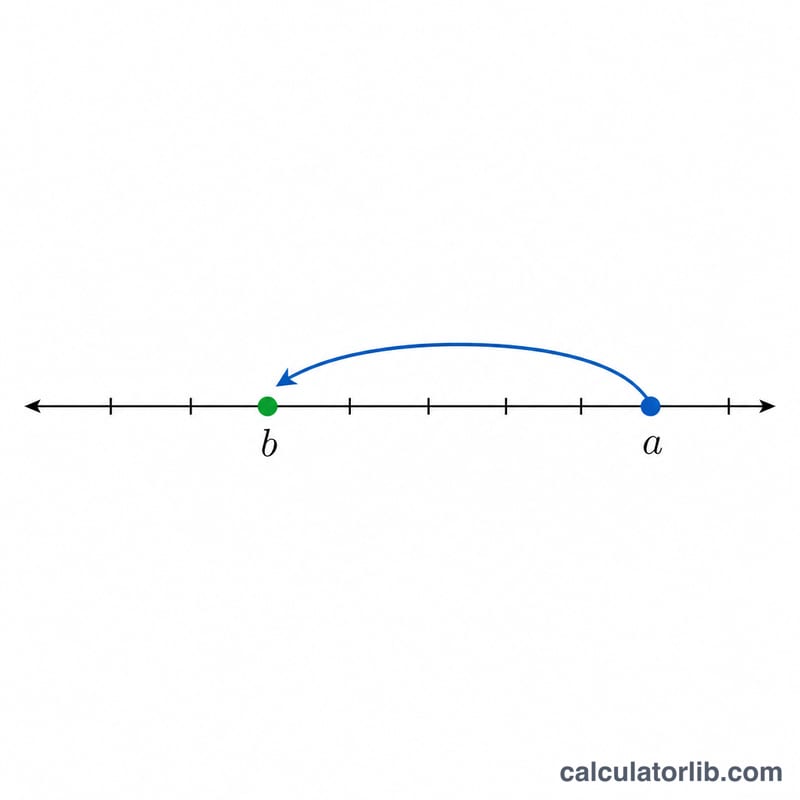
Enter your first number (the minuend) in the top field and the second number (the subtrahend) in the bottom field, then calculate. The result is the difference, \(a - b\). You can use positive numbers, negative numbers, and decimals.
The Formula Explained
The formula is simply $$\text{Difference} = \text{Minuend} - \text{Subtrahend}$$ The minuend (a) is the quantity you start with, and the subtrahend (b) is the amount you take away. The order matters: \(5 - 3 = 2\), but \(3 - 5 = -2\). If the subtrahend is negative, subtracting it adds to the total, e.g. \(5 - (-3) = 8\).
Worked Example
Suppose you have $100 and spend $37. The difference is $$100 - 37 = 63$$ so you have $63 left. With decimals, \(12.5 - 4.25 = 8.25\).
How to Subtract by Hand (Column Method with Borrowing)
The column method subtracts two numbers one place value at a time. The formula is \(\text{Difference} = a - b\), where \(a\) is the minuend (the number you start with) and \(b\) is the subtrahend (the number being taken away).
- Align by place value. Write the minuend on top and the subtrahend below it, lining up ones under ones, tens under tens, and so on. For decimals, line up the decimal points and pad the shorter number with trailing zeros (for example, write 4.25 and 12.50).
- Start at the rightmost column. Subtract the bottom digit from the top digit.
- Borrow when needed. If the top digit is smaller than the bottom digit, borrow 1 from the next column to the left. That reduces the left column's top digit by 1 and adds 10 to the current column's top digit. If the next column is 0, keep moving left to the first non-zero digit, borrow from it, and pass the borrowed value down column by column.
- Move left. Repeat the subtraction (and borrowing if needed) for each column until you reach the leftmost digit.
- Place the decimal point. Put the decimal point in the answer directly beneath the aligned decimal points.
- If b > a, swap the numbers, subtract the smaller from the larger, then put a negative sign on the result. For example, \(3 - 8\): compute \(8 - 3 = 5\), so the answer is \(-5\).
Example 1: whole numbers with borrowing
Compute \(502 - 187\).
- Ones: 2 is less than 7. The tens digit is 0, so borrow from the hundreds: 5 becomes 4, and the tens column becomes 10. Then borrow 1 from the tens: tens become 9, and the ones become 12. Now \(12 - 7 = 5\).
- Tens: \(9 - 8 = 1\).
- Hundreds: \(4 - 1 = 3\).
Result: \(502 - 187 = \)315.
Example 2: decimals
Compute \(12.5 - 4.25\). Pad 12.5 to 12.50 and align the decimal points.
- Hundredths: 0 is less than 5. Borrow from the tenths: 5 becomes 4, and the hundredths become 10. \(10 - 5 = 5\).
- Tenths: \(4 - 2 = 2\).
- Decimal point goes directly below the aligned points.
- Ones: 2 is less than 4. Borrow from the tens: 1 becomes 0, and the ones become 12. \(12 - 4 = 8\).
- Tens: \(0\) (leading zero, not written).
Result: \(12.5 - 4.25 = \)8.25.
Check by addition
Subtraction can be verified with the relationship \(\text{Difference} + b = a\).
- \(315 + 187 = 502\) ✓
- \(8.25 + 4.25 = 12.50\) ✓
If the sum does not equal the minuend, recheck each column for a missed borrow.
FAQ
Can the result be negative? Yes. If the second number is larger than the first, the difference is negative.
Does it support decimals? Yes, you can enter decimal values in both fields.
What are the parts of a subtraction called? The first number is the minuend, the second is the subtrahend, and the answer is the difference.