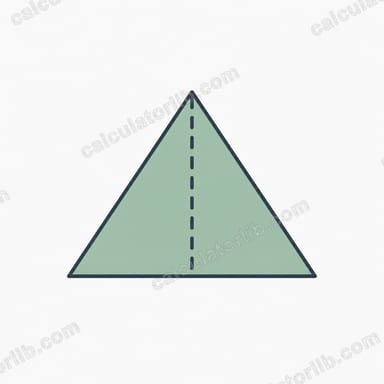

What This Triangle Area Calculator Does
This tool calculates the area of a triangle from two simple measurements: its base and its height. It is a universal geometry tool — the math is the same in every country and uses no currency or regional rules. Just enter the two values and you get an instant, accurate area, plus a bonus estimate of the triangle's perimeter.
The Inputs You Provide
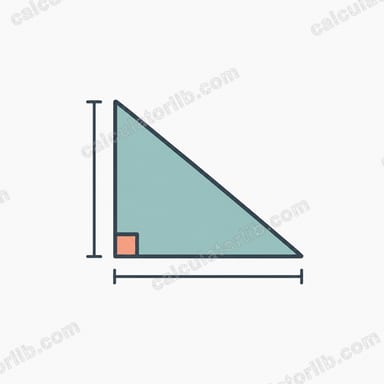
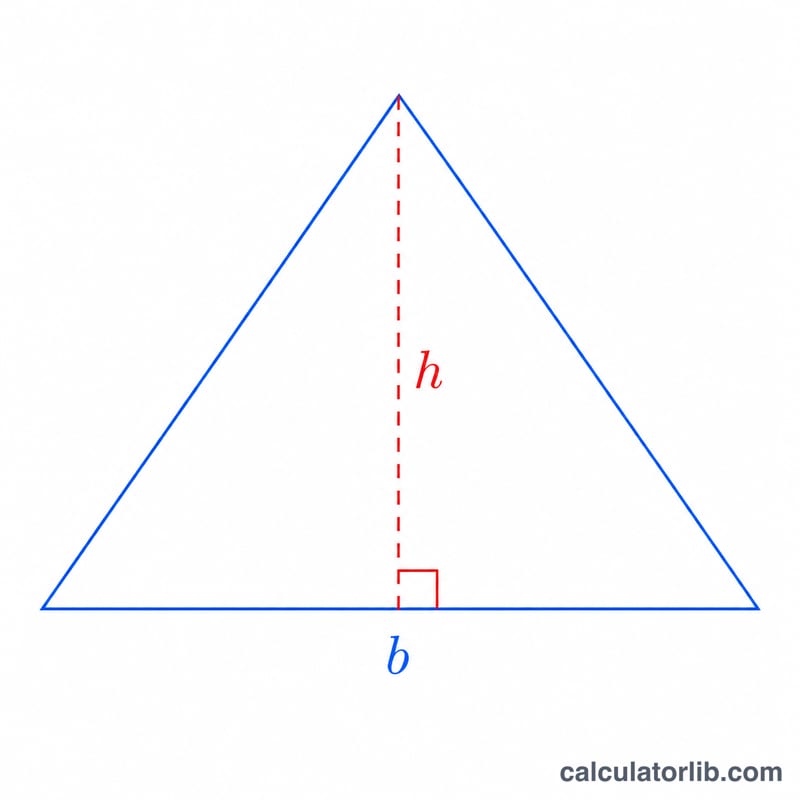
- Base: the length of one side of the triangle that you treat as the bottom edge.
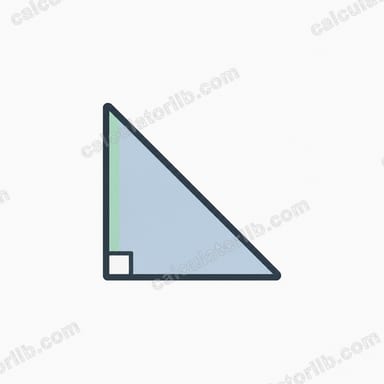
- Height: the perpendicular distance from that base up to the opposite vertex (the apex). This is the straight-up height, not the slanted side length.
Both values should use the same unit — centimetres, metres, inches, or any unit you like. The result comes out in that unit squared.
The Formula
The calculator uses the classic triangle area formula:
Area = (Base × Height) ÷ 2
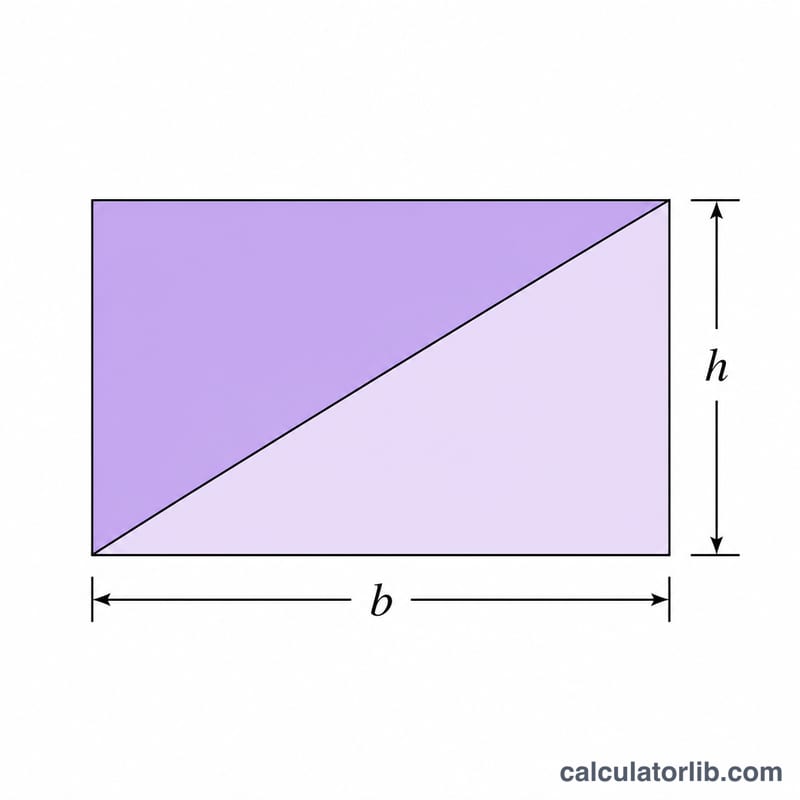
Multiplying base by height gives the area of a rectangle that fully encloses the triangle; dividing by two leaves exactly the triangle inside it.
The tool also reports an estimated perimeter using:
Perimeter = Base + 2 × √((Base ÷ 2)² + Height²)
Note that this perimeter formula assumes an isosceles triangle, where the apex sits directly above the midpoint of the base. If your triangle is not isosceles, treat the perimeter as an approximation while the area remains exact.
Worked Example
Suppose you enter a Base of 10 and a Height of 6:
- Area = (10 × 6) ÷ 2 = 60 ÷ 2 = 30 square units
- Perimeter = 10 + 2 × √((5)² + 6²) = 10 + 2 × √(25 + 36) = 10 + 2 × √61 ≈ 10 + 2 × 7.81 ≈ 25.62 units
So a triangle with a base of 10 and height of 6 covers 30 square units of area.
Frequently Asked Questions
Does the height have to be perpendicular to the base? Yes. The formula only works when the height is measured at a right angle to the base. Using a slanted side instead will give a wrong, oversized result.
What units does it use? Whatever unit you enter. Put both base and height in the same unit and the area is in that unit squared (e.g. cm² or m²).
Is the perimeter always correct? It is exact only for isosceles triangles where the apex is centred over the base. For scalene triangles, use it as a rough guide and measure each side directly for precision.