透過 MCP 連接 →

輸入計算

數學公式

Show calculation steps (3)
  1. Resistor Power Dissipation

    Resistor Power Dissipation: LED 串並聯陣列計算器

    P = voltage across resistor x string current; resistor voltage = Vsupply - LEDs per string x Vf

  2. Total Array Current

    Total Array Current: LED 串並聯陣列計算器

    Total current = current per string x number of parallel strings

  3. Total Power

    Total Power: LED 串並聯陣列計算器

    Total power = supply voltage x total array current (in amps)

廣告

結果

限流電阻(每條支路)
300
歐姆 (Ω)
LED 兩端電壓(每條支路) 6 V
電阻兩端電壓 6 V
陣列總電流 40 mA
每顆電阻功率 0.12 W
陣列總功率 0.48 W

功能說明

這個計算器可協助你設計由多組相同串聯支路並聯而成的 LED 陣列。每一條支路包含數顆串聯的 LED 以及一顆限流電阻。它會幫你算出電阻值、LED 與電阻之間的電壓分配、整個陣列消耗的總電流,以及每顆電阻和整體陣列所消耗的功率。
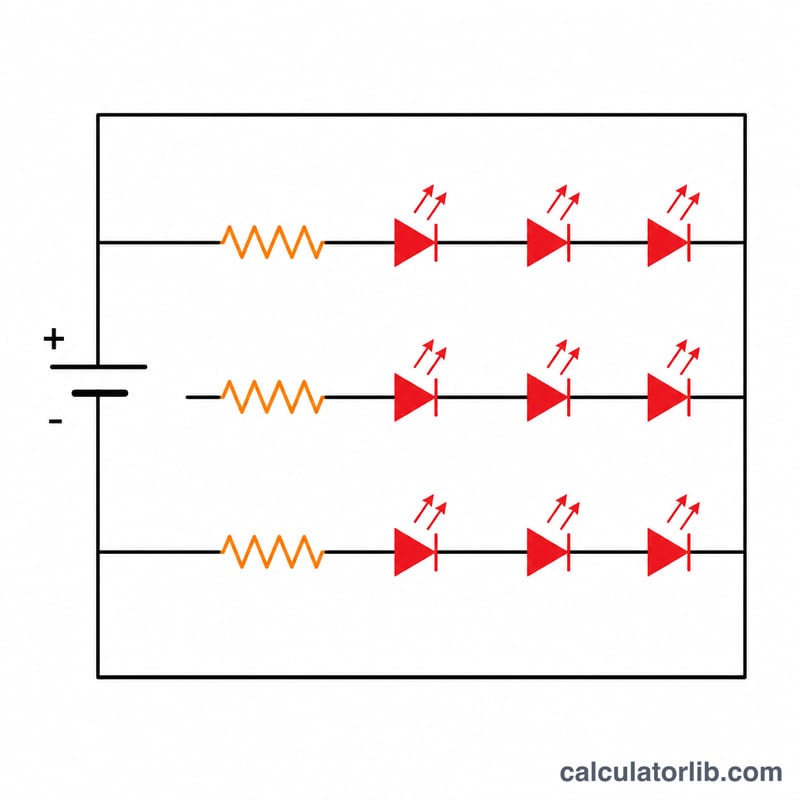
Diagram of an LED array with multiple parallel strings, each string having LEDs in series and a series resistor connected to a power supply
An LED array: several parallel strings, each with LEDs in series plus a current-limiting resistor.

使用方式

輸入供應電壓、單顆 LED 的順向電壓、每條支路所需的電流(以毫安培 mA 為單位)、每條串聯支路裡的 LED 顆數,以及並聯的支路數量。計算器會回傳每條支路所需的電阻值;若供應電壓不足以驅動你設定的 LED 數量,也會即時提出警告。

公式解析

一條支路上的 LED 會產生 \(n \times V_f\) 伏特的壓降。電阻則必須承擔剩下的電壓,也就是 \(V_{supply} - n \cdot V_f\),同時流過支路電流 \(I\)。依據歐姆定律:

$$R = \frac{V_{supply} - n \cdot V_f}{I}$$

由於每條並聯支路各自流過自己的電流,整個陣列的總電流就是「支路數 \(\times I\)」,總功率則為 \(V_{supply} \times I_{total}\)。
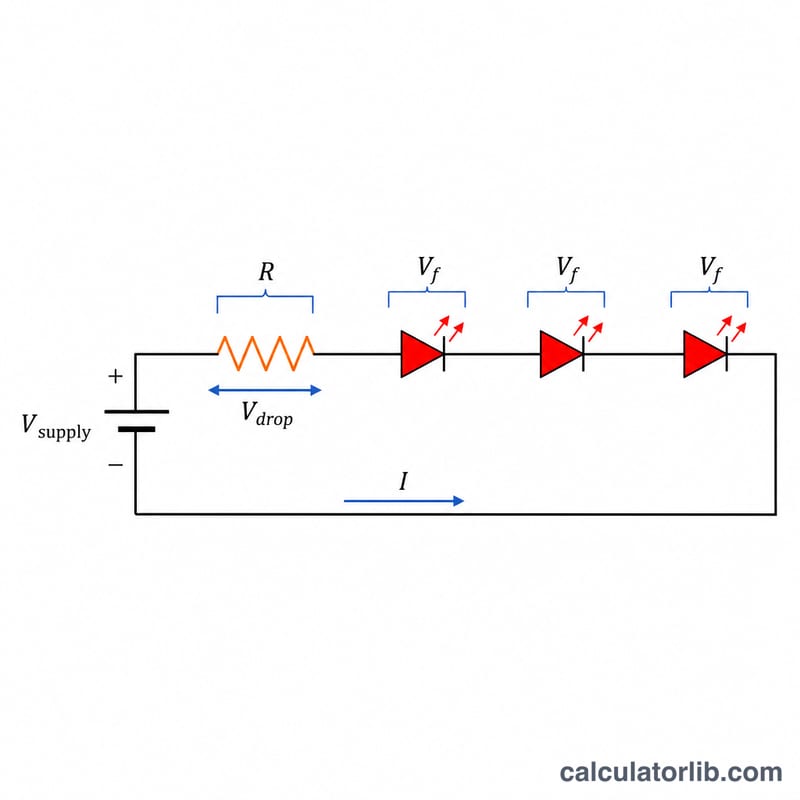
Annotated single LED string showing supply voltage, forward voltage drops across each LED, and the resistor voltage drop
Voltage budget along one string: supply minus the LED forward drops leaves the voltage across the resistor.

實例計算

供應電壓 12 V,3 顆 LED 各為 2 V,每條支路 20 mA,共 2 條支路。LED 壓降 \(= 3 \times 2 = 6\) V。電阻壓降 \(= 12 - 6 = 6\) V。

$$R = \frac{6}{0.02} = 300\ \Omega$$

總電流 \(= 20 \times 2 = 40\) mA。每顆電阻功率 \(= 6 \times 0.02 = 0.12\) W;整體陣列功率 \(= 12 \times 0.04 = 0.48\) W。

常見問題

為什麼每條支路要各用一顆電阻?由於 LED 的順向電壓會有些微差異,讓每條支路各自配一顆電阻,比共用一顆電阻更能平均分配電流。

電阻的瓦數該怎麼挑?建議選用額定功率至少為計算出每顆電阻功率兩倍以上的電阻,以保留足夠的安全裕度。

如果算出來的電阻值是負的怎麼辦?表示供應電壓低於 LED 順向電壓的總和——請減少 LED 顆數,或改用更高的供應電壓。
最後更新: